BPC-157 Reconstitution Guide: Correct Preparation for Research
Step-by-step reconstitution protocol for BPC-157: required materials, solvent selection, concentrations and storage for in-vitro research.
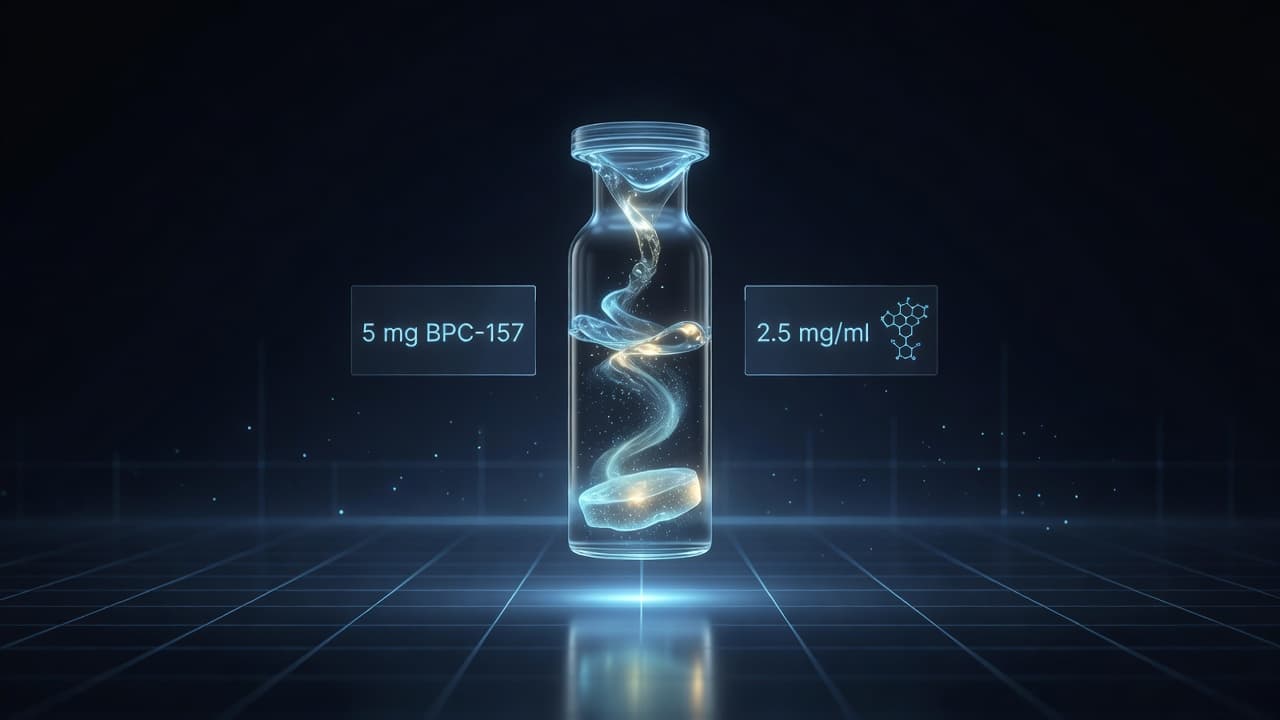
BPC-157 is a synthetic 15-amino-acid peptide. In the literature it is described as a fragment of a "body protection compound" derived from gastric juice. It is studied mainly in preclinical models; reliable clinical data in humans remain very limited to date. The peptide is supplied as a lyophilised powder and must therefore be reconstituted before use in a research protocol.
The process is technically straightforward but requires clean technique to avoid contamination or material loss. Below are the required materials and the individual steps.
What You Will Need
Prepare the following materials before you begin: a lyophilised BPC-157 vial, bacteriostatic water (BAC water) or sterile water, 70% isopropyl alcohol swabs, sterile syringes (1 ml insulin syringes work well) and a clean work surface. A laminar flow workbench is helpful if available.
Gastric pentadecapeptide (15 amino acids) known for exceptional tissue repair properties. Promotes wound healing, angiogenesis, and cytoprotection across tendons, muscles, gut, and nerves. Over 30 years of preclinical research.
USP-grade sterile water with 0.9% benzyl alcohol (near-neutral, pH 6.2 to 6.4) - the standard solvent for reconstituting lyophilized peptides. Essential accessory for any peptide research. Each vial is sealed and ready to use.
Reconstitution Procedure
Prepare the work area
Wipe your work surface thoroughly with 70% isopropyl alcohol. Use a laminar flow workbench if available. Many laboratories allow the peptide vial and solvent to come to room temperature before starting, to avoid condensation and simplify handling.
Disinfect the vial stoppers
Wipe the rubber stoppers of both the BPC-157 vial and the bacteriostatic water with an alcohol swab. Allow them to air-dry for approximately 30 seconds.
Draw up the solvent
Use a sterile syringe to draw up the desired volume of bacteriostatic water. Adding 2 ml of BAC water to a 5 mg vial gives a concentration of 2.5 mg/ml (2500 mcg/ml).
Add solvent to the peptide
Insert the needle through the rubber stopper and inject the water slowly along the inner wall of the vial. Avoid injecting directly onto the lyophilised cake under pressure. Let the water run down the glass wall and wet the powder gradually.
Allow to dissolve
Set the vial down and let it stand for a few minutes. The powder will dissolve on its own in many cases. If a small amount of material remains undissolved, roll the vial gently between your fingers.
Inspect the solution
The finished solution should be clear with no visible floating particles. If it appears cloudy or material is still visible, allow more time. Avoid vigorous shaking or rough mixing.
Do not shake the vial
Vigorous shaking can cause foaming and unnecessary mechanical stress. If undissolved material remains, roll the vial gently between your fingers or allow more time to stand.
Common Concentrations
The resulting concentration depends on how much solvent you add.
For a 5 mg vial: adding 1 ml of BAC water gives 5000 mcg/ml, while 2 ml gives a concentration of 2500 mcg/ml.
For a 10 mg vial: 2 ml gives 5000 mcg/ml, and 5 ml brings you to 2000 mcg/ml.
Choose a practical concentration
Choose a concentration that suits your calculations. A ratio of 2 ml per 5 mg gives 2500 mcg/ml and is a practical working example because volumes can easily be derived from it.
Storage
After reconstitution, storage should follow the manufacturer's specifications and product-specific stability data. Without reliable stability data for the specific product, no generally valid shelf-life statement can be made for reconstituted BPC-157 solutions.
Bacteriostatic water is a multi-dose diluent with a preservative. That does not automatically mean that every BPC-157 solution reconstituted with it remains stable for a fixed period. Sterile water contains no antimicrobial preservative and is described in official labelling as a single-dose diluent; residual amounts should be discarded promptly unless the product labelling of the reconstituted substance states otherwise.
Non-reconstituted lyophilised powder is generally more robust than a reconstituted solution. For specific storage durations, refrigerated storage or frozen storage, however, you should rely on manufacturer labelling, stability studies or internal validation data rather than generic monthly guidelines. A COA typically documents the identity and purity of a batch, not reliable post-reconstitution shelf-life data.
Avoid freeze-thaw cycles
Repeated freeze-thaw cycles can compromise the integrity of sensitive peptides. If you do freeze, follow a documented laboratory protocol and aliquot only where supported by your stability data or SOPs.
Practical Tips
Choose the appropriate solvent
Whether bacteriostatic or sterile water is suitable depends on your protocol and the manufacturer's specifications for the substance being dissolved. BAC water is designed as a multi-dose diluent, while sterile water contains no preservative.
Label everything immediately
Label every vial immediately after reconstitution: peptide name, concentration, diluent and date. Unlabelled vials in a shared laboratory refrigerator easily lead to mix-ups.
Maintain strict aseptic technique throughout
A contaminated vial can render an experiment unusable. Maintain strict aseptic technique throughout the process: sterile syringes, alcohol-disinfected stoppers and a clean work surface.
Our BPC-157 products are intended exclusively for in-vitro research and laboratory use.
Sourcing and Quality
Ensure your supplier provides a Certificate of Analysis (COA) from an independent testing laboratory. Third-party verification is an important component of quality assurance because it can document identity and purity. At PeptidesDirect, every batch is tested by Janoshik Analytical for both purity and identity confirmation.
Frequently Asked Questions
Research context for English-speaking buyers
Most of our English-speaking customers ship to the UK, Ireland, Malta or other English-as-second-language EU territories. The regulatory picture differs per country.
- Relevant authorities
- MHRA (UK, post-Brexit), HPRA (Ireland, EU-aligned), FDA Section 503A bulks list (US, restricted Cat 2 status of several peptides as of 2026)
- Customs and VAT
- EU shipments include 19% VAT; UK shipments after Brexit are now extra-EU and may attract UK VAT plus a handling fee at import
- Typical shipping window
- EU 2-4 working days, UK 4-7 working days, other international 7-14 working days, depending on customs
Research-grade peptides shipped from our EU warehouse are sold for laboratory use only and are not authorised for human or veterinary therapeutic application in any of the destination jurisdictions. US customers should be aware that the FDA Section 503A bulks list classification (and the April 2026 reclassification of twelve compounds) only governs compounding pharmacies, not direct-to-researcher imports for non-clinical work. UK buyers should declare the consignment on import and may be asked for a research justification by HMRC. We provide a CoA per batch identified by colour code rather than serial number; customs sometimes asks for this document when clearing the parcel.