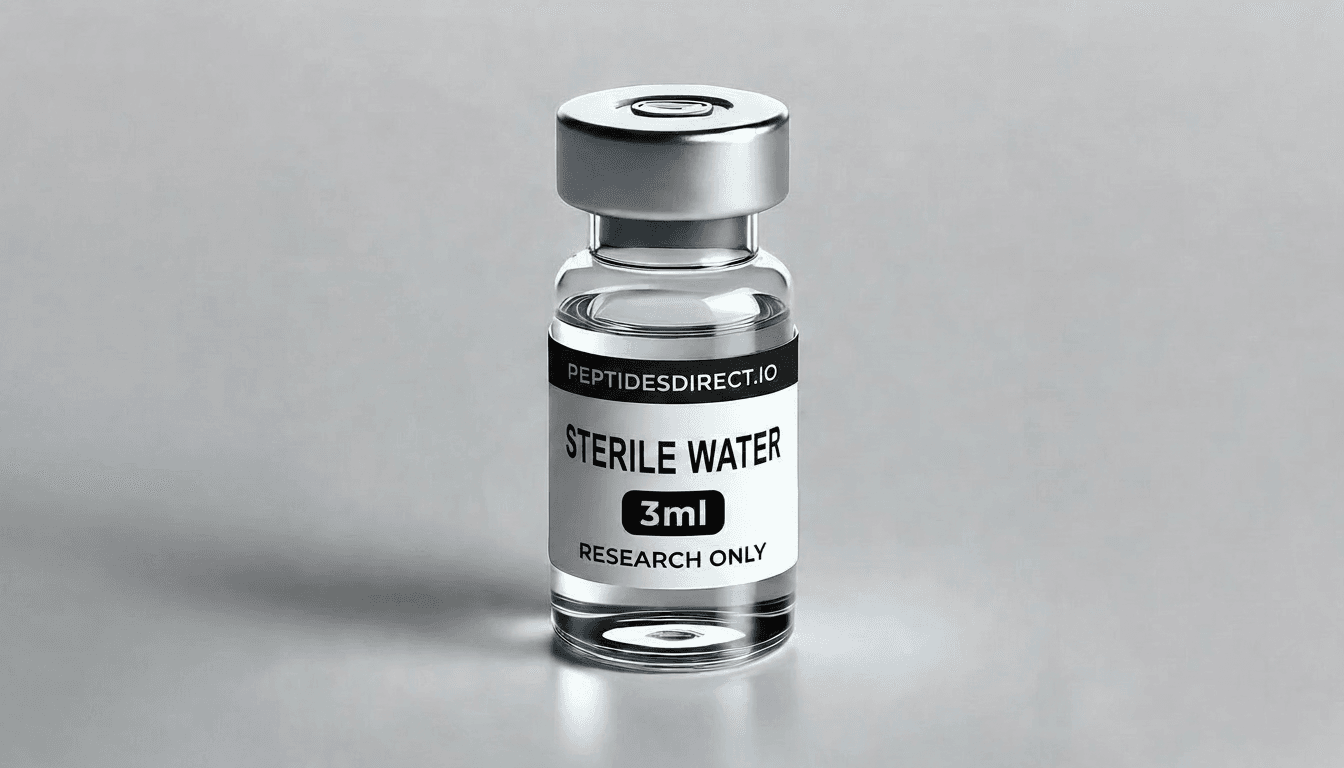
Sterile Water
Preservative-free sterile water for injection (USP, around pH 5.5), no benzyl alcohol. Single-use only: for cell-culture and in-vitro work, benzyl-alcohol-sensitive peptides, or a vial drawn in one session. For multi-dose use over days, choose bacteriostatic water.
€4.99
Payment Methods
No preservative
Plain sterile water for injection (USP): pure water with no benzyl alcohol and no antimicrobial agent. The cleanest possible diluent when a preservative would interfere.
Around pH 5.5
Near-neutral, in the USP water range (pH 5.0 to 7.0). Suitable for peptides that dissolve well at neutral pH without added acid.
Single-use only
Without a preservative, use the vial the same day and discard the rest. It does not carry the 28-day multi-dose window that bacteriostatic water does.
For cell culture and sensitive peptides
The right choice for in-vitro / cell-culture assays, where benzyl alcohol is cytotoxic, and for the few peptides that benzyl alcohol destabilizes.
Cold-chain shipped
Dispatched from EU stock in insulated packaging so the vial arrives intact and ready for laboratory use.
Research areas
What is sterile water
Sterile water is not a peptide. It is a reconstitution solvent: plain sterile water for injection (USP grade), with no benzyl alcohol and no other preservative. That is the one thing that sets it apart from bacteriostatic water, which is the same base water plus 0.9% benzyl alcohol.
The preservative in bacteriostatic water is what lets a multi-dose vial be punctured repeatedly for up to 28 days. Sterile water has no such protection, so once the seal is broken it must be used the same day and the remainder discarded. It is a single-use diluent, not a multi-week one.
When to use it instead of bacteriostatic water
For the everyday case, reconstituting a lyophilized peptide vial that you sample over days or weeks, bacteriostatic water is the correct default. Sterile water is the better choice only in specific situations:
- Cell-culture and in-vitro assays, where 0.9% benzyl alcohol is cytotoxic and would confound the result.
- The few peptides or proteins that benzyl alcohol is known to destabilize or aggregate.
- A vial you reconstitute and draw in a single session, with nothing left to protect.
- Working or dilution solutions used immediately.
Outside those cases, use bacteriostatic water: the preservative is a feature, not a downside, for multi-dose research vials.
How to use
Draw the chosen volume into a syringe and inject it slowly down the side of the peptide vial. Let the powder dissolve without shaking. Because there is no preservative, plan to use the reconstituted material the same day and refrigerate only briefly; do not treat it as a multi-day multi-dose vial.
Often studied alongside
The preservative-free counterpart to bacteriostatic water; picked for single-use and cell-culture work.
The multi-dose standard: sterile water with 0.9% benzyl alcohol
USP-grade sterile water with 0.9% benzyl alcohol (near-neutral, ~pH 5.7) - the standard solvent for reconstituting lyophilized peptides. Essential accessory for any peptide research. Each vial is sealed and ready to use.
Acidic diluent for peptides that stay cloudy in neutral water
Dilute 0.6% acetic-acid diluent at around pH 3.8, for reconstituting research peptides that stay cloudy in plain bacteriostatic water, such as IGF-1 LR3 and Cagrilintide. Two-step protocol. Each vial is sealed and ready to use.
Documentation
Material specification
Composition
Standard
Form
pH
Use
Storage (sealed)
CoA
Reference standards
The relevant reference is the USP monograph for Sterile Water for Injection: preservative-free, single-dose, pH 5.0 to 7.0. Benzyl alcohol at 0.9% is documented as cytotoxic in cell-based assays, which is the main reason to prefer preservative-free water for in-vitro work.
Research use only
This material is sold strictly for in-vitro research and laboratory use. Not intended for human or animal consumption, medical, cosmetic, or household applications. Suitable only for professional laboratory environments.