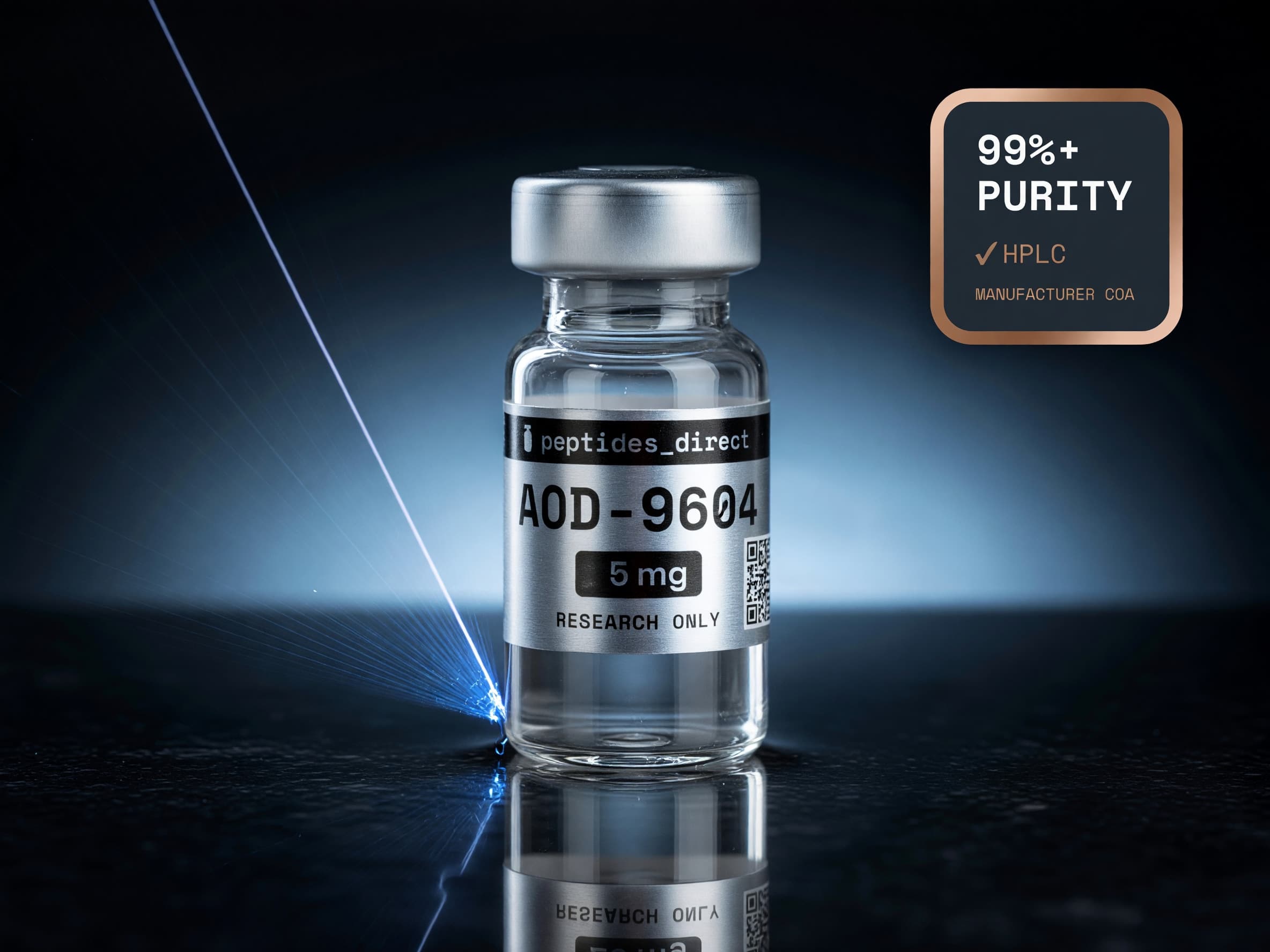
AOD-9604
Modified hGH fragment (177-191) studied for fat metabolism and lipolysis research. Interacts with beta-3 adrenergic receptors without growth-promoting effects.
99.55%Third-party lab: JanoshikView COA€36.99
€43.99
−16%savedFor Research Use Only
This product is sold strictly for in-vitro research and laboratory use. Not intended for human consumption or any in-vivo application.
Payment Methods
Targets stored fat
AOD-9604 is studied for breaking down stored triglycerides in fat cells, the process called lipolysis, without touching the muscle-building side of growth hormone.
Beta-3 adrenergic pathway
Mouse studies show the peptide raises expression of beta-3 adrenergic receptors, the main lipolytic receptors on fat cells, helping fat tissue respond more strongly to fat-burning signals.
No growth-hormone effects
The fragment keeps the fat-mobilizing tail of human growth hormone but drops the parts that drive blood sugar, IGF-1, or tissue overgrowth in research models.
Energy expenditure
In animal work, acute dosing increased fat oxidation and energy use, suggesting research interest in metabolic syndrome and fatty-tissue models.
Cartilage repair signal
Joint-injection studies in rabbits with induced osteoarthritis report better cartilage scores and shorter lameness, especially when paired with hyaluronic acid.
Phase 2b clinical outcome
Completed Phase 2 obesity trials in Australia. The Phase 2b trial (n=536, 24 weeks) did not reach its weight-loss endpoint versus placebo, and Metabolic Pharmaceuticals discontinued obesity development in 2007. The side-effect profile was reported as broadly comparable to placebo, with no treatment-related serious adverse events.
Research areas
What is AOD-9604
AOD-9604 is a short modified fragment of human growth hormone, a 16-amino-acid peptide corresponding to the C-terminal region of human growth hormone (residues 177-191) with an N-terminal tyrosine. It was developed at Monash University in Australia and taken through clinical work in the early 2000s as an obesity research candidate.
The original idea was simple. Growth hormone has two very different jobs: it builds tissue and it mobilizes fat. The Monash team wanted to know whether the fat-burning half could be isolated from the rest. AOD-9604 is the result of that effort, supplied as lyophilized (freeze-dried) powder.
How it works
Two mechanisms come up again and again in the literature.
The first is direct lipolysis. AOD-9604 stimulates fat cells to release stored triglycerides and increases fat oxidation in animal experiments. Acute dosing raises whole-body energy expenditure even in mice that lack the beta-3 adrenergic receptor, which means part of the effect runs through other pathways.
The second is beta-3 receptor expression. With longer dosing, the peptide raises the level of beta-3 adrenergic receptor RNA in fat tissue. Beta-3 receptors are the main lipolytic switch on fat cells, and obese mice tend to have them suppressed. Bringing those receptors back toward normal levels appears to be one way the fragment improves how fat tissue responds to fat-burning signals.
What it does not do, in the published animal data, is push the growth-hormone side of the molecule. There is no rise in blood sugar, no IGF-1 spike, and no tissue overgrowth at the doses studied. That is the entire point of the fragment design.
Beyond fat metabolism, a separate line of research looks at joint cartilage. Rabbit studies of collagenase-induced osteoarthritis report that intra-articular AOD-9604 injections improved cartilage histology and reduced lameness, with the strongest effect when combined with hyaluronic acid. This work has put the peptide on the radar of orthopaedic peptide reviews as a candidate for cartilage repair research.
Often studied alongside
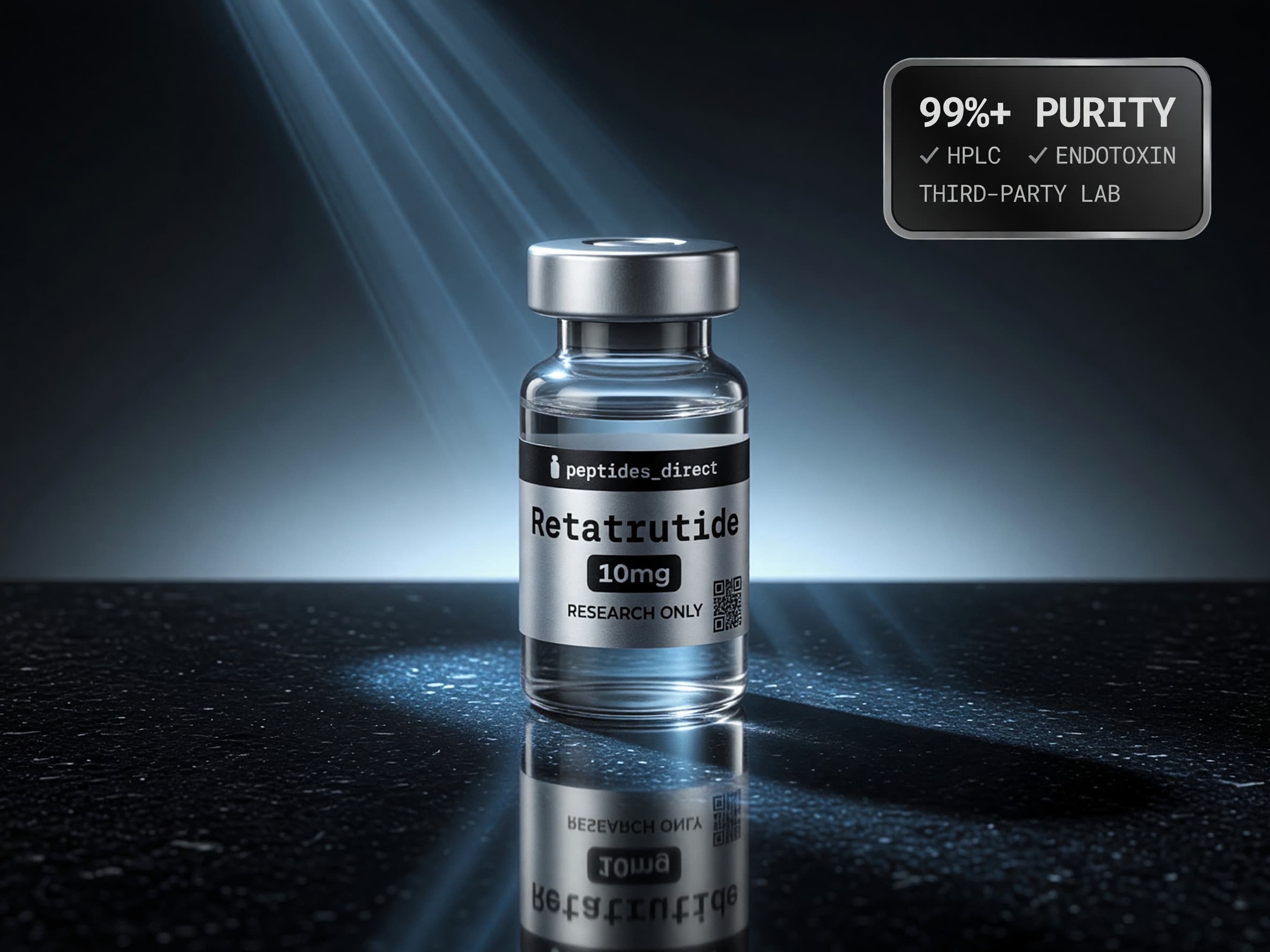
In metabolic-syndrome research, AOD-9604 is most often discussed next to other peptides that act on fat tissue or appetite from a different angle. Retatrutide hits the GLP-1, GIP, and glucagon receptors, which is a complementary mechanism to the lipolytic fragment.
Triple-agonist studied for metabolic syndrome and adiposity
First-ever triple-action weight management peptide targeting three receptors at once: GLP-1, GIP, and glucagon. Shown exceptional results in Phase 2 trials - up to 24% weight reduction. The most advanced metabolic peptide available.
MOTS-c is the other common pairing in laboratory work on energy metabolism, since it acts on mitochondrial pathways and insulin sensitivity rather than on adrenergic receptors.
Mitochondrial peptide for energy-metabolism research
Mitochondrial-derived signaling peptide (16 amino acids) that mimics the effects of exercise at the cellular level. Activates AMPK, improves glucose uptake, and enhances fat metabolism - a key tool in metabolic and longevity research.
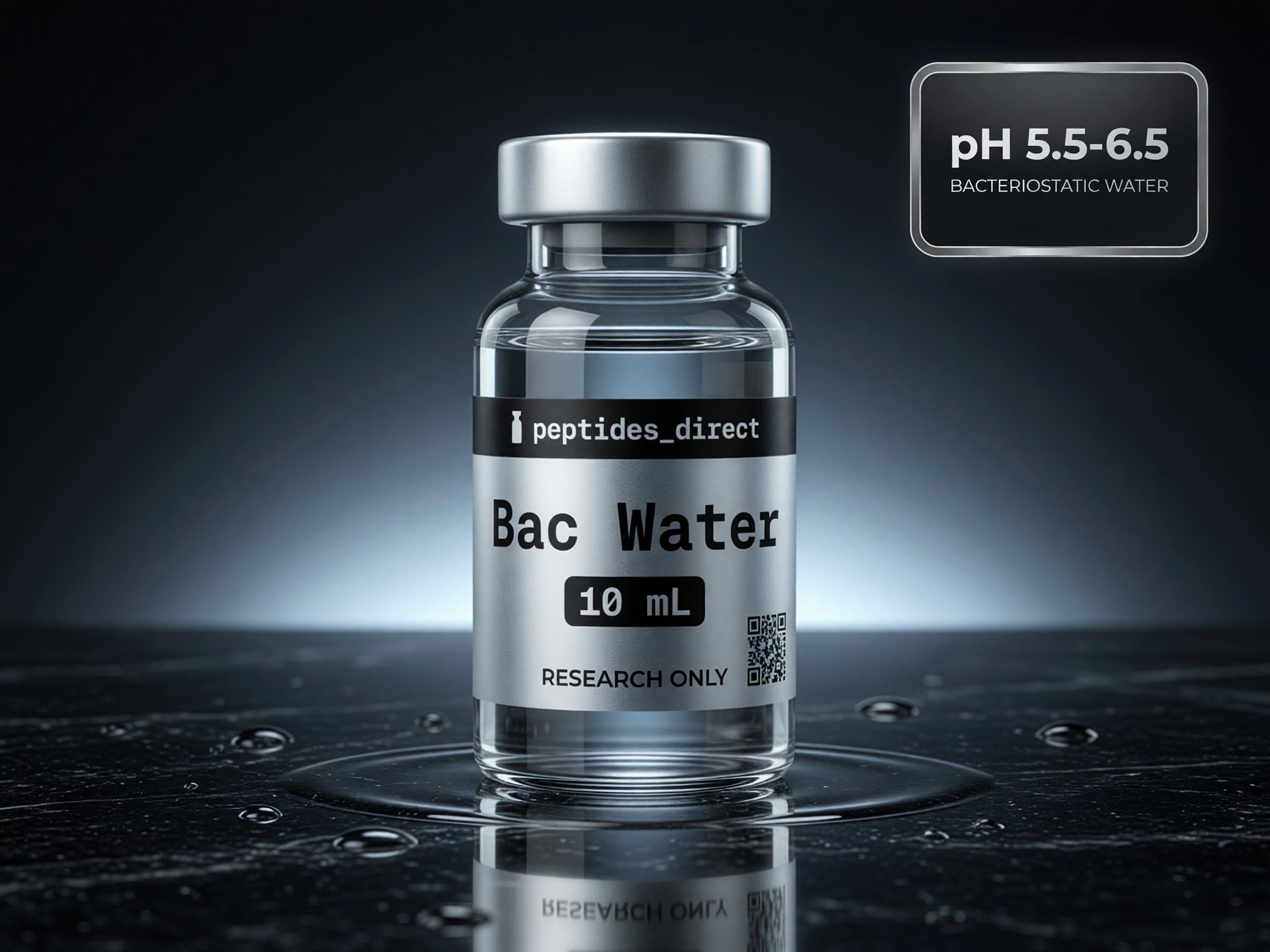
For reconstitution, the standard solvent in published protocols is bacteriostatic or sterile water.
Standard solvent for reconstitution
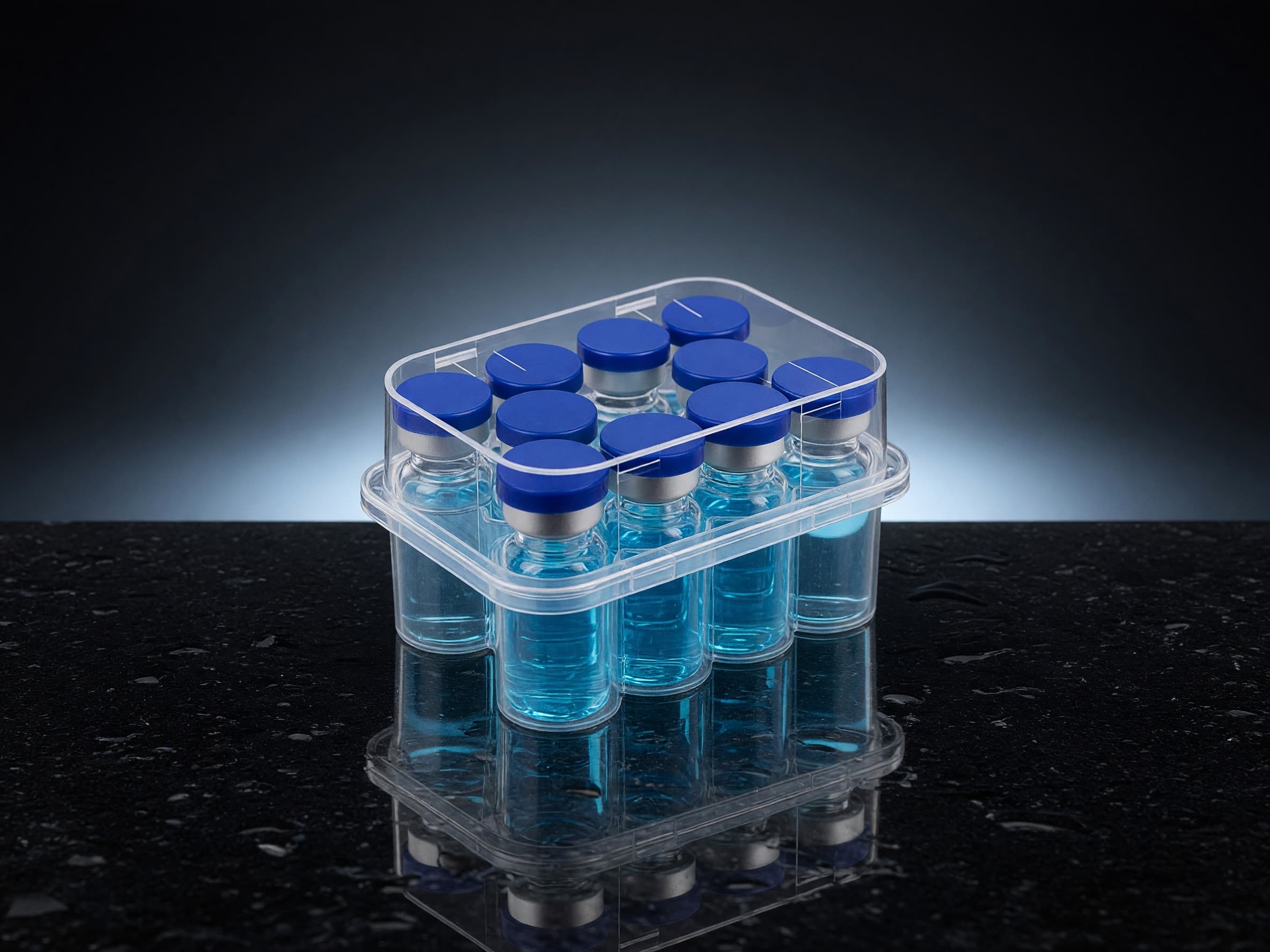
USP-grade sterile water with 0.9% benzyl alcohol (near-neutral, pH 6.2 to 6.4) - the standard solvent for reconstituting lyophilized peptides. Essential accessory for any peptide research. Each vial is sealed and ready to use.
Documentation
Material specification
Purity
Test method
Form
Storage (sealed)
Storage (reconstituted)
CoA
Selected research
- PMID 11713213
Heffernan M et al. Effects of human GH and its lipolytic fragment (AOD9604) on lipid metabolism in obese mice and beta(3)-AR knock-out mice
Endocrinology, 2001, foundational beta-3 adrenergic and lipolysis study - PMID 15134286
Wilding J. AOD-9604 Metabolic
Curr Opin Investig Drugs, 2004, clinical-development review covering Phase 2 obesity trials - PMID 16931496
Jensen MD. Potential role of new therapies in modifying cardiovascular risk in overweight patients with metabolic risk factors
Obesity, 2006, metabolic-syndrome context review - PMID 16625817
Halford JC. Obesity drugs in clinical development
Curr Opin Investig Drugs, 2006, AOD-9604 in the obesity drug pipeline - PMID 26275694
Kwon DR, Park GY. Effect of Intra-articular Injection of AOD9604 with or without Hyaluronic Acid in Rabbit Osteoarthritis Model
Ann Clin Lab Sci, 2015, cartilage-repair and osteoarthritis model - PMID 25208511
Cox HD et al. Detection and in vitro metabolism of AOD9604
Drug Test Anal, 2015, pharmacokinetics and metabolic stability - PMID 41490200
Rahman OF, Lee SJ, Seeds WA. Therapeutic Peptides in Orthopaedics: Applications, Challenges, and Future Directions
J Am Acad Orthop Surg Glob Res Rev, 2026, orthopaedic peptide review including AOD-9604
Research use only
This material is sold strictly for in-vitro research and laboratory use. Not intended for human or animal consumption, medical, cosmetic, or household applications. Suitable only for professional laboratory environments.
Reconstitution: sensitive peptide
Some peptides react sensitively to the pH and quality of the reconstitution water and can turn cloudy or not fully dissolve if reconstituted incorrectly (for example with tap water, non-sterile water, old or contaminated bacteriostatic water, or the wrong water-to-peptide ratio). This is a common reconstitution matter, not an automatic sign of a faulty vial. Always reconstitute with fresh, pharmaceutical-grade diluent as prescribed by the product-specific protocol on this page (bacteriostatic or sterile water, or dilute acetic-acid water first where the page says so), add it slowly down the inner wall of the vial, and swirl gently instead of shaking. If it still looks cloudy right after mixing, let it rest for 10 to 15 minutes and swirl again before judging clarity. Correct technique and suitable water are the customer's responsibility, and so is following the product-specific instructions on this page. Where a peptide needs an acid-first protocol (it says so above, for example for AOD-9604 and Tesamorelin), reconstituting it in plain bacteriostatic water instead is a handling error, not a defect, and is not covered. If a vial stays cloudy after these steps, contact us with clear photos. We replace it free of charge once if you reconstituted with water from our own range or with factory-sealed water from a pharmaceutical manufacturer and followed the instructions on this page; with water of unknown origin the cause cannot be narrowed down and the case is not covered.
Best reconstituted in near-neutral bacteriostatic water (around pH 5.7, the USP water value). We recommend checking your water's pH with a cheap meter first: each peptide has its own ideal range, and matching the water is your responsibility.
For AOD-9604, plan on working with acid: dissolve the powder in 0.3 to 0.5 ml of dilute acetic-acid water (pH 3.8) first, and only then top up with bacteriostatic water. Full steps are in the FAQ below.
Reconstitution itself, including the choice of diluent, volumes and technique, is part of the research work and lies with the customer; how a mix behaves once liquid meets powder is outside our control. Your statutory rights regarding genuine product defects remain unaffected.
Why peptides turn cloudy: the reconstitution guideStorage and stability
- Dry, lyophilized vials keep for months refrigerated, or up to 24 months frozen at -20°C.
- After reconstitution in bacteriostatic water, use within about 30 days at 2 to 8°C, and avoid repeated freeze-thaw.
Reviews
No reviews yet. Write the first one!
Only customers who ordered the product from us can leave a review; we verify this automatically against the order number. Every review submitted is published, regardless of star rating. Rewarded reviews from our coupon program are individually labelled.
Frequently Asked Questions
Technical data sheet
- CAS number
- 221231-10-3
- Molecular formula
- C₇₈H₁₂₃N₂₃O₂₃S₂
- Molar mass
- 1815.1 g/mol
- Type / receptor
- hGH 177-191 fragment analog
- Form
- White lyophilized powder
- Solubility
- Bacteriostatic water (BAC)
- Storage
- -20°C for up to 24 months; 30 days at 2-8°C after reconstitution
Identity data from public chemical references (PubChem). Per-batch purity: see lab reports below.
Frequently bought together
Complete your subcutaneous research workflow