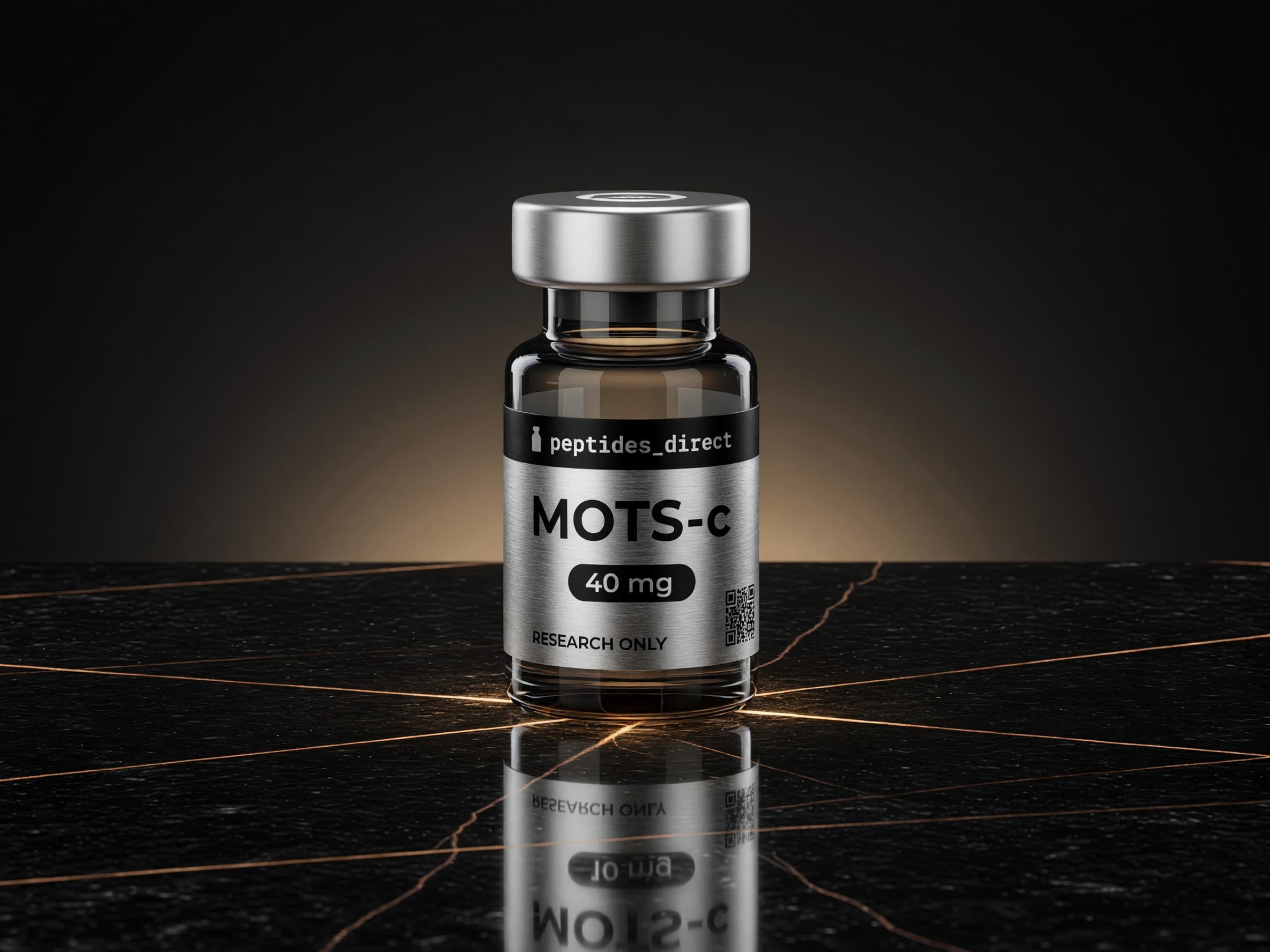
MOTS-c
Mitochondrial-derived signaling peptide (16 amino acids) that mimics the effects of exercise at the cellular level. Activates AMPK, improves glucose uptake, and enhances fat metabolism - a key tool in metabolic and longevity research.
99.86%Third-party lab: Kovera LabsView COA5.01 review€119.99
€138.99
−14%(€19.00)savedFor Research Use Only
This product is sold strictly for in-vitro research and laboratory use. Not intended for human consumption or any in-vivo application.
Payment Methods
Mitochondrial-derived peptide
A 16 amino acid peptide encoded inside the 12S rRNA region of mitochondrial DNA, one of the few known peptides written into the mitochondrial genome itself.
AMPK activator
Triggers the AMPK pathway, the master fuel-sensor that switches cells from storage mode to energy-burning mode in metabolic research.
Exercise-mimetic signal
Levels rise sharply in muscle and blood after exercise in human studies, and MOTS-c injection boosts running capacity in young, middle-aged, and old mice.
Glucose and insulin signaling
Improves glucose uptake in muscle cells and reduces insulin resistance in obese and aged mouse models.
Stress-response gene regulator
Translocates to the nucleus under metabolic stress and switches on antioxidant and stress-defense genes through the NRF2/ARE axis.
Declines with age
Circulating MOTS-c drops in older animals and humans, which is why it is a frequent target in longevity and healthspan research.
Research areas
What is MOTS-c
MOTS-c is a 16 amino acid peptide encoded inside mitochondrial DNA, specifically in the 12S rRNA gene. It was discovered in 2015 at USC and named for "mitochondrial open reading frame of the 12S rRNA type-c". Until then, mitochondrial DNA was thought to code only for the 13 classic respiratory-chain proteins, so MOTS-c opened a new class of signaling molecules called mitochondrial-derived peptides.
Levels of MOTS-c in blood and muscle decline with age and rise sharply after exercise, which is why researchers study it as a metabolic, exercise, and longevity signal.
We supply it in lyophilized (freeze-dried) form, the same molecule used in the published studies.
How it works
Mitochondria do more than produce energy. They also send chemical messages that tell the rest of the cell how much fuel is available and how much stress it is under. MOTS-c is one of those messages. When the cell runs low on energy, MOTS-c interferes with the folate cycle and downstream purine synthesis, which raises AICAR, a natural activator of AMPK. AMPK is the master fuel sensor: once it is switched on, cells pull in more glucose, burn more fat, and dial down energy storage.
Under metabolic stress, MOTS-c also moves into the cell nucleus and activates stress-defense genes through the NRF2 and ARE pathway. This is the link between MOTS-c and the broader research on healthy aging and resilience.
The strongest evidence is in muscle and metabolism. Studies show MOTS-c improves insulin sensitivity in obese and aged mice, increases glucose uptake in muscle cells, and boosts running capacity in young, middle-aged, and old animals. In humans, MOTS-c rises about 12-fold in muscle and roughly 50% in plasma after exercise.
Often studied alongside
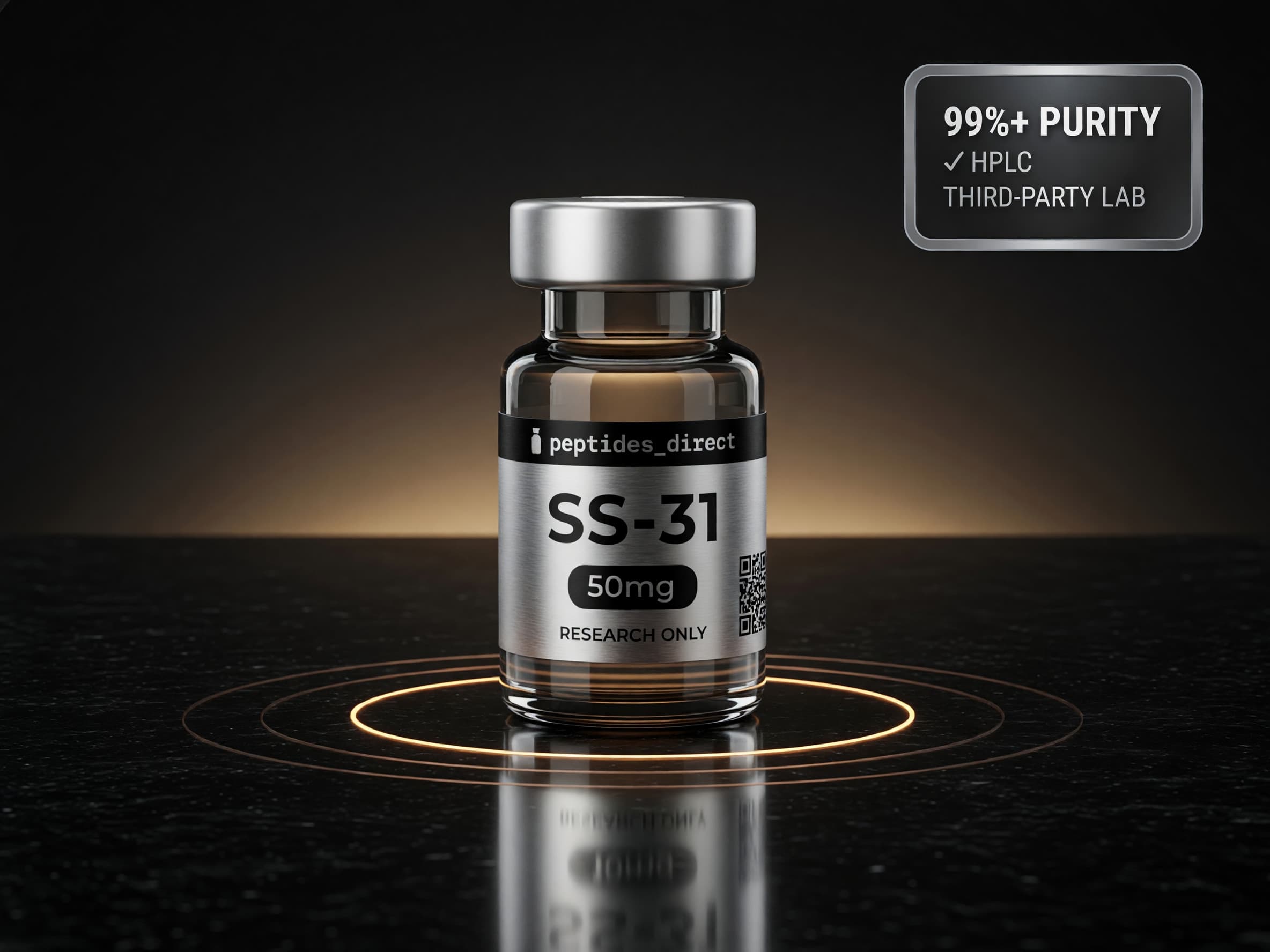
Combined-peptide research often pairs MOTS-c with other mitochondrial and longevity-linked molecules. SS-31 (Elamipretide) targets the inner mitochondrial membrane and is a frequent partner in mitochondrial-health protocols. NAD+ precursors and Epitalon round out the longevity stack most commonly seen in published reviews. All are available in research-grade form below.
Mitochondrial-membrane peptide commonly paired with MOTS-c
Mitochondria-targeted tetrapeptide (Elamipretide) that stabilizes cardiolipin and prevents ROS formation at the source.
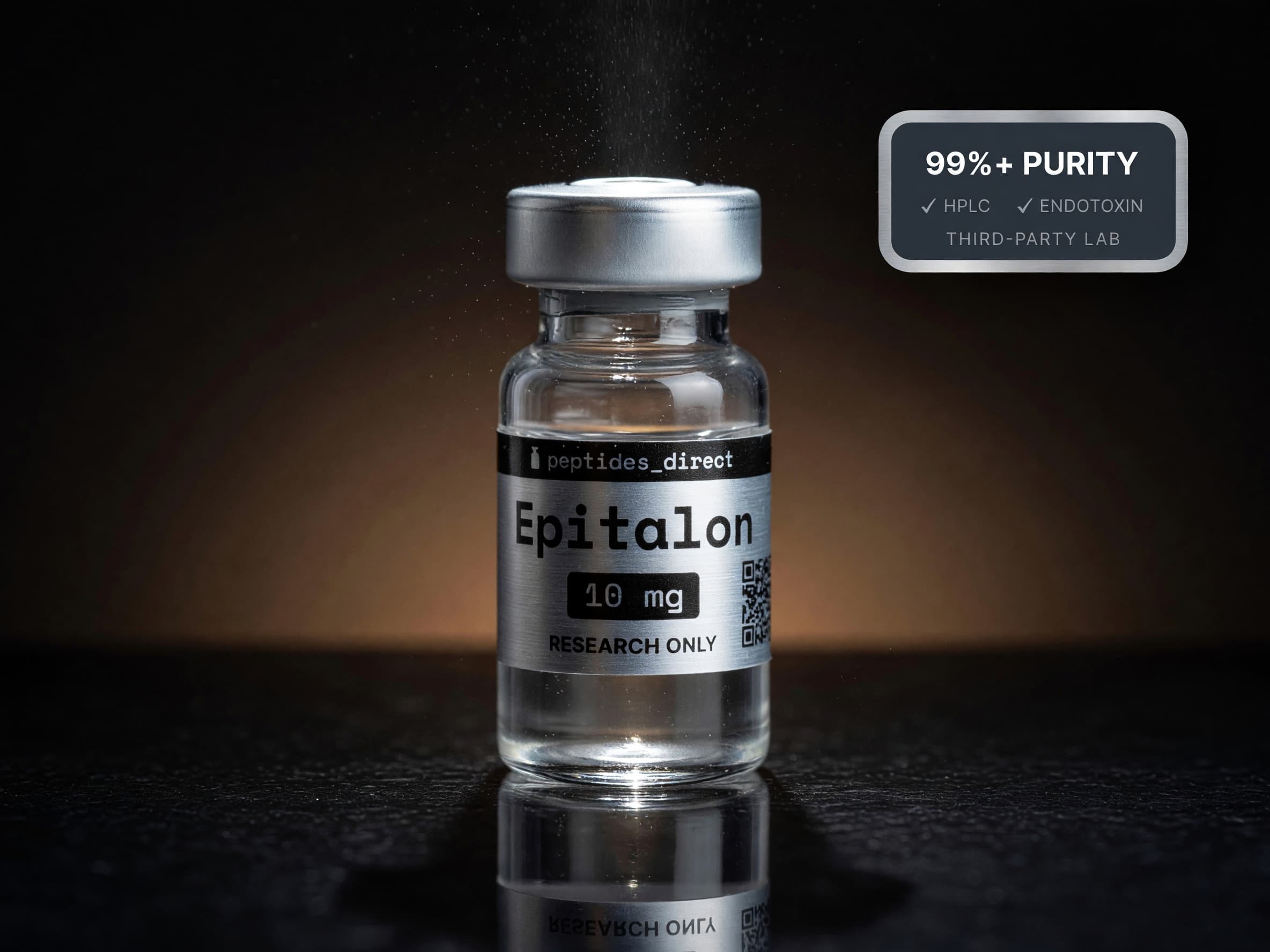
Pineal peptide used in longevity-stack research
Tetrapeptide (Ala-Glu-Asp-Gly) that activates telomerase, the enzyme responsible for maintaining telomere length. One of the most studied peptides in longevity research, developed by Prof. Khavinson at the St. Petersburg Institute of Bioregulation.
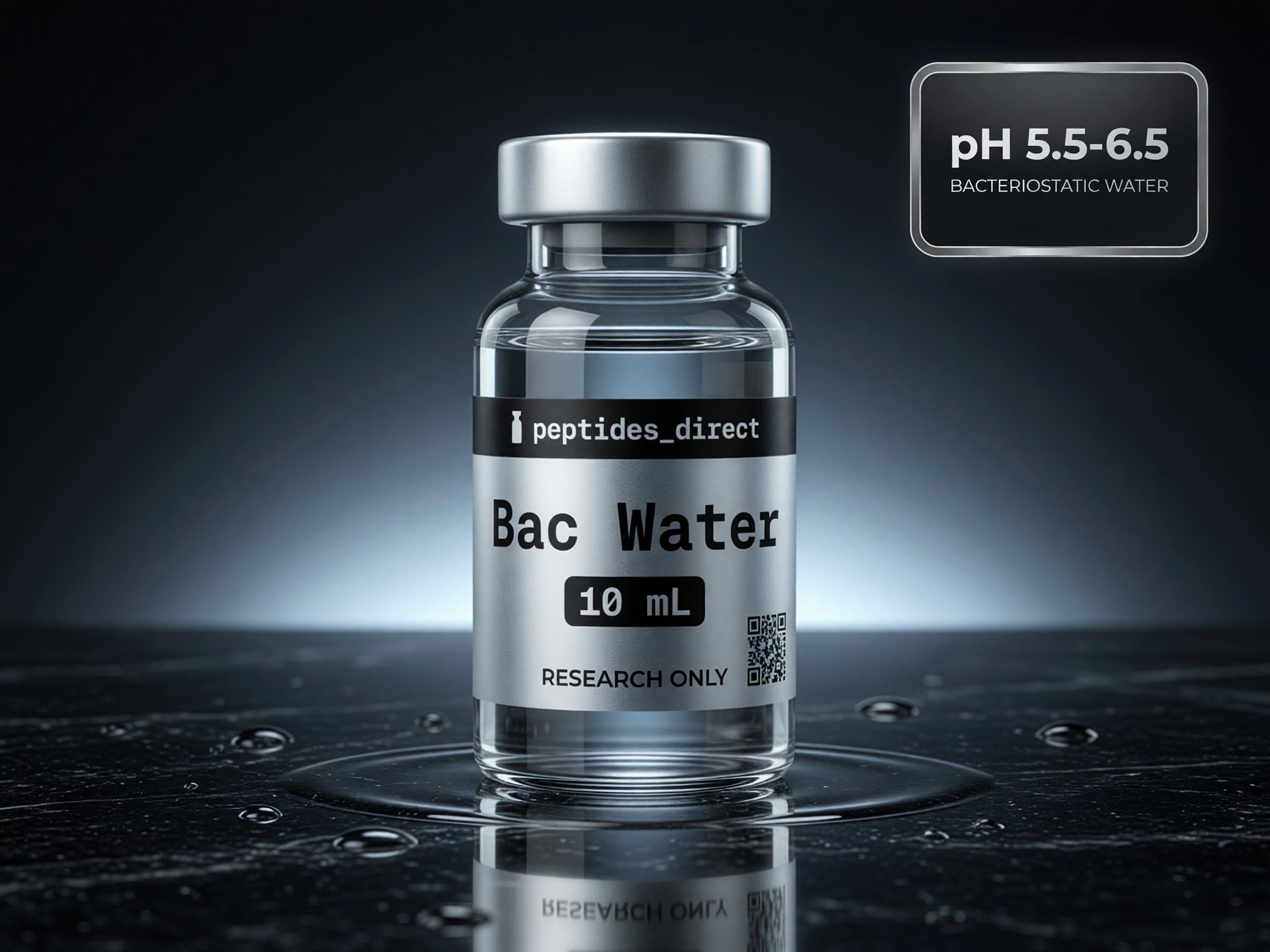
For reconstitution, the standard solvent in published protocols is bacteriostatic or sterile water.
Standard solvent for reconstitution
USP-grade sterile water with 0.9% benzyl alcohol (near-neutral, pH 6.2 to 6.4) - the standard solvent for reconstituting lyophilized peptides. Essential accessory for any peptide research. Each vial is sealed and ready to use.
Documentation
Material specification
Purity
Test method
Form
Storage (sealed)
Storage (reconstituted)
CoA
Selected research
- PMID 25738459
Lee C, et al. The mitochondrial-derived peptide MOTS-c promotes metabolic homeostasis and reduces obesity and insulin resistance
Cell Metab, 2015, original discovery and AMPK mechanism - PMID 29983246
Kim KH, et al. The Mitochondrial-Encoded Peptide MOTS-c Translocates to the Nucleus to Regulate Nuclear Gene Expression in Response to Metabolic Stress
Cell Metab, 2018, nuclear translocation and stress-response genes - PMID 33473109
Reynolds JC, et al. MOTS-c is an exercise-induced mitochondrial-encoded regulator of age-dependent physical decline and muscle homeostasis
Nat Commun, 2021, exercise-mimetic and age-related decline in mice and humans - PMID 36670507
Wan W, et al. Mitochondria-derived peptide MOTS-c: effects and mechanisms related to stress, metabolism and aging
J Transl Med, 2023, Folate-AICAR-AMPK pathway review - PMID 36233287
Mohtashami Z, et al. MOTS-c, the Most Recent Mitochondrial Derived Peptide in Human Aging and Age-Related Diseases
Int J Mol Sci, 2022, aging and age-related disease review - PMID 41520850
Gudiksen A, et al. MOTS-c improves intrinsic muscle mitochondrial bioenergetic health and efficiency in a PGC-1α/AMPK-dependent manner
Free Radic Biol Med, 2026, muscle mitochondrial bioenergetics in transgenic mice
Research use only
This material is sold strictly for in-vitro research and laboratory use. Not intended for human or animal consumption, medical, cosmetic, or household applications. Suitable only for professional laboratory environments.
Storage and stability
- Dry, lyophilized vials keep for months refrigerated, or up to 24 months frozen at -20°C.
- After reconstitution in bacteriostatic water, use within about 30 days at 2 to 8°C, and avoid repeated freeze-thaw.
Reviews
Top
AnonymousA coupon from our review program was granted for this review. 🇩🇪 · August 14, 2026
* Reviewer received a 5% thank-you coupon from our review program, independent of the rating.
Only customers who ordered the product from us can leave a review; we verify this automatically against the order number. Every review submitted is published, regardless of star rating. Rewarded reviews from our coupon program are individually labelled.
Frequently Asked Questions
Technical data sheet
- CAS number
- 1627580-64-6
- Molecular formula
- C₁₀₁H₁₅₂N₂₈O₂₂S₂
- Molar mass
- 2174.60 g/mol
- Type / receptor
- Mitochondrial-derived peptide
- Form
- White lyophilized powder
- Solubility
- Bacteriostatic water (BAC)
- Storage
- -20°C for up to 24 months; 30 days at 2-8°C after reconstitution
Identity data from public chemical references (PubChem). Per-batch purity: see lab reports below.
Frequently bought together
Complete your subcutaneous research workflow