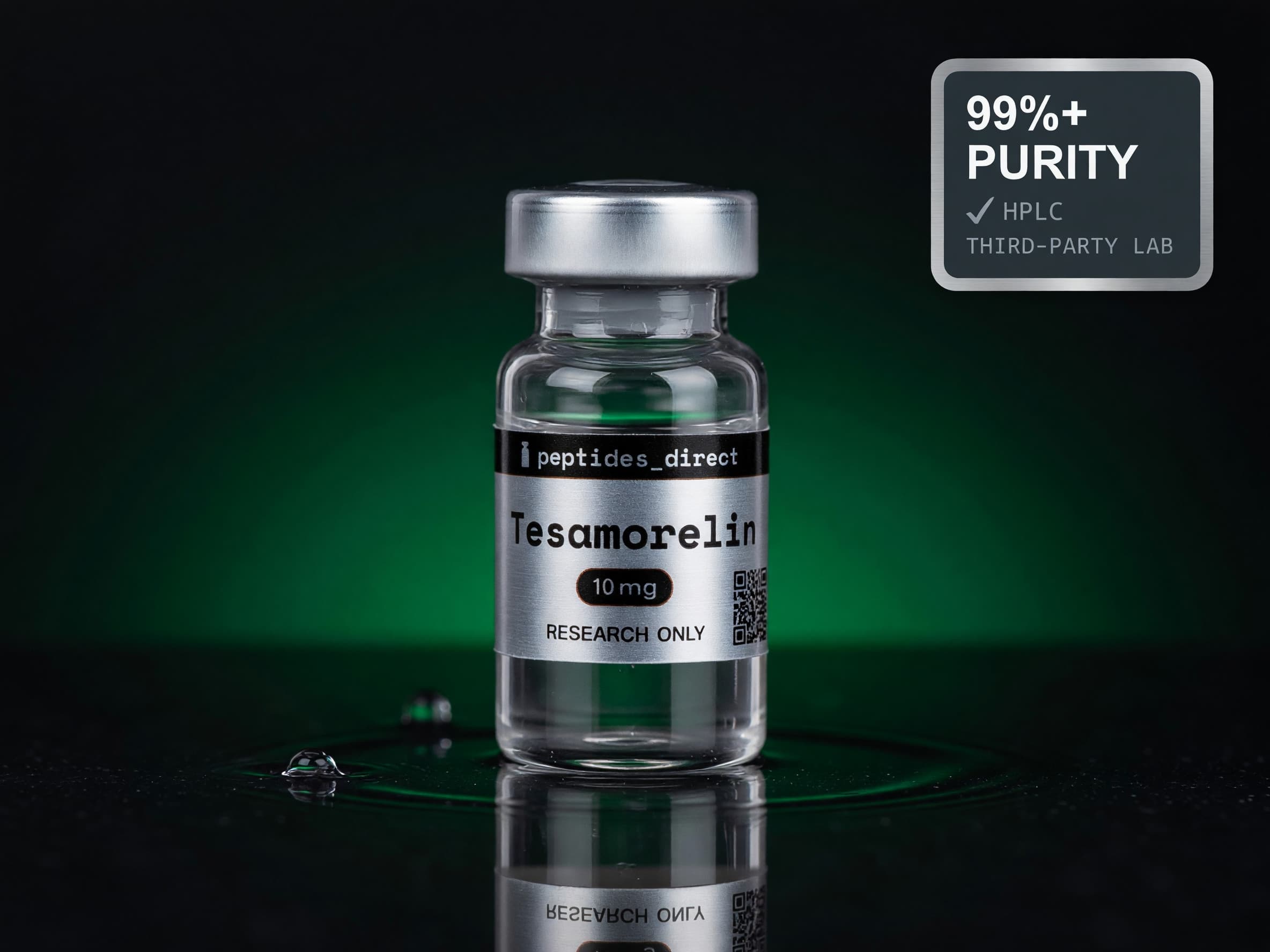
Tesamorelin
Modified GHRH analog for lipodystrophy and metabolic liver research
99.88%Third-party lab: Kovera LabsView COA€64.99
€78.99
−18%(€14.00)savedFor Research Use Only
This product is sold strictly for in-vitro research and laboratory use. Not intended for human consumption or any in-vivo application.
Payment Methods
GHRH analog
Tesamorelin is a synthetic 44 amino acid analog of growth hormone releasing hormone, with an N-terminal modification that resists rapid breakdown by DPP-4.
Pulsatile GH release
Binds GHRH receptors on pituitary somatotrophs and triggers natural, pulsatile growth hormone secretion rather than a flat exogenous spike.
Visceral fat focus
Studied in clinical trials for selective reduction of visceral adipose tissue while sparing subcutaneous fat and lean mass.
IGF-1 axis modulation
Increases circulating IGF-1 through downstream hepatic stimulation, restoring a youthful pattern of the GH and IGF-1 axis in research models.
Liver fat research
Shifts hepatic gene expression toward oxidative phosphorylation and away from inflammation in HIV-associated NAFLD trials.
Cognitive aging research
GHRH stimulation has been studied for its effects on executive function and verbal memory in older adults, including those with mild cognitive impairment.
Research areas
What is Tesamorelin
Tesamorelin is a synthetic 44 amino acid peptide that mirrors human growth hormone releasing hormone (GHRH). A small chemical group (trans-3-hexenoic acid) is added to the N-terminus, which protects the molecule from the enzyme DPP-4 and gives it a much longer working half-life than natural GHRH. It is the first and so far only compound approved by the FDA for the reduction of excess abdominal fat in HIV-associated lipodystrophy, sold under the brand name Egrifta.
We supply it in lyophilized (freeze-dried) form, the same molecule used in the published clinical and laboratory studies.
How it works
Tesamorelin docks onto GHRH receptors on somatotroph cells in the anterior pituitary. The receptor activates an intracellular calcium and cAMP cascade, prompting the cell to synthesize and release growth hormone in the natural pulsatile rhythm. The released GH then travels to the liver and other tissues, where it triggers production of insulin-like growth factor 1 (IGF-1).
The most documented effect is on visceral adipose tissue. In randomized trials in HIV-associated lipodystrophy, tesamorelin reduced visceral fat by roughly 15 to 18 percent over 26 weeks, while subcutaneous fat and lean tissue were preserved. Follow-up work has shown reductions in liver fat in HIV-associated non-alcoholic fatty liver disease and a shift in hepatic gene expression toward oxidative phosphorylation and away from inflammation. Because the GHRH system feeds back on itself, the pulsatile pattern of GH release remains close to physiological, which separates this approach from direct exogenous GH administration in research models.
A separate line of research has examined GHRH stimulation in cognitive aging. In a 20-week controlled trial in older adults, GHRH treatment raised IGF-1 and produced favorable effects on executive function, with positive trends in verbal memory in both healthy older adults and those with mild cognitive impairment. The cognitive findings in HIV cohorts have been more mixed.
Often studied alongside
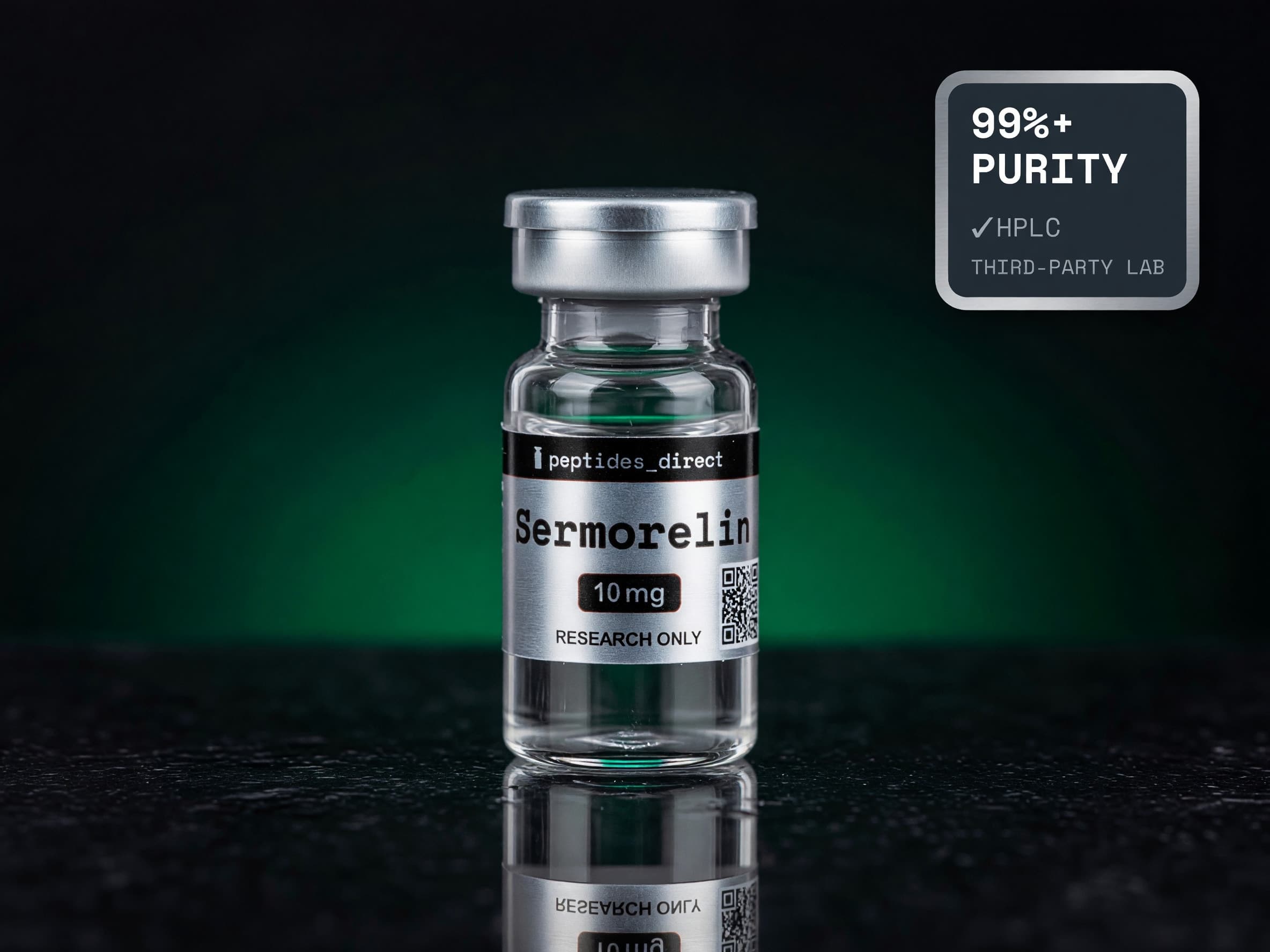
Published tesamorelin trials have been monotherapy, but some researchers in community protocols pair it with growth hormone releasing peptides (GHRPs) such as ipamorelin, which act on a different receptor (GHSR) and amplify GH release through a complementary pathway. Sermorelin, the shorter 29 amino acid GHRH fragment, is often used as a lower-cost alternative when long half-life is not required.
Shorter GHRH fragment in the same receptor family
GHRH(1-29) analog for physiological growth hormone stimulation research
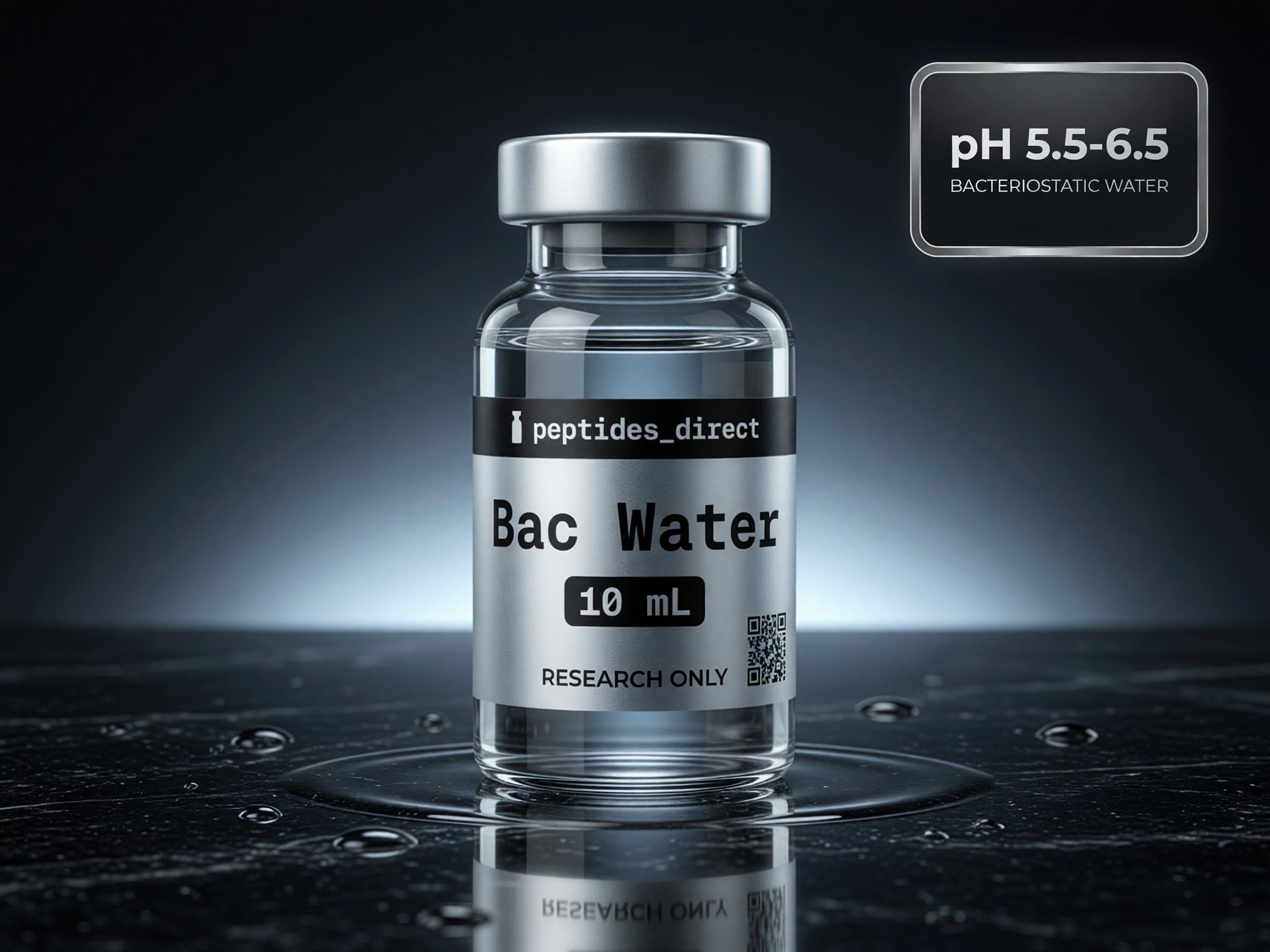
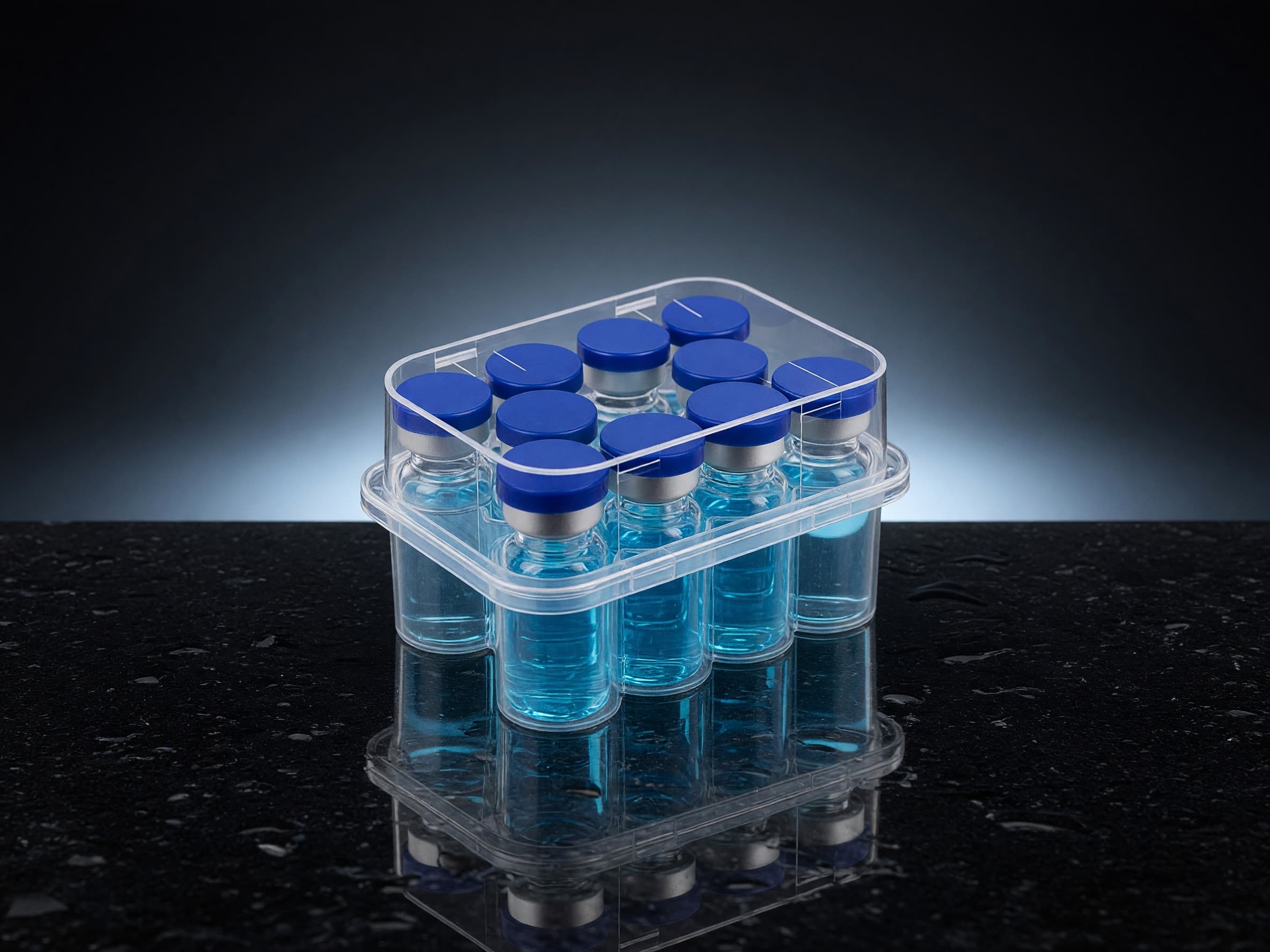
For reconstitution, the standard solvent in published protocols is bacteriostatic water. The dissolved peptide is clear and colorless.
Standard solvent for reconstitution
USP-grade sterile water with 0.9% benzyl alcohol (near-neutral, pH 6.2 to 6.4) - the standard solvent for reconstituting lyophilized peptides. Essential accessory for any peptide research. Each vial is sealed and ready to use.
Documentation
Material specification
Purity
Test method
Form
Storage (sealed)
Storage (reconstituted)
CoA
Selected research
- PMID 25038357
Effect of tesamorelin on visceral fat and liver fat in HIV-infected patients with abdominal fat accumulation: a randomized clinical trial
JAMA, 2014, randomized trial on visceral and hepatic fat - PMID 38905488
Efficacy and safety of tesamorelin in people with HIV on integrase inhibitors
AIDS, 2024, body composition under modern HIV regimens - PMID 32701508
Effects of tesamorelin on hepatic transcriptomic signatures in HIV-associated NAFLD
JCI Insight, 2020, hepatic gene expression and fibrosis - PMID 25358450
Population pharmacokinetic analysis of tesamorelin
Clin Pharmacokinet, 2015, PK and IGF-1 response modeling - PMID 22869065
Effects of growth hormone-releasing hormone on cognitive function in adults with mild cognitive impairment and healthy older adults
Arch Neurol, 2012, GHRH and cognition trial - PMID 21668043
Tesamorelin: a review of its use in the management of HIV-associated lipodystrophy
Drugs, 2011, clinical use review - PMID 39813152
Effects of tesamorelin on neurocognitive impairment in persons with HIV and abdominal obesity
J Infect Dis, 2025, neurocognitive substudy
Research use only
This material is sold strictly for in-vitro research and laboratory use. Not intended for human or animal consumption, medical, cosmetic, or household applications. Suitable only for professional laboratory environments.
Reconstitution: sensitive peptide
Some peptides react sensitively to the pH and quality of the reconstitution water and can turn cloudy or not fully dissolve if reconstituted incorrectly (for example with tap water, non-sterile water, old or contaminated bacteriostatic water, or the wrong water-to-peptide ratio). This is a common reconstitution matter, not an automatic sign of a faulty vial. Always reconstitute with fresh, pharmaceutical-grade diluent as prescribed by the product-specific protocol on this page (bacteriostatic or sterile water, or dilute acetic-acid water first where the page says so), add it slowly down the inner wall of the vial, and swirl gently instead of shaking. If it still looks cloudy right after mixing, let it rest for 10 to 15 minutes and swirl again before judging clarity. Correct technique and suitable water are the customer's responsibility, and so is following the product-specific instructions on this page. Where a peptide needs an acid-first protocol (it says so above, for example for AOD-9604 and Tesamorelin), reconstituting it in plain bacteriostatic water instead is a handling error, not a defect, and is not covered. If a vial stays cloudy after these steps, contact us with clear photos. We replace it free of charge once if you reconstituted with water from our own range or with factory-sealed water from a pharmaceutical manufacturer and followed the instructions on this page; with water of unknown origin the cause cannot be narrowed down and the case is not covered.
Best reconstituted in near-neutral bacteriostatic water (around pH 5.7, the USP water value). We recommend checking your water's pH with a cheap meter first: each peptide has its own ideal range, and matching the water is your responsibility.
Tesamorelin dissolves most reliably acid-first: 0.2 to 0.4 ml of dilute acetic-acid water first, then top up with bacteriostatic water. Full steps are in the FAQ below.
Reconstitution itself, including the choice of diluent, volumes and technique, is part of the research work and lies with the customer; how a mix behaves once liquid meets powder is outside our control. Your statutory rights regarding genuine product defects remain unaffected.
Why peptides turn cloudy: the reconstitution guideStorage and stability
- Dry, lyophilized vials keep for months refrigerated, or up to 24 months frozen at -20°C.
- After reconstitution in bacteriostatic water, use within about 30 days at 2 to 8°C, and avoid repeated freeze-thaw.
Reviews
No reviews yet. Write the first one!
Only customers who ordered the product from us can leave a review; we verify this automatically against the order number. Every review submitted is published, regardless of star rating. Rewarded reviews from our coupon program are individually labelled.
Frequently Asked Questions
Technical data sheet
- CAS number
- 218949-48-5
- Molecular formula
- C₂₂₁H₃₆₆N₇₂O₆₇S
- Molar mass
- 5135.86 g/mol
- Type / receptor
- GHRH analog
- Form
- White lyophilized powder
- Solubility
- Bacteriostatic water (BAC)
- Storage
- -20°C for up to 24 months; 30 days at 2-8°C after reconstitution
Identity data from public chemical references (PubChem). Per-batch purity: see lab reports below.
Frequently bought together
Complete your subcutaneous research workflow