LL-37
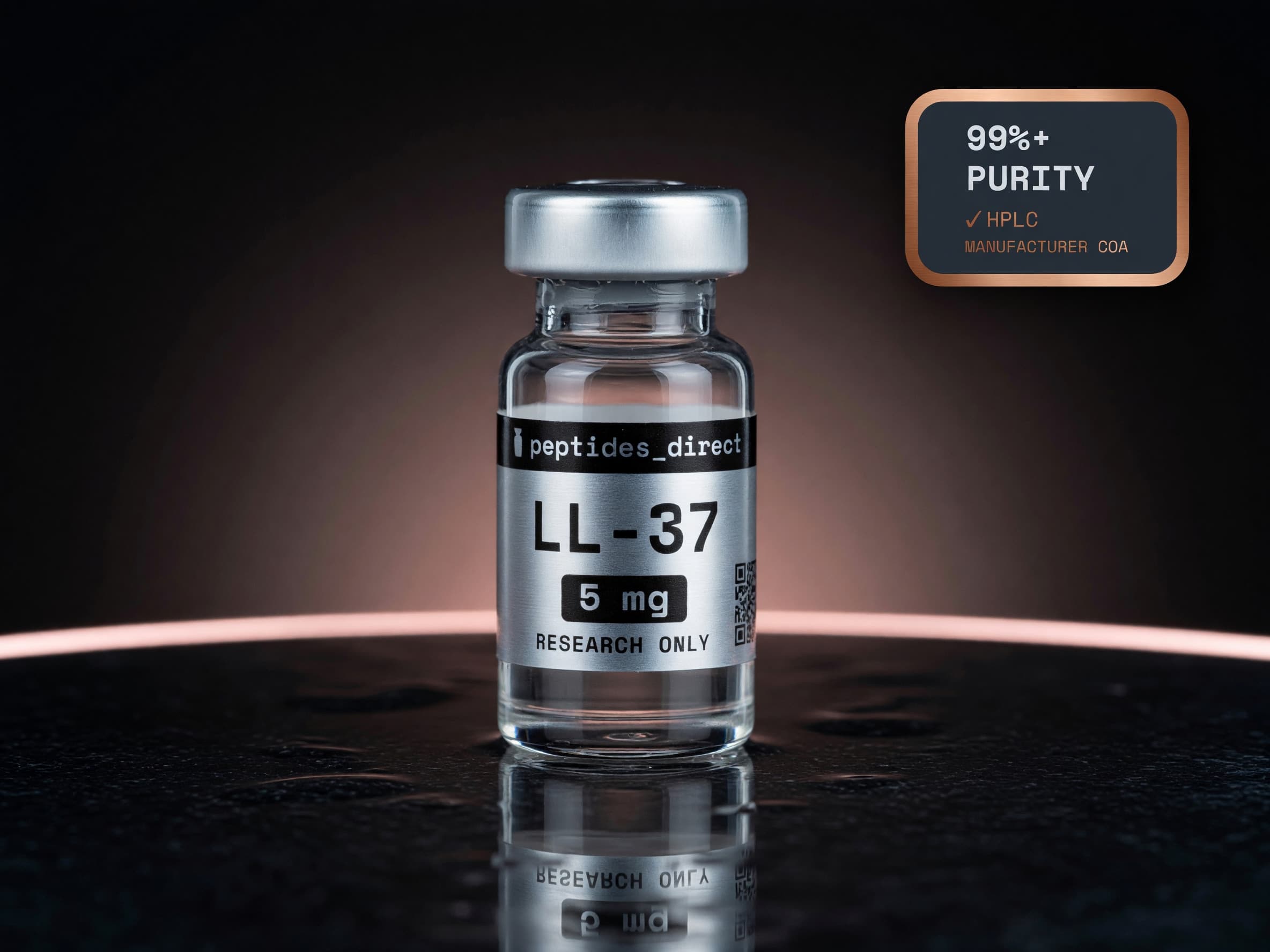
Cathelicidin-derived antimicrobial peptide (37 amino acids). Researched for innate immunity, antimicrobial activity, and wound-healing pathways. ≥99% HPLC purity with Janoshik CoA.
99.15%Third-party lab: JanoshikView COA€57.99
€68.99
−16%(€11.00)savedFor Research Use Only
This product is sold strictly for in-vitro research and laboratory use. Not intended for human consumption or any in-vivo application.
Payment Methods
Human cathelicidin
LL-37 is the only cathelicidin antimicrobial peptide made by the human body. It is 37 amino acids long, cleaved from the precursor protein hCAP18 inside neutrophils, skin, and mucosal cells.
Disrupts microbial membranes
The peptide folds into an amphipathic helix on contact with bacteria. It inserts into the membrane, breaks its integrity, and kills a wide range of gram-positive, gram-negative, and fungal targets in lab tests.
Anti-biofilm activity
Research shows LL-37 prevents bacterial attachment and breaks down established biofilms, including Staphylococcus aureus and Pseudomonas aeruginosa, at concentrations below the killing dose.
Vitamin D regulated
The cathelicidin gene carries a vitamin D response element. Active vitamin D switches LL-37 production on, which is one of the key links between vitamin D status and innate immunity in research.
Wound-healing signal
Studies report that LL-37 drives keratinocyte migration, recruits new blood vessels, and stimulates the cells that close wounds, with strong interest in chronic and diabetic wound research.
Immunomodulation
Beyond direct killing, LL-37 tunes cytokine output, neutralizes lipopolysaccharide (the toxin behind sepsis), and balances inflammation in immune-cell models.
Research areas
What is LL-37
LL-37 is the active form of the human cathelicidin protein, named after the two leucines at the start of its 37 amino-acid chain. It is the only cathelicidin made by humans and is stored in neutrophils, sweat, saliva, gut mucus, and the outer layers of skin. When the body encounters bacteria, the precursor hCAP18 is cleaved and LL-37 is released as a first-line innate-immunity defender.
We supply it as a synthetic peptide in lyophilized (freeze-dried) form: identical in sequence to the molecule used in published studies.
How it works
LL-37 is unstructured in solution but snaps into a helical shape on contact with negatively charged bacterial membranes. The helix has a water-loving side and a fat-loving side, which lets it insert into the membrane, punch holes, and kill the cell. The same amphipathic structure is what gives LL-37 its broad activity against bacteria, fungi, and enveloped viruses in laboratory tests.
The peptide also acts as a signal. It binds bacterial endotoxin (LPS) and dampens the runaway inflammation seen in sepsis models. It triggers keratinocyte and endothelial-cell migration, which is the foundation of the strong wound-healing signal reported across cell-culture and animal studies, especially for chronic and diabetic wounds. And it works against biofilms: research shows LL-37 stops bacteria from attaching to surfaces and disassembles existing biofilm matrix at concentrations lower than the killing dose.
A second layer of biology makes LL-37 special. The cathelicidin gene carries a vitamin D response element, so active vitamin D directly turns LL-37 production on. This is one of the most studied molecular links between vitamin D status and innate immunity.
Often studied alongside
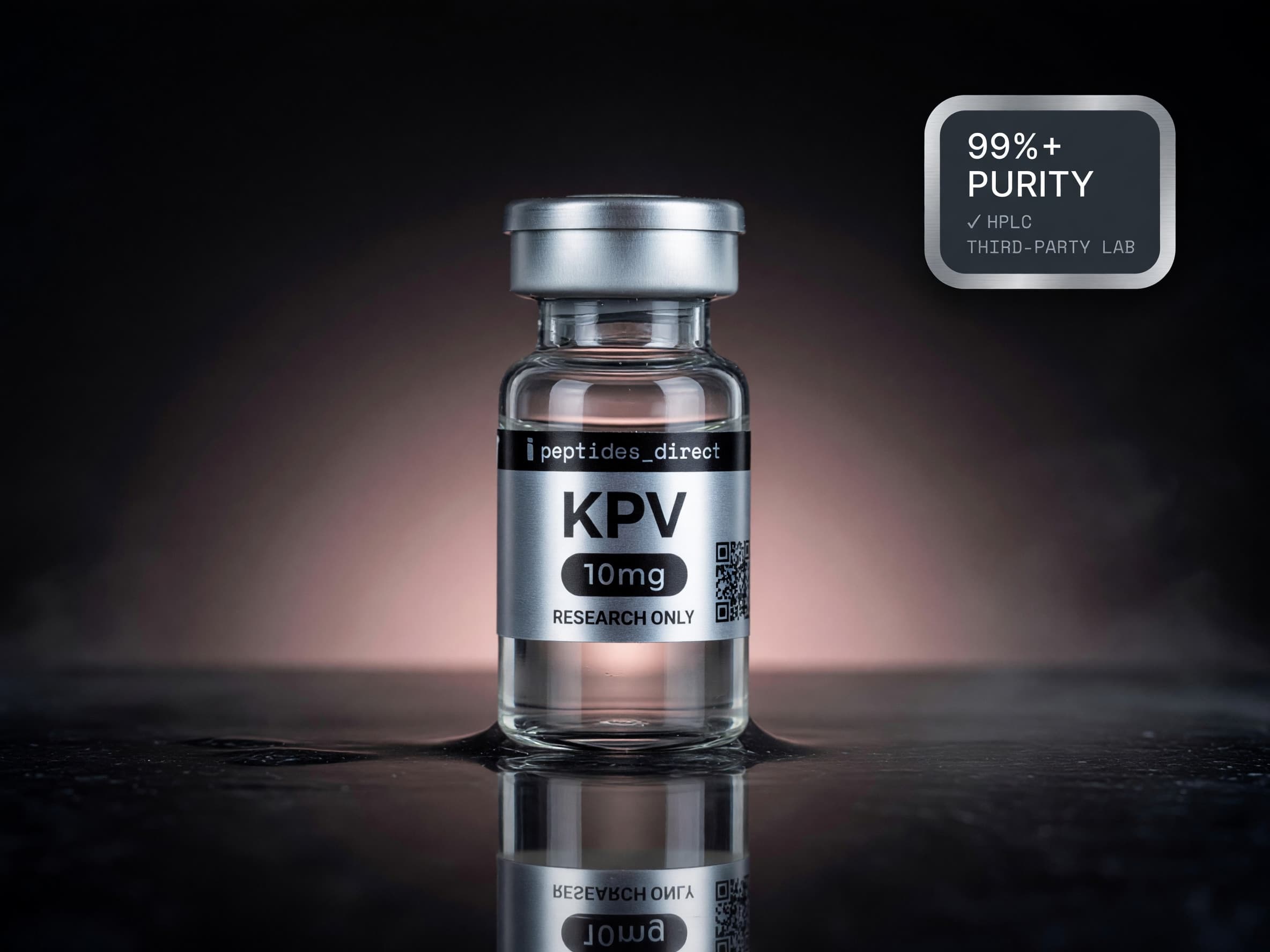
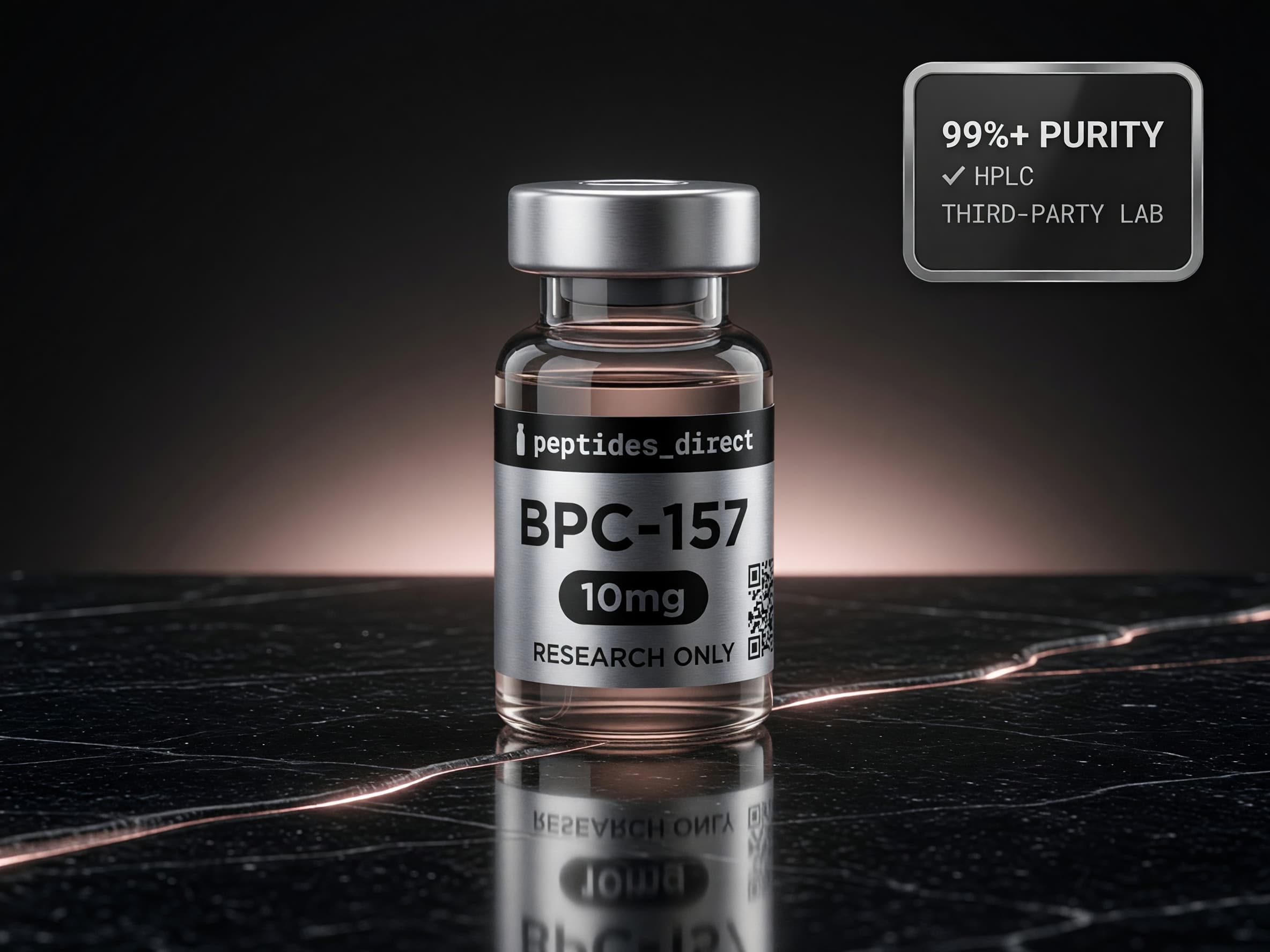
Combined-peptide research often pairs LL-37 with KPV, the small anti-inflammatory fragment of alpha-MSH, to explore antimicrobial activity together with cytokine calming. Wound-focused work pairs it with BPC-157 for tissue repair, and stack-style protocols sometimes group it with the regenerative KLOW combination.
Anti-inflammatory peptide commonly paired with LL-37
Anti-inflammatory tripeptide derived from alpha-MSH (positions 11-13). Inhibits NF-kB signaling, supports gut barrier integrity, and shows antimicrobial activity. A targeted approach to inflammation research without broad immunosuppression.
Wound-healing peptide studied alongside LL-37
Gastric pentadecapeptide (15 amino acids) known for exceptional tissue repair properties. Promotes wound healing, angiogenesis, and cytoprotection across tendons, muscles, gut, and nerves. Over 30 years of preclinical research.
Regenerative stack often discussed with LL-37
4-in-1 anti-aging peptide blend: GHK-Cu 50mg + BPC-157 10mg + TB-500 10mg + KPV 10mg. Targets collagen synthesis, tissue regeneration, skin repair, and anti-inflammatory pathways.
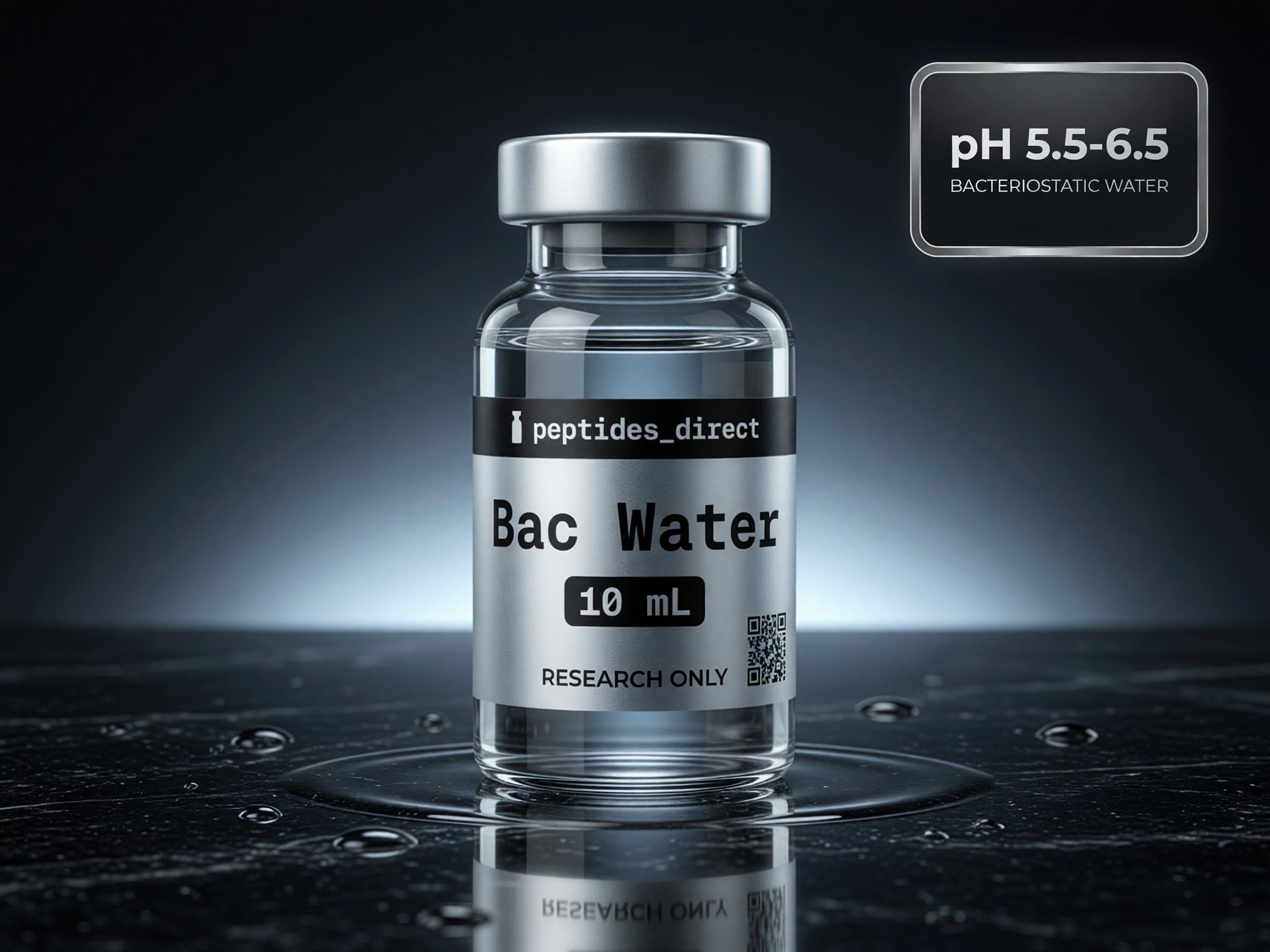
For reconstitution, the standard solvent in published protocols is bacteriostatic or sterile water.
Standard solvent for reconstitution
USP-grade sterile water with 0.9% benzyl alcohol (near-neutral, pH 6.2 to 6.4) - the standard solvent for reconstituting lyophilized peptides. Essential accessory for any peptide research. Each vial is sealed and ready to use.
Documentation
Material specification
Purity
Test method
Form
Storage (sealed)
Storage (reconstituted)
CoA
Selected research
- PMID 24463069
High-quality 3D structures shine light on antibacterial, anti-biofilm and antiviral activities of human cathelicidin LL-37 and its fragments
Biochim Biophys Acta, 2014, structural basis of antimicrobial mechanism - PMID 36781570
Antibiofilm properties of cathelicidin LL-37: an in-depth review
World J Microbiol Biotechnol, 2023, biofilm prevention and disruption review - PMID 34072318
The Potential of Human Peptide LL-37 as an Antimicrobial and Anti-Biofilm Agent
Antibiotics (Basel), 2021, broad antimicrobial and biofilm review - PMID 17513768
IFN-gamma- and TNF-independent vitamin D-inducible human suppression of mycobacteria: the role of cathelicidin LL-37
J Immunol, 2007, vitamin D induction of LL-37 in innate immunity - PMID 32825174
Therapeutic Potential of Cathelicidin Peptide LL-37, an Antimicrobial Agent, in a Murine Sepsis Model
Int J Mol Sci, 2020, sepsis and LPS neutralization model - PMID 34687253
Evaluation of LL-37 in healing of hard-to-heal venous leg ulcers: a multicentric prospective randomized placebo-controlled clinical trial
Wound Repair Regen, 2021, chronic wound clinical research - PMID 38423213
Cathelicidin LL-37 promotes wound healing in diabetic mice by regulating TFEB-dependent autophagy
Peptides, 2024, diabetic wound-healing mechanism
Research use only
This material is sold strictly for in-vitro research and laboratory use. Not intended for human or animal consumption, medical, cosmetic, or household applications. Suitable only for professional laboratory environments.
Reconstitution: sensitive peptide
Some peptides react sensitively to the pH and quality of the reconstitution water and can turn cloudy or not fully dissolve if reconstituted incorrectly (for example with tap water, non-sterile water, old or contaminated bacteriostatic water, or the wrong water-to-peptide ratio). This is a common reconstitution matter, not an automatic sign of a faulty vial. Always reconstitute with fresh, pharmaceutical-grade diluent as prescribed by the product-specific protocol on this page (bacteriostatic or sterile water, or dilute acetic-acid water first where the page says so), add it slowly down the inner wall of the vial, and swirl gently instead of shaking. If it still looks cloudy right after mixing, let it rest for 10 to 15 minutes and swirl again before judging clarity. Correct technique and suitable water are the customer's responsibility, and so is following the product-specific instructions on this page. Where a peptide needs an acid-first protocol (it says so above, for example for AOD-9604 and Tesamorelin), reconstituting it in plain bacteriostatic water instead is a handling error, not a defect, and is not covered. If a vial stays cloudy after these steps, contact us with clear photos. We replace it free of charge once if you reconstituted with water from our own range or with factory-sealed water from a pharmaceutical manufacturer and followed the instructions on this page; with water of unknown origin the cause cannot be narrowed down and the case is not covered.
Best reconstituted in near-neutral bacteriostatic water (around pH 5.7, the USP water value). We recommend checking your water's pH with a cheap meter first: each peptide has its own ideal range, and matching the water is your responsibility.
Reconstitution itself, including the choice of diluent, volumes and technique, is part of the research work and lies with the customer; how a mix behaves once liquid meets powder is outside our control. Your statutory rights regarding genuine product defects remain unaffected.
Why peptides turn cloudy: the reconstitution guideStorage and stability
- Dry, lyophilized vials keep for months refrigerated, or up to 24 months frozen at -20°C.
- After reconstitution in bacteriostatic water, use within about 30 days at 2 to 8°C, and avoid repeated freeze-thaw.
Reviews
No reviews yet. Write the first one!
Only customers who ordered the product from us can leave a review; we verify this automatically against the order number. Every review submitted is published, regardless of star rating. Rewarded reviews from our coupon program are individually labelled.
Frequently Asked Questions
Technical data sheet
- CAS number
- 154947-66-7
- Molecular formula
- C₂₀₅H₃₄₀N₆₀O₅₃
- Molar mass
- 4493.26 g/mol
- Type / receptor
- Antimicrobial cathelicidin peptide
- Form
- White lyophilized powder
- Solubility
- Bacteriostatic water (BAC)
- Storage
- -20°C for up to 24 months; 30 days at 2-8°C after reconstitution
Identity data from public chemical references (PubChem). Per-batch purity: see lab reports below.
Frequently bought together
Complete your subcutaneous research workflow