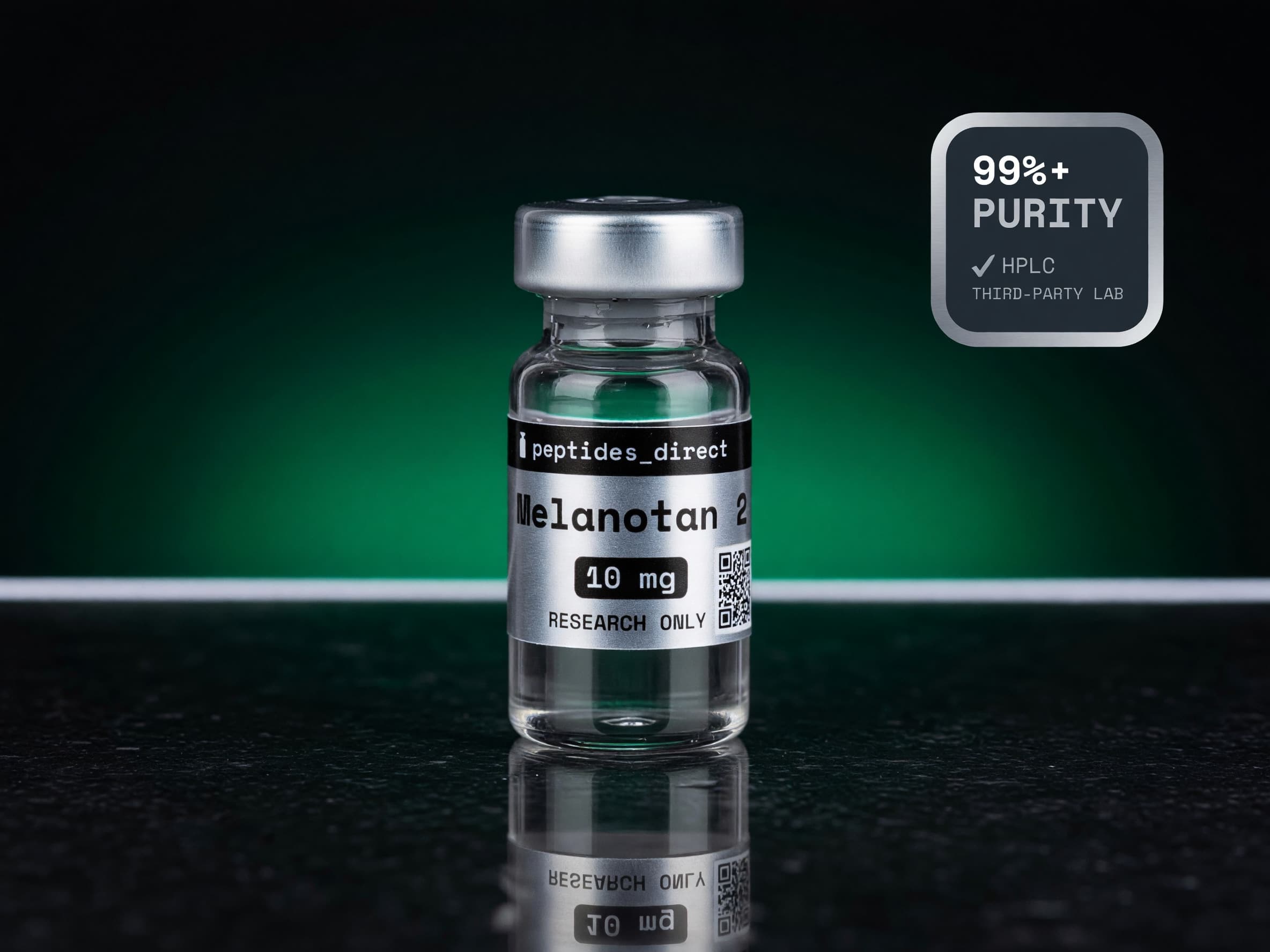
Melanotan-2
Tanning peptide that activates melanin production in the skin. Stimulates melanocyte receptors for natural UV-free pigmentation. Also researched for appetite regulation and libido effects.
99.66%Third-party lab: JanoshikView COA€29.99
€34.99
−14%(€5.00)savedFor Research Use Only
This product is sold strictly for in-vitro research and laboratory use. Not intended for human consumption or any in-vivo application.
Payment Methods
Synthetic alpha-MSH analog
Melanotan-2 is a small cyclic peptide modeled on alpha-melanocyte-stimulating hormone (alpha-MSH), the body's own signal at melanocortin receptors.
Binds multiple melanocortin receptors
Studied as a non-selective agonist at MC1R, MC3R, MC4R, and MC5R. Native alpha-MSH is broken down quickly; the cyclic structure of MT-2 stays active much longer in laboratory assays.
MC1R and melanogenesis research
MC1R sits on melanocytes and controls the switch from red-yellow pheomelanin to brown-black eumelanin. MT-2 is a standard tool for studying this pathway in cell and animal models.
Photoprotection studies
Used in research on how melanocortin signaling and pigment type relate to UV-induced DNA damage in cultured melanocytes.
MC4R appetite and behavior research
MC4R is a central regulator of feeding and energy balance. MT-2 is one of the most cited probes in laboratory studies of MC4R signaling.
Reference compound for SAR
The Nle4, D-Phe7, and Asp-Lys lactam modifications make MT-2 a benchmark in structure-activity studies of melanocortin peptides.
Research areas
What is Melanotan-2
Melanotan-2 (MT-2, MT-II) is a synthetic cyclic seven-residue peptide. It was designed in the 1980s and 1990s at the University of Arizona as a more stable analog of alpha-MSH, the natural ligand at melanocortin receptors. Three changes set it apart from the parent hormone: a norleucine in position 4, a D-phenylalanine in position 7, and a lactam ring closing the molecule between aspartate and lysine. Together these changes resist enzymatic breakdown and lock the peptide in a shape that binds melanocortin receptors with high affinity.
We supply Melanotan-2 in lyophilized (freeze-dried) form, the same format used in published research protocols.
How it works
The melanocortin receptor family has five members. MT-2 acts as a non-selective agonist at four of them: MC1R, MC3R, MC4R, and MC5R. It does not engage MC2R, the adrenal receptor.
At MC1R on melanocytes, receptor activation raises intracellular cAMP, which drives the transcription factor MITF and shifts pigment production toward eumelanin. This is the pathway most often studied in cell-culture and rodent models of melanogenesis. MC4R is the central appetite and behavior receptor and is widely studied in feeding, energy-balance, and arousal research. MC3R and MC5R add further branches involved in metabolism and exocrine biology.
Because MT-2 hits several melanocortin receptors at once, it is used in laboratories as a broad probe to map melanocortin signaling, rather than as a tool for any single pathway in isolation.
Often studied alongside
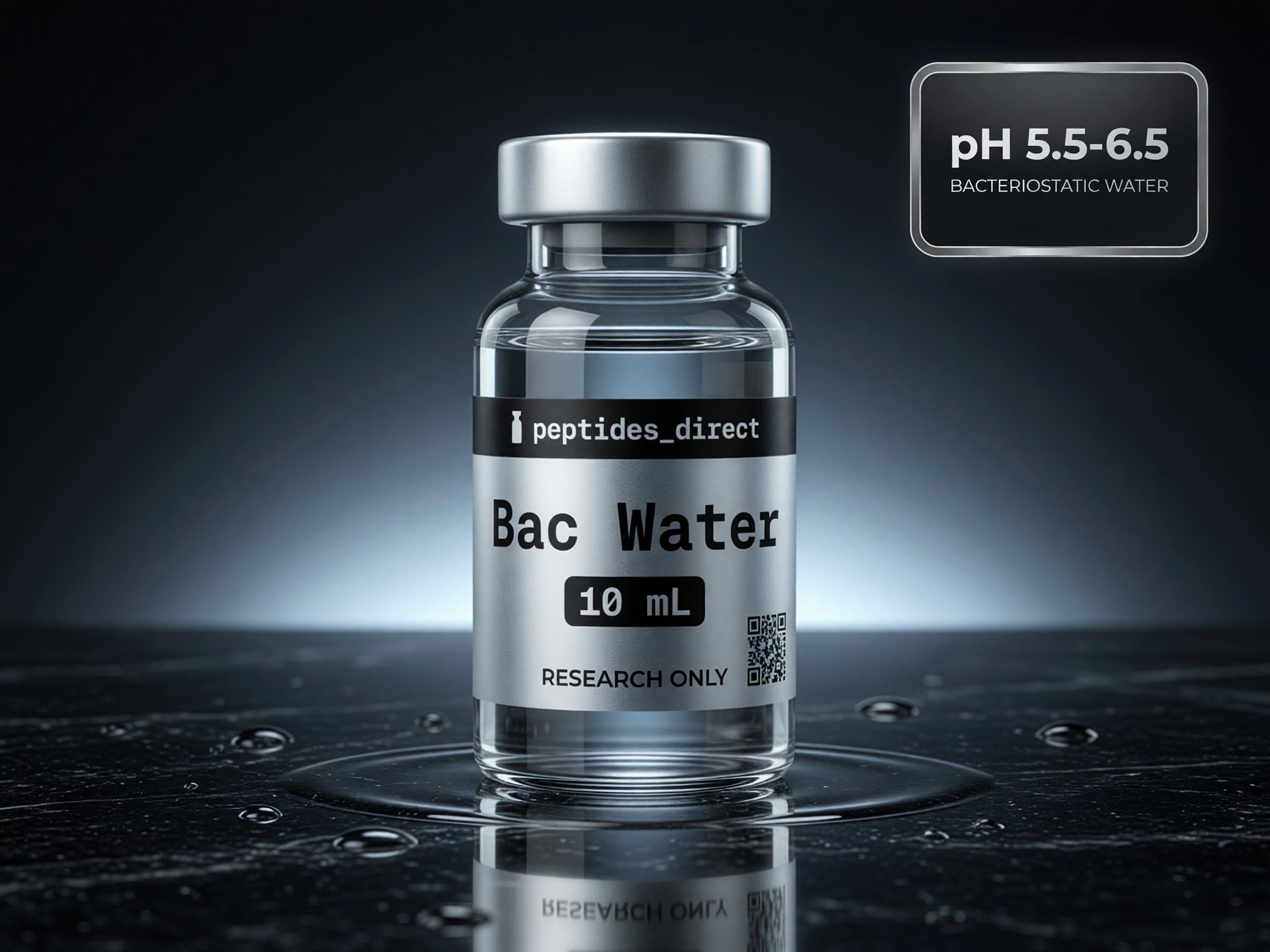
For reconstitution, the standard solvent in published protocols is bacteriostatic or sterile water. Lyophilized MT-2 dissolves into a clear solution and is typically aliquoted and refrigerated for short-term laboratory use.
Standard solvent for reconstitution
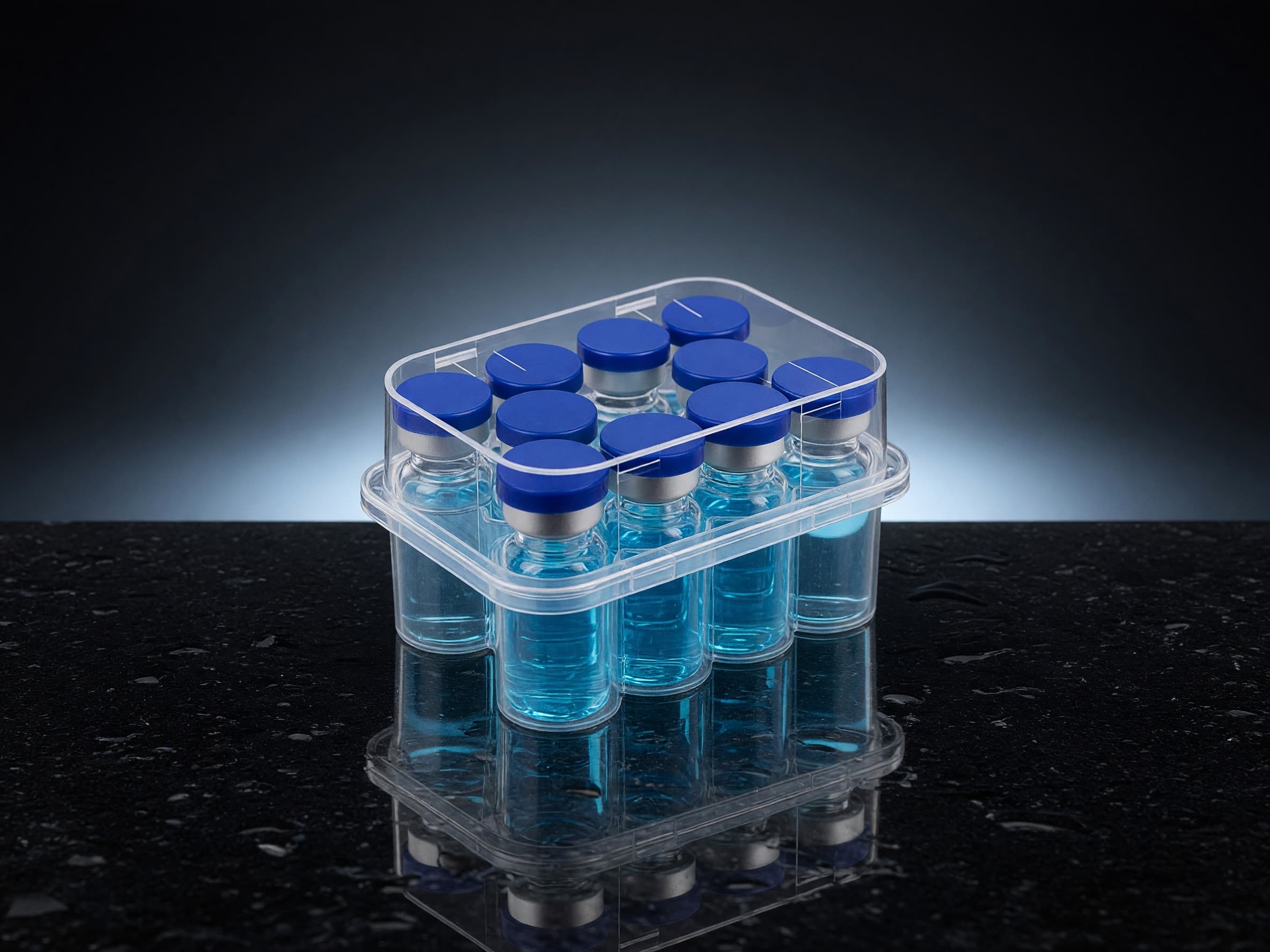
USP-grade sterile water with 0.9% benzyl alcohol (near-neutral, pH 6.2 to 6.4) - the standard solvent for reconstituting lyophilized peptides. Essential accessory for any peptide research. Each vial is sealed and ready to use.
In the wider melanocortin literature, MT-2 is frequently compared with afamelanotide (Melanotan-1), the linear MC1R-selective analog. Side-by-side experiments help researchers tell apart MC1R-driven effects from those involving MC3R, MC4R, or MC5R.
Documentation
Material specification
Purity
Test method
Form
Storage (sealed)
Storage (reconstituted)
CoA
Selected research
- PMID 8637402
Dorr RT et al. Evaluation of melanotan-II, a superpotent cyclic melanotropic peptide in a pilot phase-I clinical study
Life Sci, 1996, early human pharmacology of MT-II - PMID 16293341
Fitzgerald LM et al. Effect of MELANOTAN, [Nle4, D-Phe7]-alpha-MSH, on melanin synthesis in humans with MC1R variant alleles
Peptides, 2006, MC1R variant melanin response - PMID 12591111
Ter Laak MP et al. The potent melanocortin receptor agonist melanotan-II promotes peripheral nerve regeneration and has neuroprotective properties in the rat
Eur J Pharmacol, 2003, neuroprotection model - PMID 12535159
Raposinho PD, White RB, Aubert ML. The melanocortin agonist Melanotan-II reduces the orexigenic and adipogenic effects of neuropeptide Y in the male rat
J Neuroendocrinol, 2003, MC4R appetite and energy-balance research - PMID 19043625
Ryakhovsky VV et al. The first preparative solution phase synthesis of melanotan II
Beilstein J Org Chem, 2008, structure and synthesis reference - PMID 34464955
Gilhooley E, Daly S, McKenna D. Melanotan II User Experience: A Qualitative Study of Online Discussion Forums
Dermatology, 2021, side-effect profile reported in the dermatology literature - PMID 24355990
Hjuler KF, Lorentzen HF. Melanoma associated with the use of melanotan-II
Dermatology, 2014, dermatologic case report
Research use only
This material is sold strictly for in-vitro research and laboratory use. Not intended for human or animal consumption, medical, cosmetic, or household applications. Suitable only for professional laboratory environments.
Storage and stability
- Dry, lyophilized vials keep for months refrigerated, or up to 24 months frozen at -20°C.
- After reconstitution in bacteriostatic water, use within about 30 days at 2 to 8°C, and avoid repeated freeze-thaw.
Reviews
No reviews yet. Write the first one!
Only customers who ordered the product from us can leave a review; we verify this automatically against the order number. Every review submitted is published, regardless of star rating. Rewarded reviews from our coupon program are individually labelled.
Frequently Asked Questions
Technical data sheet
- CAS number
- 121062-08-6
- Molecular formula
- C₅₀H₆₉N₁₅O₉
- Molar mass
- 1024.18 g/mol
- Type / receptor
- Melanocortin receptor agonist
- Form
- White lyophilized powder
- Solubility
- Bacteriostatic water (BAC)
- Storage
- -20°C for up to 24 months; 30 days at 2-8°C after reconstitution
Identity data from public chemical references (PubChem). Per-batch purity: see lab reports below.
Frequently bought together
Complete your subcutaneous research workflow