Study Reference
For each peptide we stock, a short plain-language look at the published research: what it is, how studies used it with doses exactly as published, what they measured, and how solid the evidence is, with PubMed sources. We report what studies found, we do not give dosing advice.
Longevity

GHK-CuGHK-Cu is the copper(II) complex of the tripeptide glycyl-L-histidyl-L-lysine, a small peptide that occurs naturally in human plasma, saliva, and urine and declines with age. It has been studied mostly in cell culture and animals as a signal that can stimulate collagen and growth-factor production by fibroblasts, support wound healing and angiogenesis, and reduce oxidative-stress and inflammatory markers.SS-31SS-31, also called elamipretide (MTP-131, Bendavia), is a synthetic aromatic-cationic tetrapeptide that crosses cell membranes, concentrates in the inner mitochondrial membrane, and binds the phospholipid cardiolipin. By stabilizing cardiolipin it is studied for improving electron-transport-chain efficiency, reducing mitochondrial reactive oxygen species, and restoring cellular energy output. It has been tested in humans for heart failure, primary mitochondrial myopathy, and dry age-related macular degeneration with geographic atrophy, and in animals for cardiac aging and ischemia-reperfusion injury. Several of its pivotal human trials missed their primary endpoints.MOTS-cMOTS-c is a 16-amino-acid peptide encoded inside the mitochondrial 12S rRNA gene. In animal studies it activates the cellular energy sensor AMPK and is studied mainly for improving insulin sensitivity, reversing diet- and age-related metabolic decline, and boosting exercise/running capacity. In humans it is mostly studied as a naturally circulating peptide that rises with exercise, not yet as an administered drug.NAD+NAD+ (nicotinamide adenine dinucleotide) is the central coenzyme that cells use to move electrons in energy metabolism and to fuel enzymes such as sirtuins and PARPs. When given by injection or IV drip it is marketed for "anti-aging", energy and recovery, but the direct human evidence for injected NAD+ itself is thin: most of the rigorous human data are for the oral precursors NR and NMN, which the body converts into NAD+, not for the intact molecule given by vein.EpitalonEpitalon (also spelled Epithalon, sequence Ala-Glu-Asp-Gly, abbreviated AEDG) is a synthetic four-amino-acid peptide developed by Vladimir Khavinson's group in St. Petersburg as the minimal active fragment of the pineal-gland extract Epithalamin. It has been studied mostly in Russian-led animal and cell experiments as a candidate geroprotector, where it has been reported to activate telomerase in cultured human cells, shift gene expression, and modestly extend the lifespan of the longest-lived rodents and reduce some tumor rates.ThymalinThymalin is a polypeptide extract isolated from the thymus gland of calves, used in the former USSR and Russia since the 1970s as an injectable immunomodulator (an immune-system regulator). It is studied for restoring T-lymphocyte numbers and function in elderly people, in acute respiratory infections including severe COVID-19, and as a "geroprotector" (anti-ageing agent) intended to lower age-related illness and mortality.Thymosin Alpha-1Thymosin alpha-1 (thymalfasin, brand name Zadaxin) is a synthetic 28-amino-acid peptide identical to a fragment of the natural thymic hormone prothymosin alpha. It is an immune modulator: it boosts the maturation and activity of T-cells, dendritic cells and antibody responses while damping excessive inflammation. It has been studied as a treatment for chronic hepatitis B and C, as supportive therapy in sepsis, and as an add-on (adjuvant) to vaccines and cancer therapy.
Healing
BPC-157BPC-157 is a synthetic stable gastric pentadecapeptide (15 amino acids), a fragment derived from a protein found in human gastric juice. In animal studies it has been tested for its effect on healing of tendon, ligament, muscle-tendon junction, nerve, and the stomach lining. All efficacy evidence to date is preclinical (rats); there is no published human efficacy trial and no established human dosing protocol.TB-500Thymosin beta-4 (Tbeta4) is a naturally occurring 43-amino-acid actin-sequestering peptide. In research it has been studied for tissue repair: dermal and corneal wound healing, cardiac protection after a heart attack, and dry eye. The clinical and animal-study evidence is built almost entirely on the full-length 43-amino-acid peptide (drug codes RGN-259 for the eye and RGN-352 for systemic/cardiac use). The product sold in research markets as "TB-500" is marketed as the actin-binding fragment of Tbeta4 (often centred on the Ac-LKKTETQ sequence) and is not the molecule used in the published peer-reviewed efficacy studies below. There are essentially no controlled efficacy trials on the isolated "TB-500" fragment itself, so the evidence here is for full-length thymosin beta-4.KPVKPV is the C-terminal tripeptide of alpha-melanocyte-stimulating hormone (lysine-proline-valine, also called alpha-MSH 11-13). It is studied mainly as an anti-inflammatory agent: in cells and in mouse models of intestinal inflammation (DSS- and TNBS-induced colitis, a stand-in for inflammatory bowel disease) it dampens inflammatory signalling (NF-kB and MAP kinase pathways) and reduces tissue inflammation markers. Evidence is almost entirely in-vitro and in mice; there are no published human efficacy trials.LL-37LL-37 is the only human cathelicidin antimicrobial peptide, a 37-residue cationic alpha-helical peptide released from the hCAP-18 precursor in neutrophils, keratinocytes and epithelia. It is studied for direct broad-spectrum killing of bacteria and fungi by membrane disruption, for neutralizing bacterial LPS (endotoxin) and dampening inflammatory cytokines, and for promoting skin wound re-epithelialization and angiogenesis.
Metabolic
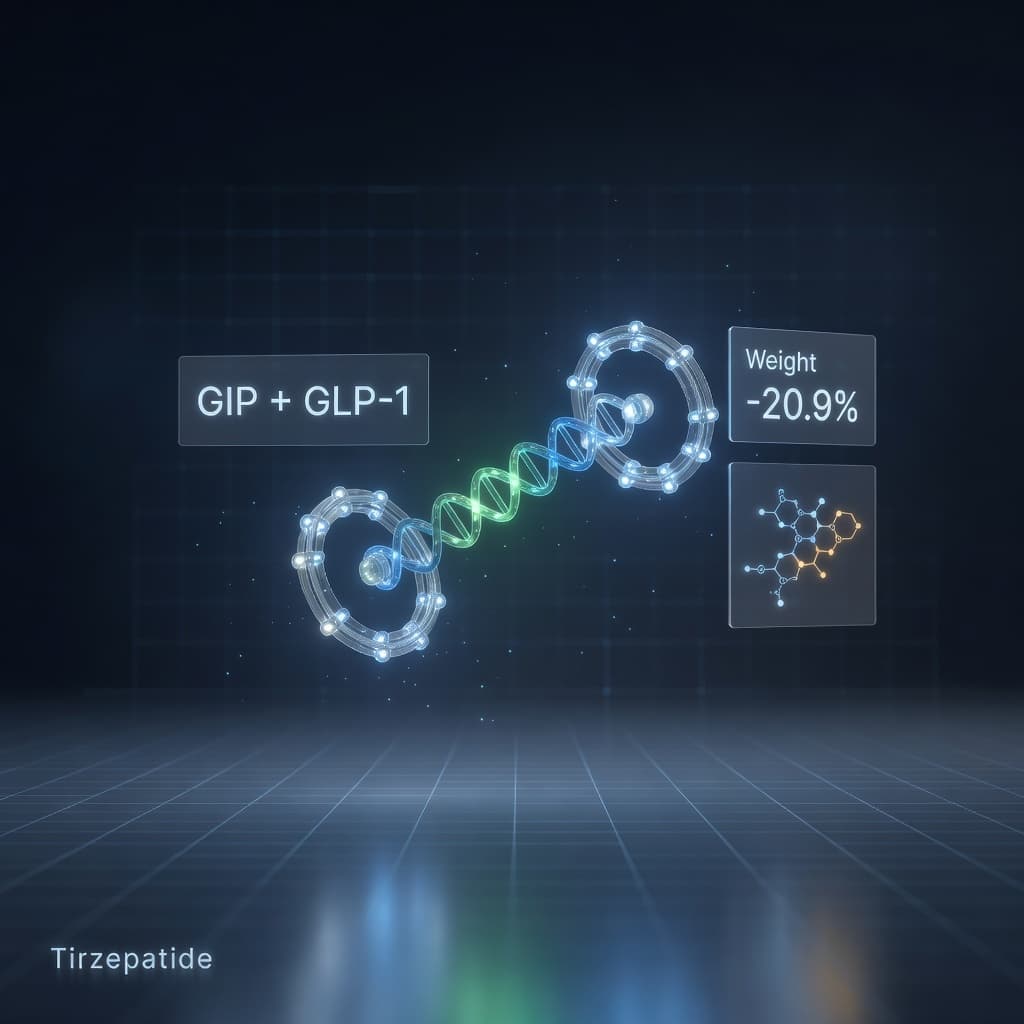
RetatrutideRetatrutide (LY3437943) is a once-weekly injectable peptide developed by Eli Lilly that activates three receptors at once: the GIP, GLP-1, and glucagon receptors (a "triple agonist"). In studies it has been examined for body-weight reduction in obesity, blood-sugar control in type 2 diabetes, and reduction of liver fat in metabolic-dysfunction-associated steatotic liver disease (MASLD).AOD-9604AOD-9604 is a synthetic, stabilized fragment of the C-terminus of human growth hormone (Tyr-hGH 177-191, also called the "lipolytic domain"), engineered to copy growth hormone's fat-burning effect without raising IGF-1, growth-promoting, or pro-diabetic activity. It has been studied mainly as an anti-obesity agent (stimulating fat breakdown / lipolysis) and, more recently and on a much smaller scale, as a joint-cartilage repair injection. Important honesty up front: the largest human obesity trials, including the pivotal 24-week Phase 2b study, did NOT show clinically meaningful weight loss versus placebo, and the drug program was discontinued.CagrilintideCagrilintide is a long-acting (once-weekly) synthetic analogue of the gut/pancreatic hormone amylin, developed by Novo Nordisk. In research it is studied as an injectable weight-loss agent, both on its own and combined with semaglutide (the combination is called CagriSema), where it suppresses appetite and reduces body weight. It is investigational and not an approved medicine in these trials.
Cognitive
SelankSelank is a synthetic heptapeptide (Thr-Lys-Pro-Arg-Pro-Gly-Pro), a stabilized analogue of the immunomodulatory peptide tuftsin (sometimes coded TP-7), developed in Russia as an anxiolytic. It is studied mainly for generalized anxiety disorder and stress-related (asthenic) states, and in animals as an anti-anxiety agent that appears to work in part as a positive allosteric modulator of the GABA system and via the enkephalin system, reportedly without benzodiazepine-type sedation or dependence.SemaxSemax is a synthetic heptapeptide (Met-Glu-His-Phe-Pro-Gly-Pro), a stabilized analogue of the adrenocorticotropic hormone fragment ACTH(4-10) with no hormonal (corticotropic) activity. It is studied as a nootropic and neuroprotective agent, mostly in Russia, for ischemic stroke recovery, cognitive performance, optic-nerve disease, and as a way to raise brain BDNF/NGF; it is typically given intranasally.
Growth
TesamorelinTesamorelin (trade name Egrifta, formerly TH9507) is a synthetic analogue of growth-hormone-releasing hormone (GHRH). It stimulates the pituitary to release the body's own growth hormone in a pulsatile pattern, which raises IGF-1 and, in the studied populations, reduces visceral (deep abdominal) fat and liver fat. It is the only GHRH analogue with completed phase III human trials, all in HIV-associated fat accumulation.Melanotan-2Melanotan-2 (MT-2) is a synthetic cyclic analogue of the body's own alpha-melanocyte-stimulating hormone (alpha-MSH). It binds melanocortin receptors and was studied mainly for three things: darkening the skin (pigmentation), triggering penile erections, and reducing appetite/food intake in animals. It is not an approved medicine, and most human data come from very small early-phase studies plus case reports of harm.IpamorelinIpamorelin is a synthetic pentapeptide (Aib-His-D-2-Nal-D-Phe-Lys-NH2) that selectively activates the ghrelin receptor (GHS-R1a) to trigger pulsatile growth hormone (GH) release from the pituitary. It is mainly studied as a selective GH secretagogue and was tested in humans as a ghrelin mimetic to speed gut recovery after bowel surgery.SermorelinSermorelin (also called GHRH(1-29), GRF(1-29)NH2, or Geref) is a synthetic 29-amino-acid peptide copying the first 29 residues of human growth-hormone-releasing hormone, the shortest fragment that still fully stimulates the pituitary. It binds GHRH receptors on pituitary somatotrophs and triggers the body's own pulsatile growth-hormone (GH) release. It was historically studied and FDA-approved as a diagnostic agent to test pituitary GH reserve and as a treatment to accelerate growth in children with GH deficiency; smaller studies also tested it in idiopathic short stature, in older adults, and by the intranasal route.IGF-1 LR3IGF-1 LR3 (Long R3 IGF-I) is a synthetic 83-amino-acid analogue of insulin-like growth factor 1 with an Arg substitution at position 3 and a 13-residue N-terminal extension. These changes make it bind much less tightly to IGF binding proteins, so in the bloodstream it stays free and active far longer than native IGF-1, which is why it is used as a research reagent to drive IGF-1 receptor signalling, cell proliferation and tissue growth in cell culture and animal models. There are essentially no published human efficacy trials of the LR3 analogue itself; the human data that exist are for native recombinant IGF-1 (mecasermin), not LR3.CJC-1295CJC-1295 is a synthetic 30-amino-acid analogue of growth-hormone-releasing hormone (the active hGRH/GRF 1-29 fragment). It binds the pituitary GHRH receptor and makes the gland release growth hormone (GH), which in turn raises insulin-like growth factor 1 (IGF-1). Four amino-acid substitutions protect it from the enzyme dipeptidyl-peptidase-4, so it lasts longer than natural GHRH. Two distinct forms exist and must not be confused. (1) CJC-1295 WITH DAC carries a drug-affinity-complex (a maleimidopropionyl group) that covalently latches onto a free thiol on circulating serum albumin after injection. This stretches its plasma half-life from minutes to roughly 6 to 8 days, giving sustained, non-pulsatile background GH stimulation and once-weekly-style dosing. This is the form used in the published Teichman, Ionescu/Frohman and Alba studies and in the foundational Jette rat work. (2) CJC-1295 WITHOUT DAC is the same modified GRF 1-29 sequence but with no albumin anchor, so it acts short (minutes to about 30 minutes), behaving like sermorelin and producing a single GH pulse. There is no published controlled human trial isolating the no-DAC form; the human evidence below is all for the DAC version. CJC-1295 is not an approved drug, has no established human therapeutic dosing, and is sold for laboratory research only. WADA prohibits it in sport.
Combinations
Research and laboratory use only, not for human or veterinary use. These summaries report published study data. They are not dosing advice and not a protocol.