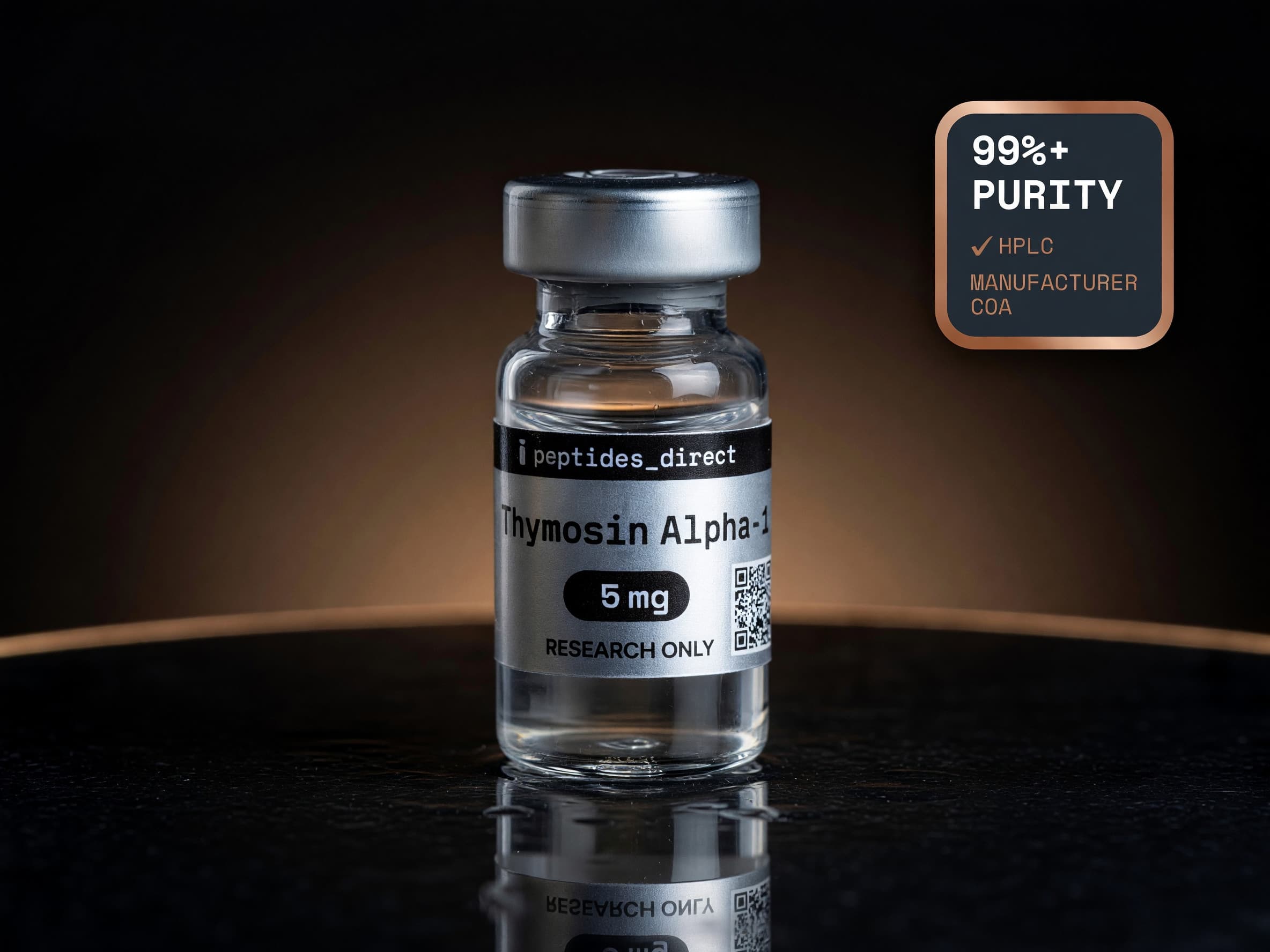
Thymosin Alpha-1
Synthetic 28-amino-acid immunomodulatory peptide. Approved as Zadaxin in 35+ countries for chronic hepatitis B and C. Studied in 30+ trials across 11,000+ subjects for immune modulation via TLR2/9 dendritic cell signaling.
99.31%Third-party lab: JanoshikView COA€64.99
€75.99
−14%savedFor Research Use Only
This product is sold strictly for in-vitro research and laboratory use. Not intended for human consumption or any in-vivo application.
Payment Methods
28-amino-acid thymic peptide
Thymosin Alpha-1 (TA1, also known as thymalfasin) is a synthetic version of a 28-amino-acid peptide first isolated from calf thymus in 1972 by Allan Goldstein. The N-terminally acetylated structure is reproduced 1:1 in solid-phase synthesis.
Approved in 35+ countries
Marketed as Zadaxin (SciClone), TA1 is approved for chronic hepatitis B, hepatitis C, and as an immune adjunct across Italy, Mexico, Egypt, and 30+ other countries. Not FDA approved in the US, evaluated in numerous off-label clinical contexts.
Dendritic cell TLR2/TLR9 signaling
TA1 binds TLR2 and TLR9 receptors on dendritic cells, triggering Th1 activation and IDO-mediated Treg generation. The dual signal simultaneously enhances pathogen defense and promotes immune tolerance balance.
T-cell maturation enhancer
In thymectomized models TA1 restores T-cell function: increases CD4+ T-helper and CD8+ cytotoxic populations, accelerates progenitor differentiation, and rebalances Th1/Th2 ratios skewed by chronic infection or aging.
Studied in COVID-19 and sepsis
Multiple Chinese hospital protocols evaluated TA1 in COVID-19 (Wuhan, Beijing) reporting reduced ICU admission and 28-day mortality in severe cases. Earlier sepsis trials showed similar restoration of lymphocyte counts.
11,000+ subjects in trial database
A 2024 Frontiers in Medicine review documented 30+ randomized trials covering 11,000+ subjects across hepatitis B, hepatitis C, immune-compromised states, and adjunctive cancer therapy over four decades of research.
Research areas
What is Thymosin Alpha-1
Thymosin Alpha-1 (TA1) is a synthetic version of a 28-amino-acid immunomodulatory peptide originally isolated from the thymus gland. The native peptide is generated by proteolytic cleavage of prothymosin alpha and circulates at low picomolar concentrations as part of natural immune regulation. Synthetic TA1 (thymalfasin) is the active ingredient in Zadaxin, approved in over 35 countries since the 1990s for chronic hepatitis B and C and as an immune adjunct.
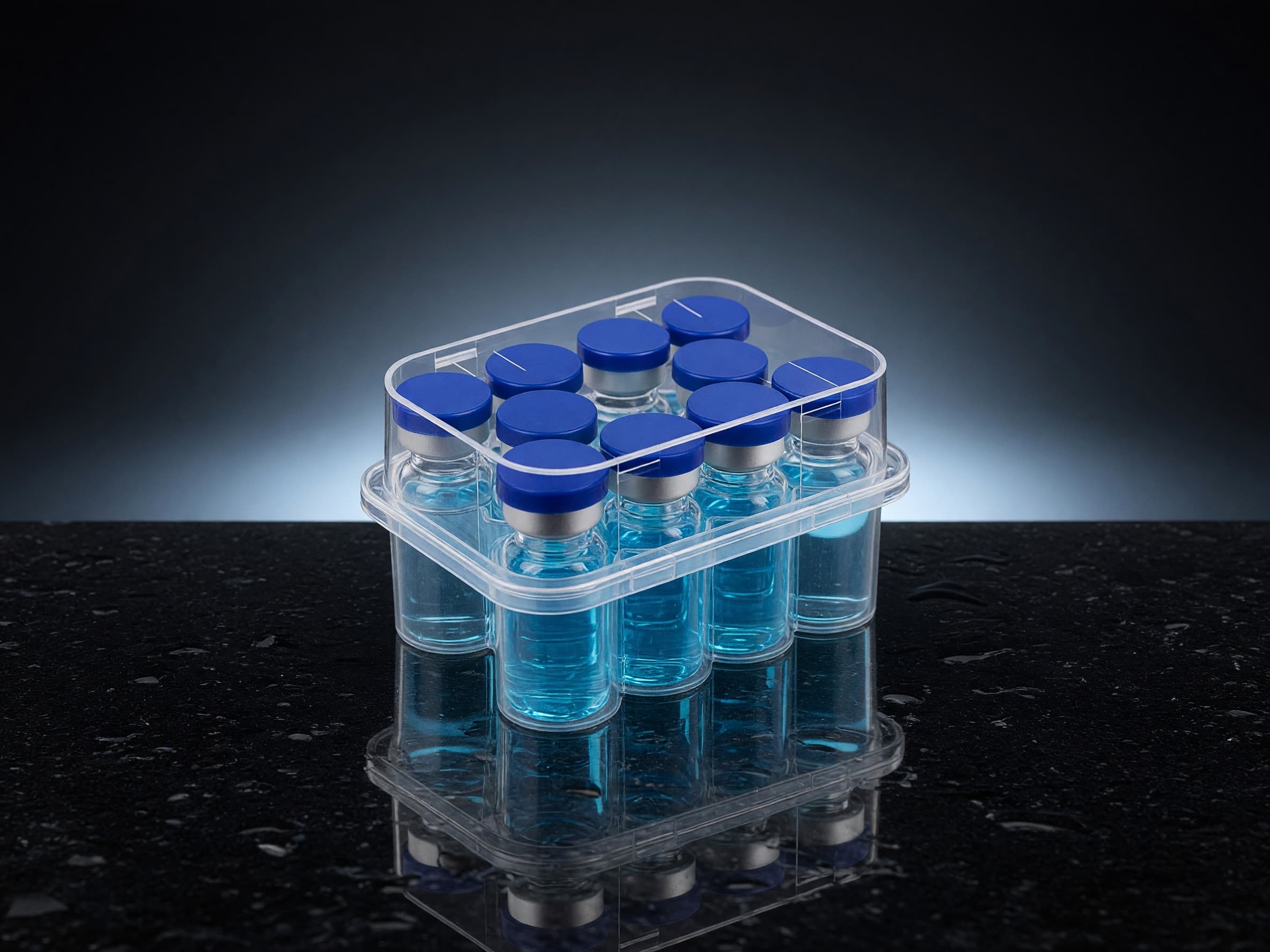
We supply it as a lyophilized (freeze-dried) powder for laboratory research, with a batch-specific third-party certificate of analysis.
How it works
TA1 modulates immunity through multiple receptor-level mechanisms in dendritic cells and T-cell populations:
- TLR2 and TLR9 binding: on dendritic cells, triggers downstream NF-kB and IRF7 pathways producing both pro-inflammatory and tolerogenic cytokine signatures
- T-cell maturation: accelerates differentiation of CD4+ helpers and CD8+ cytotoxic T-cells from thymic progenitors, restoring lymphocyte counts depleted by infection or aging
- Th1/Th2 rebalancing: shifts cytokine profile toward Th1 (IFN-gamma, IL-2), useful when chronic infection or tumor environment has biased the response toward Th2
- IDO + Treg axis: simultaneous induction of indoleamine 2,3-dioxygenase generates regulatory T-cells, preventing the pro-inflammatory shift from becoming autoimmune
This dual signature, pathogen defense enhancement plus tolerance promotion, is mechanistically different from cytokine therapies (which only push one direction) and is why TA1 has been studied in such diverse indications: viral hepatitis, sepsis, cancer adjunct, COVID-19, immunosenescence.
Often studied alongside
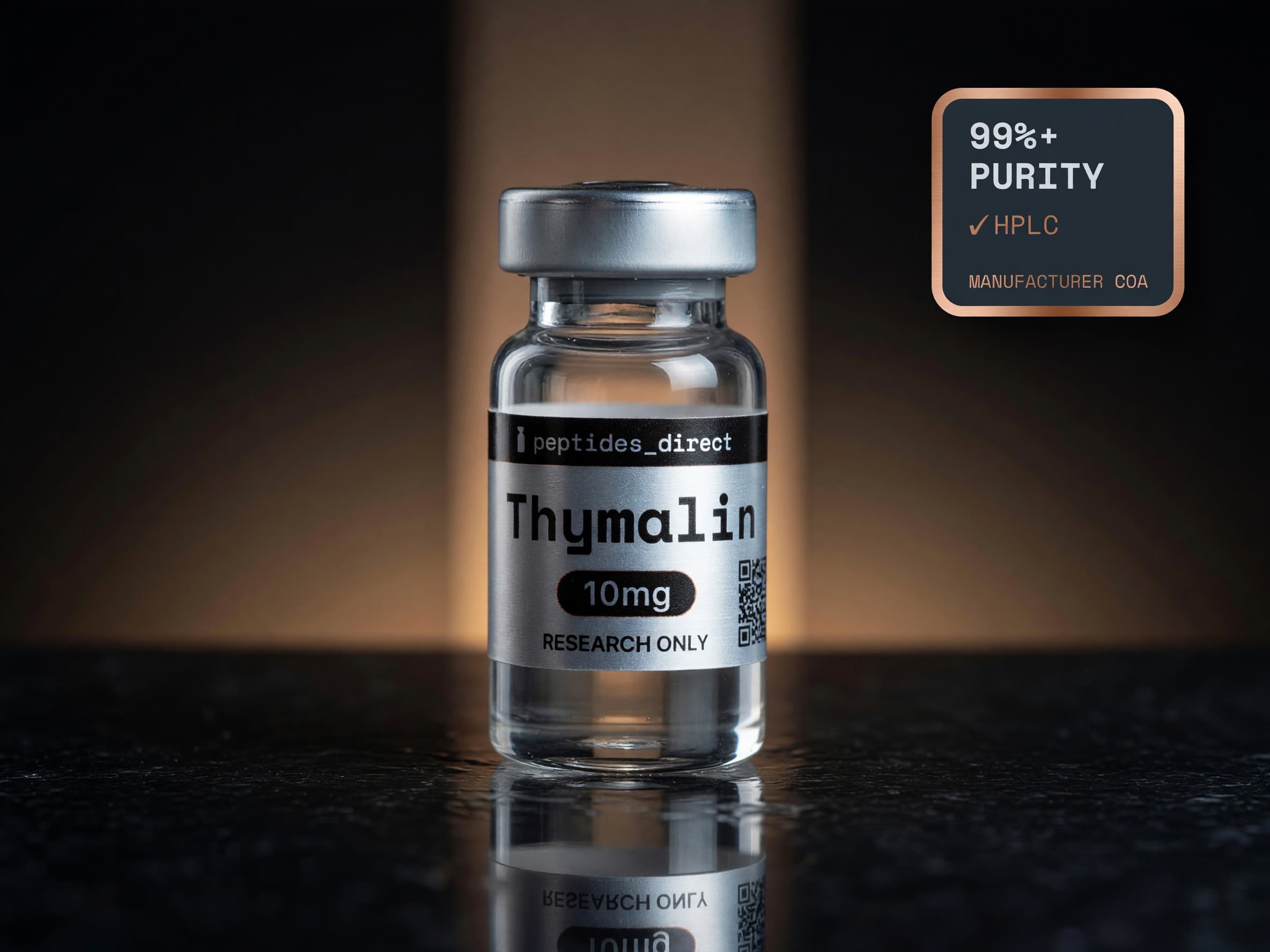
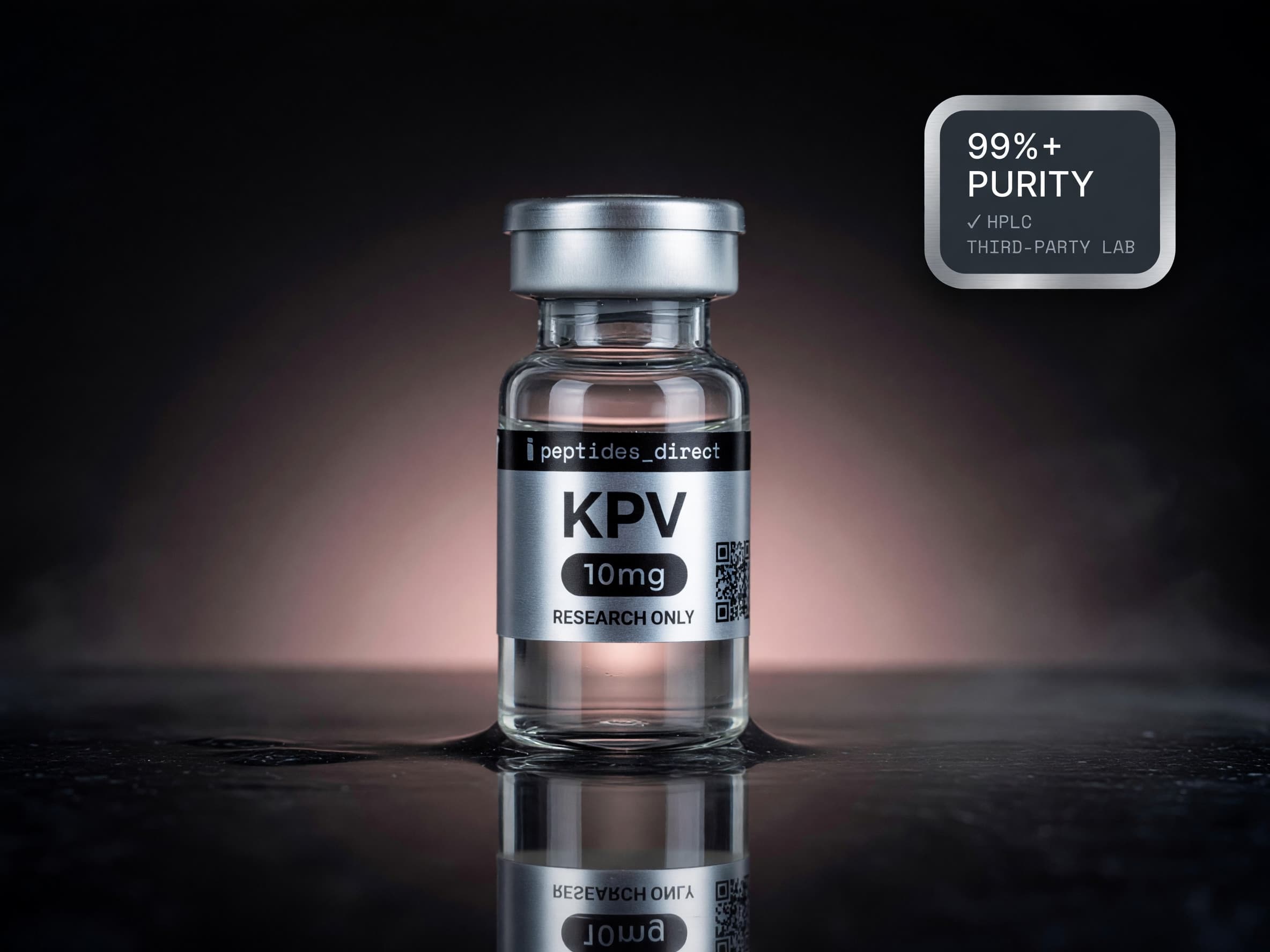
Research protocols frequently pair TA1 with other thymus-derived peptides or with anti-inflammatory peptides for stacked immune effects. Thymalin (a thymic peptide complex) and KPV (an alpha-MSH fragment with anti-inflammatory properties) are commonly investigated as adjacent compounds.
Thymic peptide complex studied for immunosenescence
Thymus-derived immune peptide developed by Prof. Khavinson. Restores T-cell function and thymic activity that naturally decline with age. Over 40 years of clinical use in Russia for immune support and anti-aging research.
Anti-inflammatory tripeptide studied for immune balance
Anti-inflammatory tripeptide derived from alpha-MSH (positions 11-13). Inhibits NF-kB signaling, supports gut barrier integrity, and shows antimicrobial activity. A targeted approach to inflammation research without broad immunosuppression.
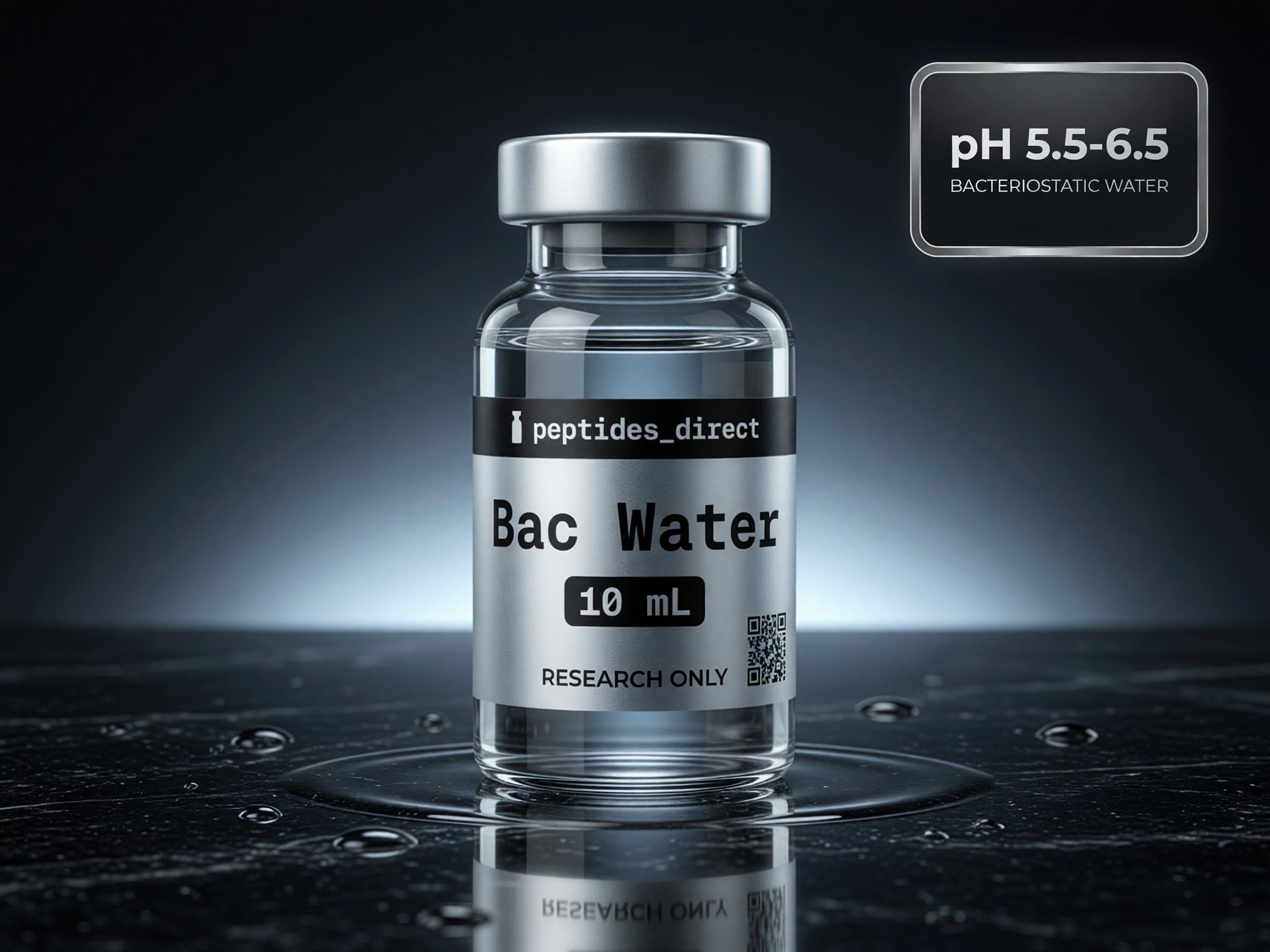
For reconstitution, the standard solvent in published protocols is bacteriostatic or sterile water.
Standard solvent for reconstitution
USP-grade sterile water with 0.9% benzyl alcohol (near-neutral, pH 6.2 to 6.4) - the standard solvent for reconstituting lyophilized peptides. Essential accessory for any peptide research. Each vial is sealed and ready to use.
Documentation
Material specification
Purity
Test method
Form
Storage (sealed)
Storage (reconstituted)
CoA
Selected research
- PMID 265233
Goldstein AL et al. Purification and biological activity of thymosin, a hormone of the thymus gland
PNAS, 1977, founding isolation paper by Goldstein and colleagues - PMID 38883879
Phenotypic drug discovery: a case for thymosin alpha-1 (Frontiers in Medicine 2024)
Frontiers in Medicine, 2024, comprehensive review covering 30+ clinical trials and 11,000+ subjects - PMID 33347925
Thymosin alpha 1 use in adult patients with severe forms of COVID-19
Frontiers in Pharmacology, 2020, COVID-19 outcomes study in severe cases
Research use only
This material is sold strictly for in-vitro research and laboratory use. Not intended for human or animal consumption, medical, cosmetic, or household applications. Suitable only for professional laboratory environments.
Storage and stability
- Dry, lyophilized vials keep for months refrigerated, or up to 24 months frozen at -20°C.
- After reconstitution in bacteriostatic water, use within about 30 days at 2 to 8°C, and avoid repeated freeze-thaw.
Reviews
No reviews yet. Write the first one!
Only customers who ordered the product from us can leave a review; we verify this automatically against the order number. Every review submitted is published, regardless of star rating. Rewarded reviews from our coupon program are individually labelled.
Frequently Asked Questions
Technical data sheet
- CAS number
- 62304-98-7
- Molecular formula
- C₁₂₉H₂₁₅N₃₃O₅₅
- Molar mass
- 3108.3 g/mol
- Type / receptor
- Immunomodulatory 28-aa peptide
- Form
- White lyophilized powder
- Solubility
- Bacteriostatic water (BAC)
- Storage
- -20°C for up to 24 months; 30 days at 2-8°C after reconstitution
Identity data from public chemical references (PubChem). Per-batch purity: see lab reports below.
Frequently bought together
Complete your subcutaneous research workflow