For Research Use Only
This product is sold strictly for in-vitro research and laboratory use. Not intended for human consumption or any in-vivo application.
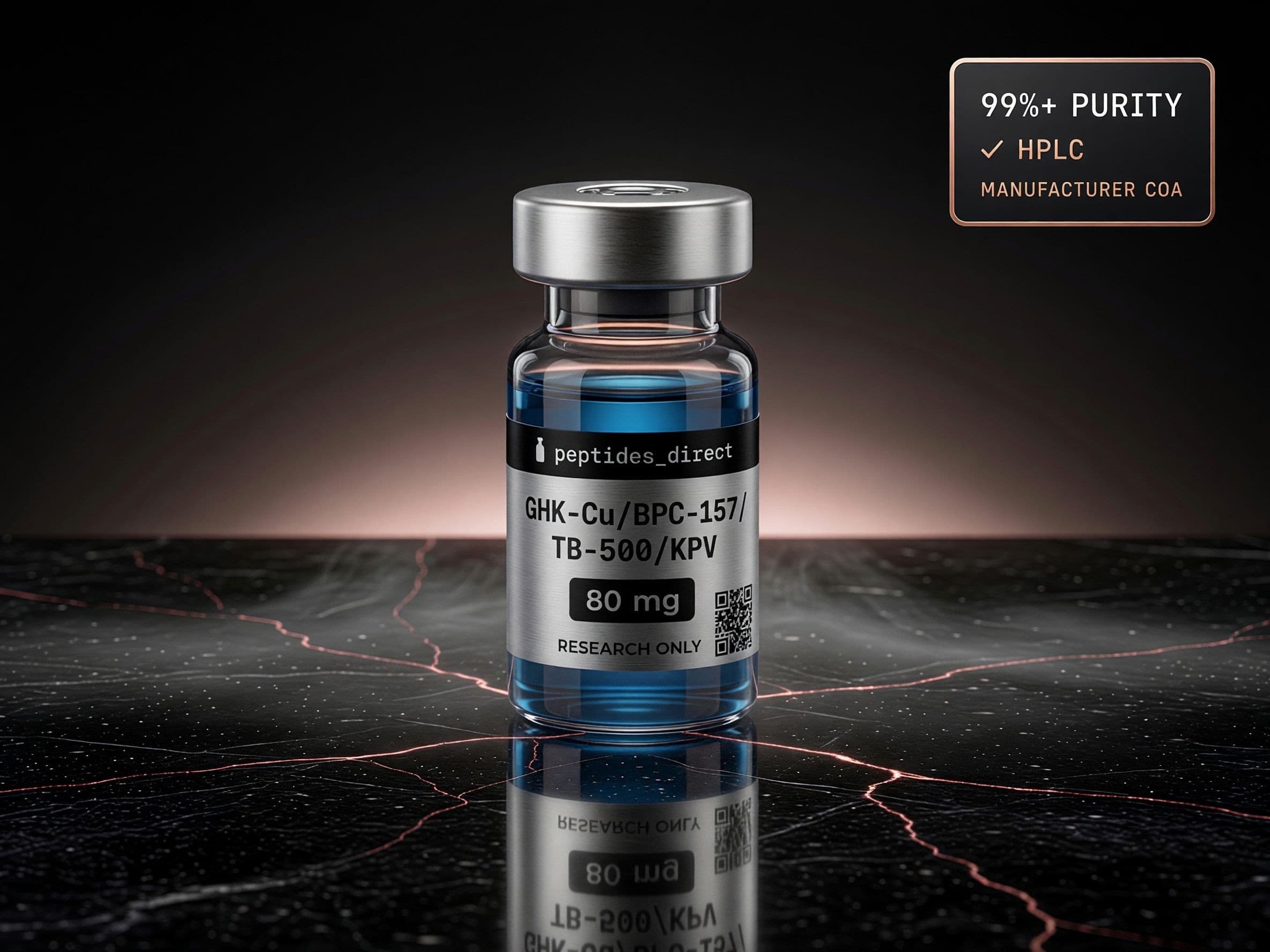
GHK-Cu/BPC-157/TB-500/KPV
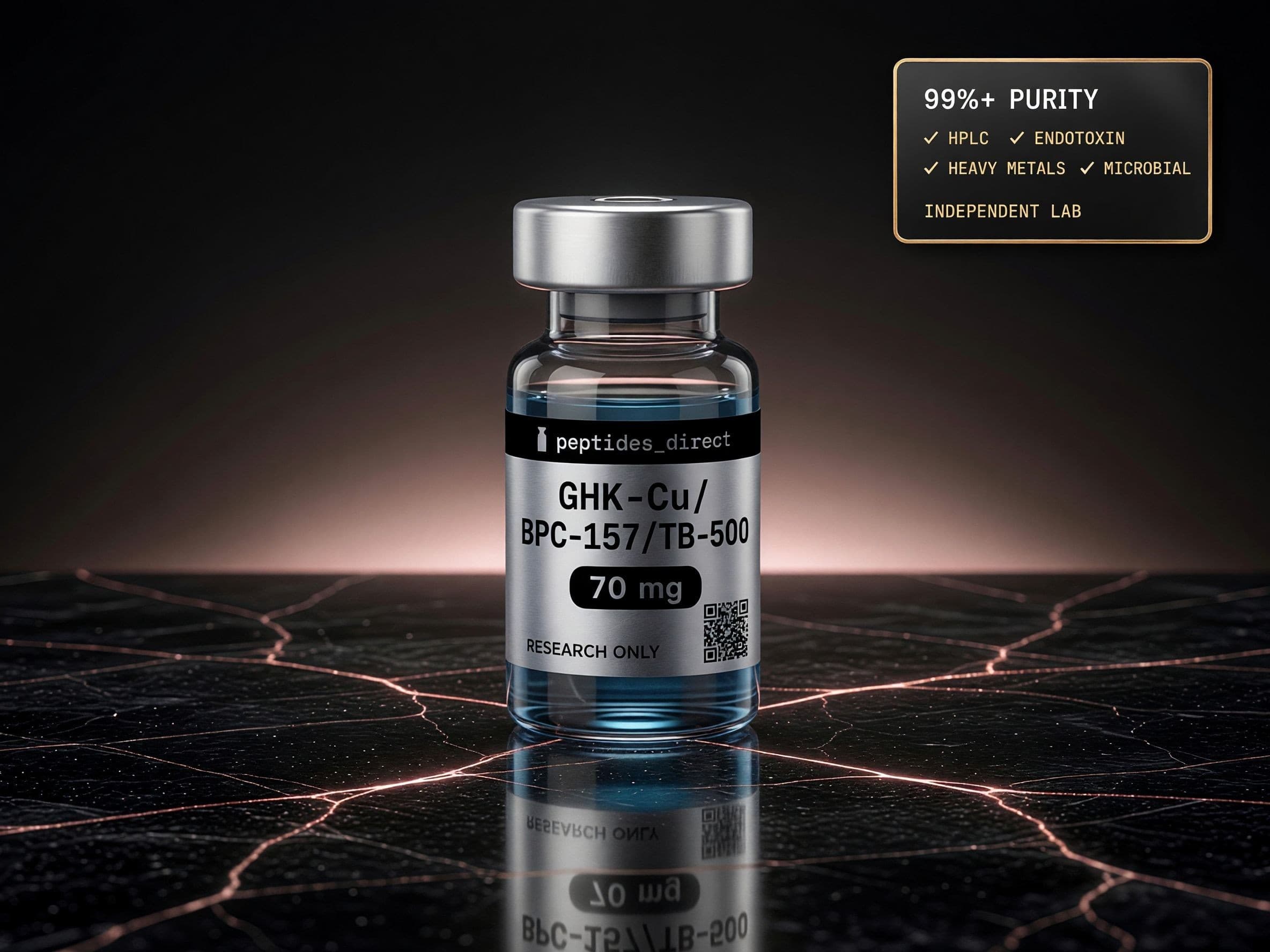
GHK-Cu/BPC-157/TB-500/KPV is a co-lyophilized vial holding GHK-Cu, BPC-157, TB-500 and KPV at a fixed 50:10:10:10 mass ratio, 80 mg total. Each peptide has its own published literature; no study has tested the four together. Per-component content on the batch CoA.
€115.99
€129.99
−11%(€14.00)savedVolume price per vial
- 3+−5%€110.19 each
- 5+−10%€104.39 each
- 10+−15%€98.59 each
Applied automatically in the cart. Cart-level volume tiers from EUR 500 apply where they are higher. Not combined with coupon codes.
For Research Use Only
This product is sold strictly for in-vitro research and laboratory use. Not intended for human consumption or any in-vivo application.
Payment Methods


 |
|Four peptides in one vial
GHK-Cu, BPC-157, TB-500 and KPV, co-lyophilized at a fixed 50:10:10:10 mass ratio, 80 mg total. Per-component amounts are on the material specification below.
BPC-157: gastric pentadecapeptide
A 15-residue sequence derived from a protein in gastric juice, studied in rodent models with angiogenesis, VEGFR2 and the Akt-eNOS pathway as the proposed mechanism.
TB-500: full-length thymosin beta-4
The complete 43-amino-acid peptide (mass about 4963 Da, CAS 77591-33-4), CoA-confirmed. It binds G-actin, the monomer of the actin cytoskeleton.
GHK-Cu: copper tripeptide
A copper(II)-binding tripeptide from human plasma. Fibroblast culture studies measured collagen synthesis across picomolar concentrations.
KPV: alpha-MSH(11-13)
The C-terminal tripeptide of alpha-melanocyte-stimulating hormone, studied for NF-kB signalling and for PepT1 uptake in intestinal models.
Studied separately, not as a blend
No study testing these four peptides in one experiment, in any species, was identified. The ratio is a formulation choice, not a finding.
Research areas
What is GHK-Cu/BPC-157/TB-500/KPV
GHK-Cu/BPC-157/TB-500/KPV is a research blend of four peptides in a single co-lyophilized vial: GHK-Cu, BPC-157, TB-500 and KPV at a fixed 50:10:10:10 mass ratio, 80 mg in total. Because the four are freeze-dried together before the vial is filled, the ratio is fixed at manufacture and cannot be changed by reconstitution.
The whole difference between this blend and GHK-Cu/BPC-157/TB-500 is one component (KPV) and 10 mg.
We supply it as a co-lyophilized powder for laboratory research only. In solution it takes on a faint blue tint, which comes from the copper ion in GHK-Cu.
Mechanism
Four components, four separate literatures. None of the results below was generated with the peptides combined.
GHK-Cu is a copper(II)-binding tripeptide identified in human plasma. In cultured human skin fibroblasts collagen synthesis was measured across picomolar concentrations alongside cell number (PMID 29986520 reviews the wider gene-expression data).
BPC-157 is a 15-amino-acid sequence derived from a gastric-juice protein. Its rodent literature describes VEGFR2 and Akt-eNOS signalling and angiogenesis as the proposed mechanism (PMID 40789979, PMID 40005999).
TB-500 is full-length thymosin beta-4, the principal G-actin-binding peptide in most cell types. It binds monomeric actin; the dermal and corneal model literature measured cytoskeletal organisation and cell migration (PMID 10469335, PMID 23050815).
KPV is the last three residues of alpha-MSH. Published work measures NF-kB pathway activity and uptake through the intestinal PepT1 transporter in rodent intestinal models (PMID 18061177, PMID 12750433).
The honest summary is short: four separately studied molecules in one vial, no combination study behind the ratio, and a certificate that reports each component's measured content rather than one blended number.
Documentation
Material specification
Composition
Purity
Test method
Form
Typical storage (sealed)
CoA
Research use only
This material is sold strictly for in-vitro research and laboratory use. Not intended for human or animal consumption, medical, cosmetic, or household applications. Suitable only for professional laboratory environments.
Storage and stability
- Dry, lyophilized vials keep for months refrigerated, or up to 24 months frozen at -20°C.
Reviews
No reviews yet. Write the first one!
Only customers who ordered the product from us can leave a review; we verify this automatically against the order number. Reviews are checked before publication; the star rating does not affect this. Rewarded reviews from our coupon program are individually labelled.
Frequently Asked Questions
Technical data sheet
- Vial volume
- 3 ml