For Research Use Only
This product is sold strictly for in-vitro research and laboratory use. Not intended for human consumption or any in-vivo application.
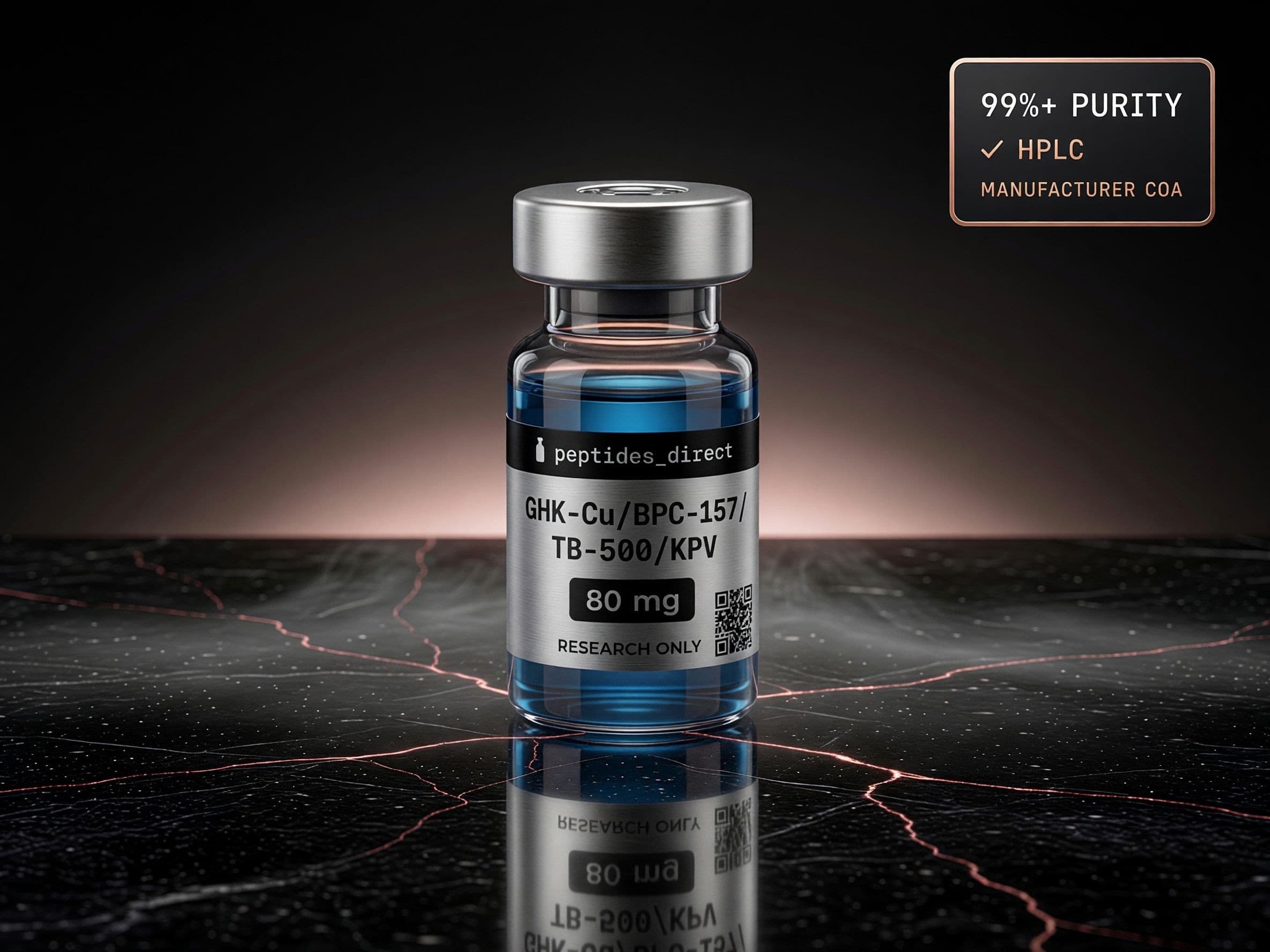
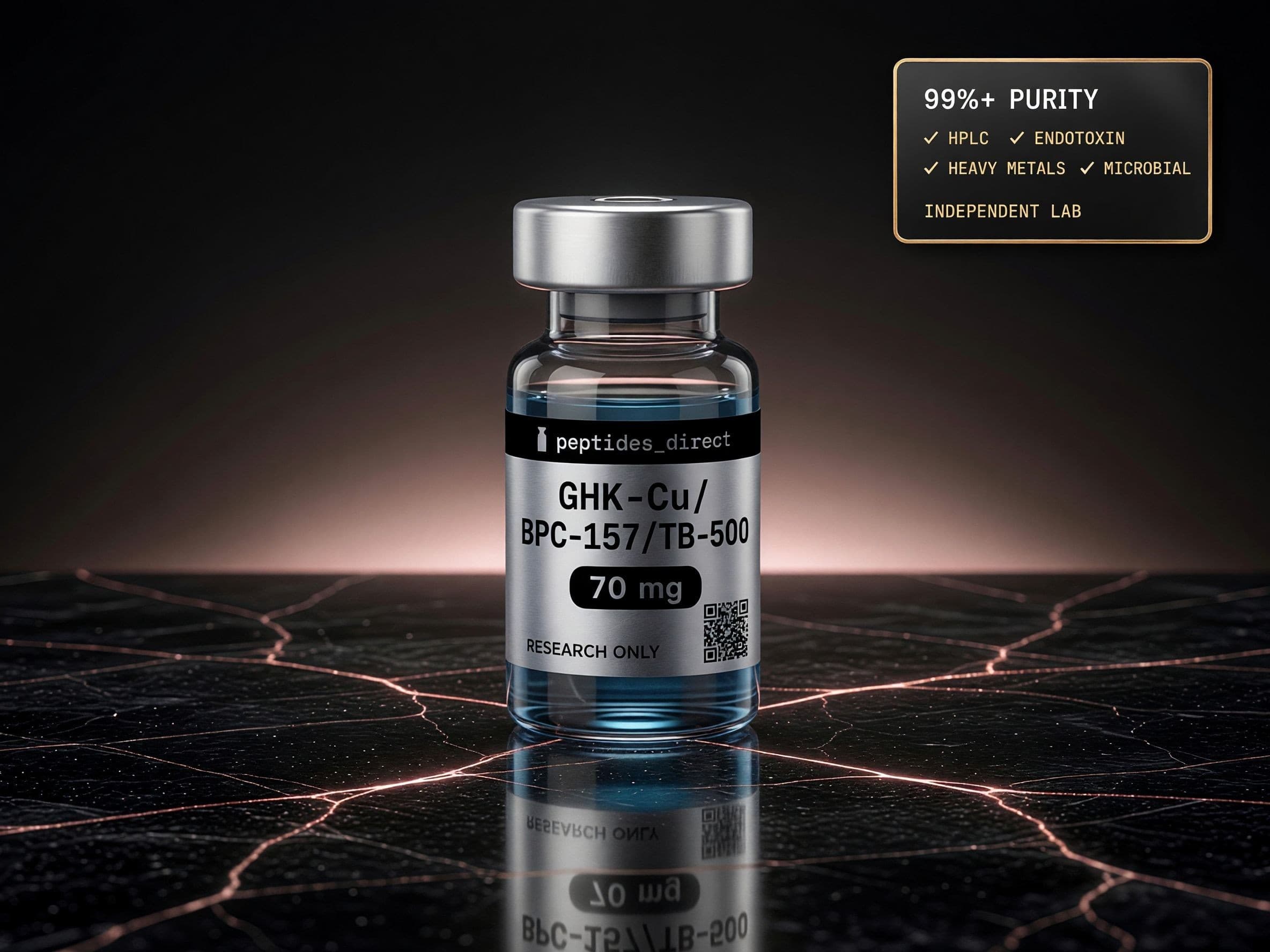
GHK-Cu/BPC-157/TB-500
GHK-Cu/BPC-157/TB-500 is a co-lyophilized vial holding GHK-Cu, BPC-157 and TB-500 at a fixed 50:10:10 mass ratio, 70 mg total. Each peptide has its own published literature; no study has tested the three together. Per-component content on the batch CoA.
99.00%Third-party lab: LiquilabsView COA€99.99
€114.99
−13%(€15.00)savedVolume price per vial
- 3+−5%€94.99 each
- 5+−10%€89.99 each
- 10+−15%€84.99 each
Applied automatically in the cart. Cart-level volume tiers from EUR 500 apply where they are higher. Not combined with coupon codes.
For Research Use Only
This product is sold strictly for in-vitro research and laboratory use. Not intended for human consumption or any in-vivo application.
Payment Methods


 |
|Three peptides, one vial
GHK-Cu, BPC-157 and TB-500, co-lyophilized at a fixed 50:10:10 mass ratio, 70 mg total. Per-component amounts are on the material specification below.
GHK-Cu: collagen synthesis in culture
Fibroblast studies measured collagen synthesis across picomolar to nanomolar concentrations, alongside cell number (PMID 3169264).
BPC-157: gastric pentadecapeptide
A 15-residue sequence derived from a protein in gastric juice, studied in rodent models with angiogenesis and growth-factor signalling as the proposed mechanism.
TB-500: full-length thymosin beta-4
The complete 43-amino-acid peptide, CoA-confirmed, not the short Ac-LKKTETQ fragment sold elsewhere under the same name. It binds G-actin, the monomer of the actin cytoskeleton.
Per-component CoA figures
The batch report states measured content for each of the three peptides separately, which is the only meaningful way to certify a multi-component vial.
Studied separately, not as a blend
No study testing this three-peptide combination in any species was identified. The ratio is a formulation choice, not a finding.
Research areas
What is GHK-Cu/BPC-157/TB-500
GHK-Cu/BPC-157/TB-500 is a three-peptide research blend in a single lyophilized vial: GHK-Cu, BPC-157 and TB-500 at a fixed 50:10:10 mass ratio, 70 mg in total. The three are freeze-dried together, so that ratio is fixed at formulation and cannot be changed after reconstitution.
GHK-Cu is the copper(II) complex of the natural human tripeptide glycyl-histidyl-lysine, studied mainly in fibroblast culture and in ex vivo skin. BPC-157 is a 15-amino-acid sequence derived from the gastric-juice protein BPGP, studied in rodent models. TB-500 is full-length thymosin beta-4, a 43-amino-acid actin-binding protein present in most cell types; our material is CoA-confirmed as the complete sequence rather than the short fragment some of the market sells under the same name.
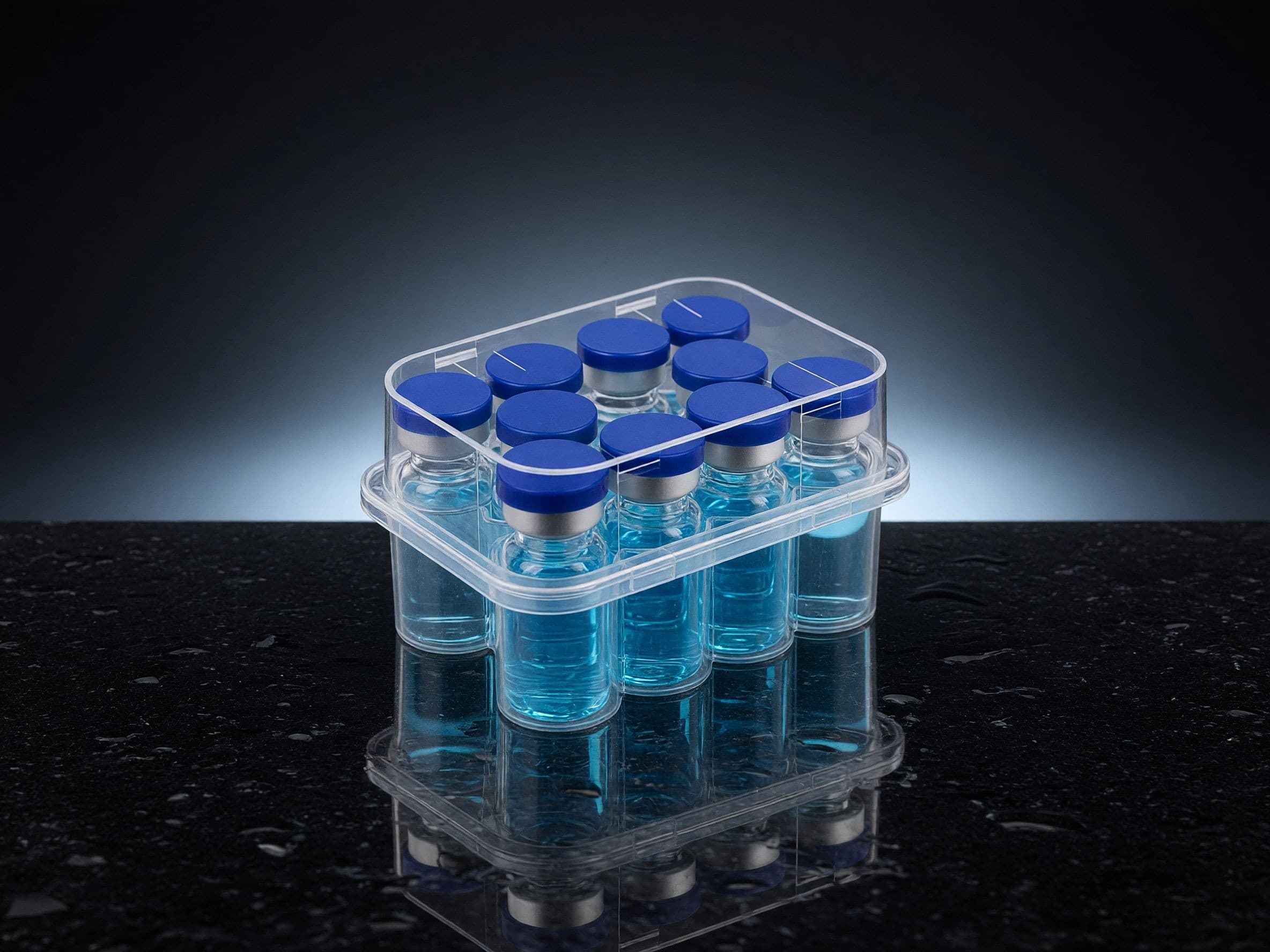
We supply GHK-Cu/BPC-157/TB-500 as a freeze-dried powder for laboratory research only. In solution it takes on a faint blue to blue-green tint, which comes from the copper ion in GHK-Cu and from nothing else.
Mechanism
There are three separate mechanisms here, one per component, and they come from three separate literatures.
GHK-Cu binds copper and presents it to cells. Copper is the cofactor of lysyl oxidase, which cross-links collagen, and of superoxide dismutase. In cultured human skin fibroblasts, collagen synthesis was measured across picomolar to nanomolar concentrations alongside cell number, so the readout was output per cell (PMID 3169264). The wider gene-expression literature on this peptide is reviewed in PMID 29986520.
BPC-157 is described in its literature as acting through angiogenesis and growth-factor signalling, measured in rodent models of connective tissue and of the gastric lining. It is unusually stable in gastric juice.
TB-500 binds G-actin, the monomer from which cells assemble the actin cytoskeleton. Sequestering part of that pool is the molecular mechanism behind the migration and angiogenesis endpoints reported in cardiac, dermal and corneal model systems (PMID 36464872).
One point belongs on the page plainly: no study testing these three peptides as a combination, in any species, was identified. Each result above belongs to a single-component study. Anything said about the three acting jointly is inference rather than data, which is also why we publish per-component content figures instead of one blended purity number.
Documentation
Material specification
Composition
Purity
Test method
Form
Typical storage (sealed)
CoA
Scope: Identity, Content / assay, Purity, Microbial, Endotoxin, Heavy metals
Selected research
- PMID 3169264
Stimulation of collagen synthesis in fibroblast cultures by the tripeptide-copper complex glycyl-L-histidyl-L-lysine-Cu2+
FEBS Lett, 1988; human skin fibroblast culture - PMID 26236730
GHK Peptide as a Natural Modulator of Multiple Cellular Pathways in Skin Regeneration
Biomed Res Int, 2015; review of collagen and immune-pathway data
Research use only
This material is sold strictly for in-vitro research and laboratory use. Not intended for human or animal consumption, medical, cosmetic, or household applications. Suitable only for professional laboratory environments.
Storage and stability
- Dry, lyophilized vials keep for months refrigerated, or up to 24 months frozen at -20°C.
Reviews
No reviews yet. Write the first one!
Only customers who ordered the product from us can leave a review; we verify this automatically against the order number. Reviews are checked before publication; the star rating does not affect this. Rewarded reviews from our coupon program are individually labelled.
Frequently Asked Questions
Technical data sheet
- Vial volume
- 3 ml