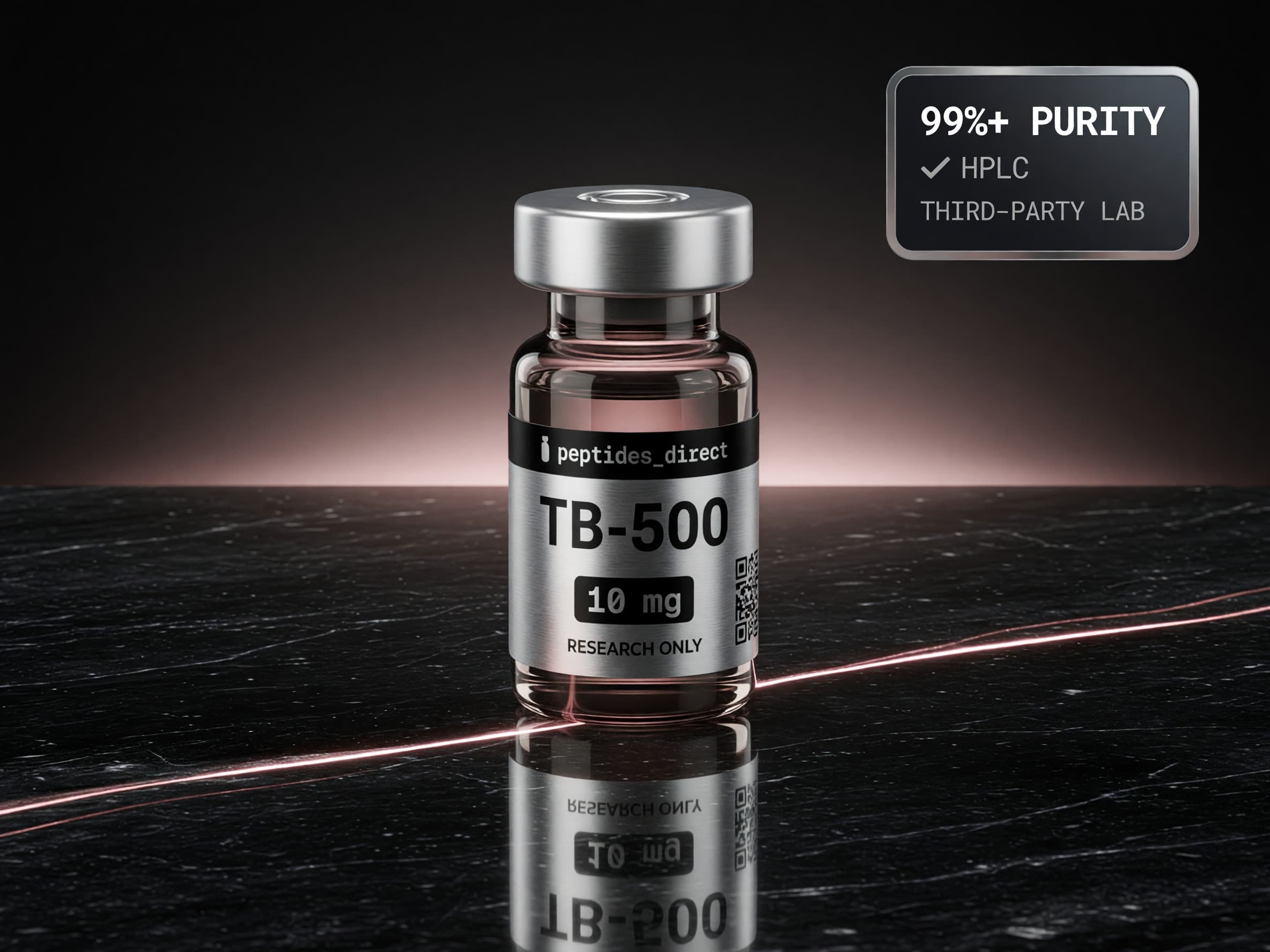
TB-500
Full-length 43-amino-acid Thymosin Beta-4, a naturally occurring repair protein, independently confirmed by a third-party CoA from Janoshik. Promotes cell migration and new blood vessel formation for systemic tissue healing. Especially researched for muscle, tendon, and cardiac repair.
99.94%Third-party lab: JanoshikView COA5.01 review€54.99
€64.99
−15%(€10.00)savedFor Research Use Only
This product is sold strictly for in-vitro research and laboratory use. Not intended for human consumption or any in-vivo application.
Payment Methods
Full-length Thymosin Beta-4
TB-500 is the synthetic form of thymosin beta-4, the full 43-amino-acid repair peptide. The material we supply is the complete 43-aa molecule (mass ~4963 Da), independently confirmed by CoA, not a shortened fragment. Its actin-binding activity is concentrated in the central region around the Ac-LKKTETQ sequence.
Actin organizer
Binds G-actin, the building block of the cellular skeleton. By managing the actin pool, it lets cells reshape themselves and move toward damaged tissue in laboratory studies.
Cell migration signal
Triggers cells like fibroblasts, endothelial cells, and stem cells to migrate into wound sites, the first step of tissue repair in cell-culture and animal models.
New blood vessels
Promotes angiogenesis. New capillaries deliver oxygen and nutrients to healing tissue, a recurring finding in cardiac and skin repair research.
Anti-inflammatory and anti-fibrotic
Lowers pro-inflammatory mediators and reduces excessive scar-forming pathways in animal studies, helping tissue heal cleanly instead of stiffening.
Cornea and surface tissue
A long line of eye research shows the peptide accelerates closure of corneal wounds and dampens infection-driven inflammation in laboratory models.
Research areas
What is TB-500
TB-500 is the research-market name for thymosin beta-4 (Tβ4), a small repair protein found throughout the body. The material we supply is the full-length 43-amino-acid Tβ4 (mass ~4963 Da, CAS 77591-33-4), independently confirmed by our third-party CoA. Its actin-binding activity is concentrated in a short central stretch around the Ac-LKKTETQ sequence, but our product is the complete peptide, not an isolated fragment. (The name 'TB-500' is sometimes also used for that short fragment, which is exactly why a CoA matters: ours certifies the full 43-aa form.)
We supply it in lyophilized (freeze-dried) form, the same format used in published protocols.
How it works
TB-500 acts on the cellular skeleton. It binds to G-actin, the monomer that cells use to assemble and reshape their internal scaffolding. By managing this pool of actin, the peptide lets cells change shape, crawl toward injured tissue, and rebuild what is missing. This single mechanism feeds into a wide range of repair processes: fibroblasts close skin wounds, endothelial cells form new capillaries, and progenitor cells move into damaged tissue.
The peptide also calms inflammation and pushes back against fibrosis. In animal models of cardiac injury, eye infection, and skin wounding, it lowers inflammatory mediators and reduces the excessive scar tissue that often follows damage. The combination of cell-migration signal, angiogenesis, and softer scarring is what gives TB-500 its reputation as a broad regenerative research tool.
Often studied alongside
The most popular pairing in regenerative-peptide research is TB-500 plus BPC-157, sometimes called the "Wolverine Stack" in informal labs. The two peptides act through different mechanisms: TB-500 mobilizes cells through actin, while BPC-157 supports growth-factor signaling and blood-vessel formation. Many independent research groups examine them together when modeling complex injuries.
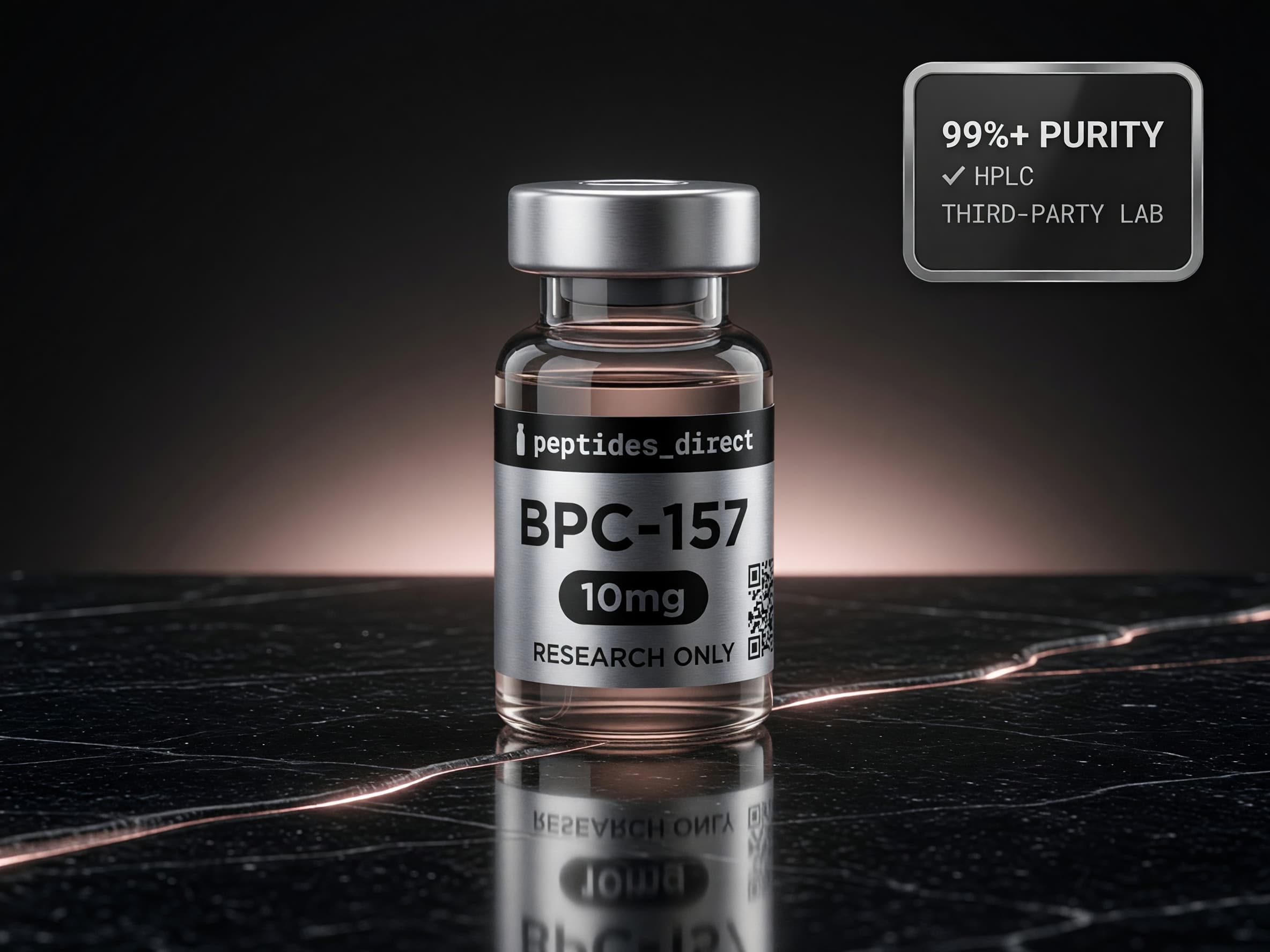
Most common research partner for TB-500
Gastric pentadecapeptide (15 amino acids) known for exceptional tissue repair properties. Promotes wound healing, angiogenesis, and cytoprotection across tendons, muscles, gut, and nerves. Over 30 years of preclinical research.
For convenience, a pre-mixed combination vial is also available.
Pre-blended BPC-157 and TB-500 in a single vial
The Wolverine Stack: BPC-157 + TB-500 in equal parts in one vial (50/50: 10mg = 5mg each, 20mg = 10mg each). The most researched healing peptide duo for tissue repair, tendon recovery, and systemic regeneration. Batch-specific Janoshik COA.
For reconstitution, the standard solvent in published protocols is bacteriostatic or sterile water.
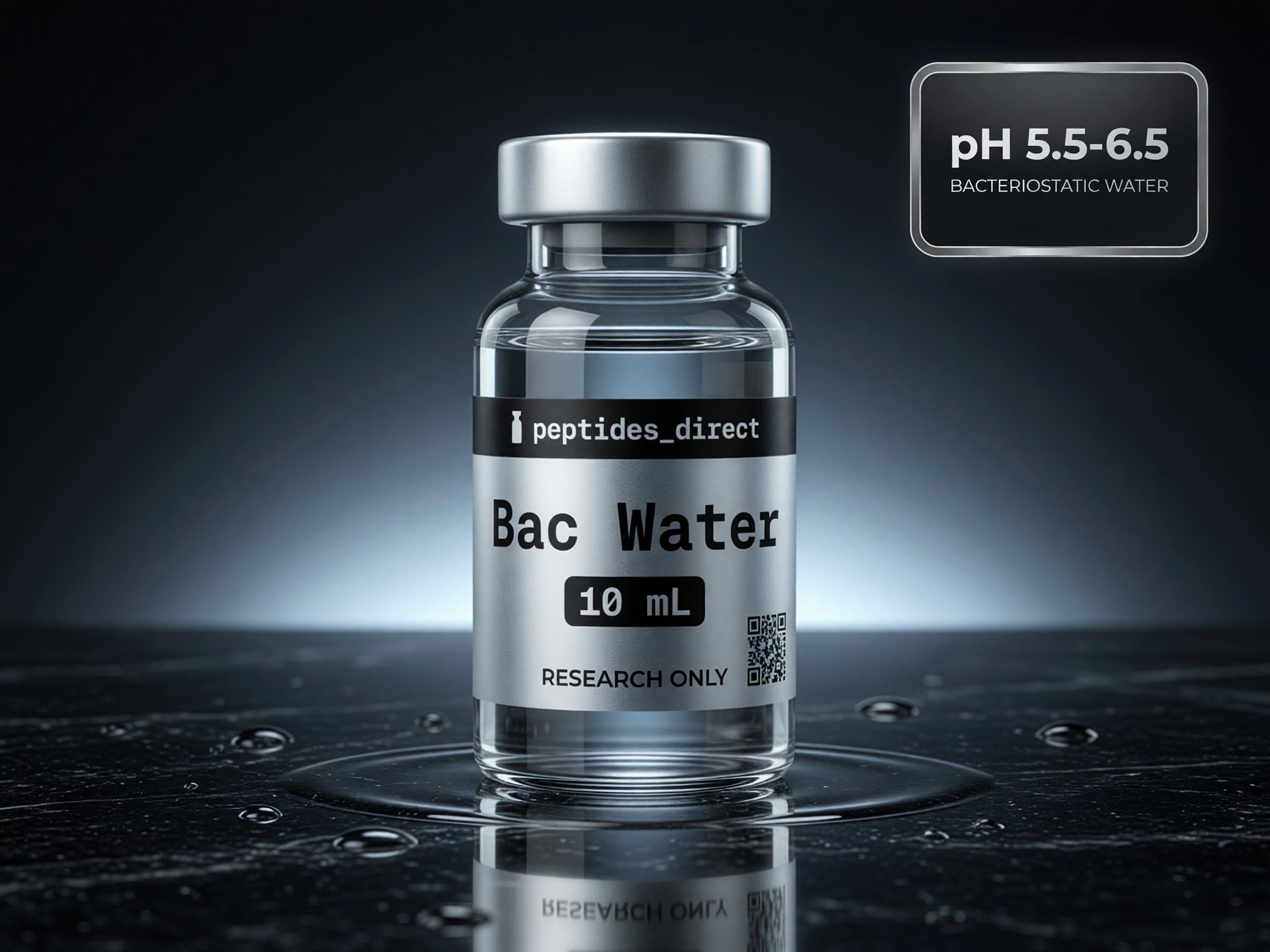
Standard solvent for reconstitution
USP-grade sterile water with 0.9% benzyl alcohol (near-neutral, pH 6.2 to 6.4) - the standard solvent for reconstituting lyophilized peptides. Essential accessory for any peptide research. Each vial is sealed and ready to use.
Documentation
Material specification
Purity
Test method
Form
Storage (sealed)
Storage (reconstituted)
CoA
Selected research
- PMID 36464872
Ying Y et al. Thymosin β4 and Actin: Binding Modes, Biological Functions and Clinical Applications
Curr Protein Pept Sci, 2023, mechanism review on actin binding and regenerative roles - PMID 35462518
Research advances on thymosin β4 in promoting wound healing
Zhonghua Shao Shang Yu Chuang Mian Xiu Fu Za Zhi, 2022, review of wound-healing studies including burns and diabetic ulcers - PMID 40279568
Tβ4-Engineered ADSC Extracellular Vesicles Rescue Cell Senescence for Diabetic Wound Healing
Adv Sci, 2025, microneedle delivery in a diabetic wound model - PMID 40362372
Maar K et al. Thymosin Beta-4 Modulates Cardiac Remodeling by Regulating ROCK1 Expression
Int J Mol Sci, 2025, post-infarction cardiac repair in adult mammals - PMID 41235866
Engineered Tandem Thymosin Peptide Promotes Corneal Wound Healing
Invest Ophthalmol Vis Sci, 2025, corneal wound closure study - PMID 39380984
Activation of pro-resolving pathways mediate the therapeutic effects of thymosin beta-4 during Pseudomonas aeruginosa keratitis
Front Immunol, 2024, anti-inflammatory mechanism in eye infection - PMID 36580759
Kleinman HK et al. Thymosin β4 and the anti-fibrotic switch
Int Immunopharmacol, 2023, review of anti-fibrotic and anti-inflammatory pathways
Research use only
This material is sold strictly for in-vitro research and laboratory use. Not intended for human or animal consumption, medical, cosmetic, or household applications. Suitable only for professional laboratory environments.
Storage and stability
- Dry, lyophilized vials keep for months refrigerated, or up to 24 months frozen at -20°C.
- After reconstitution in bacteriostatic water, use within about 30 days at 2 to 8°C, and avoid repeated freeze-thaw.
Reviews
Dimitris S.A coupon from our review program was granted for this review. 🇬🇷 · August 22, 2026
* Reviewer received a 5% thank-you coupon from our review program, independent of the rating.
Only customers who ordered the product from us can leave a review; we verify this automatically against the order number. Every review submitted is published, regardless of star rating. Rewarded reviews from our coupon program are individually labelled.
Frequently Asked Questions
Technical data sheet
- CAS number
- 77591-33-4
- Molecular formula
- C₂₁₂H₃₅₀N₅₆O₇₈S
- Molar mass
- 4963.4 g/mol
- Type / receptor
- Actin-binding 43-aa peptide (Thymosin Beta-4)
- Form
- White lyophilized powder
- Solubility
- Bacteriostatic water (BAC)
- Storage
- -20°C for up to 24 months; 30 days at 2-8°C after reconstitution
Identity data from public chemical references (PubChem). Per-batch purity: see lab reports below.
Frequently bought together
Complete your subcutaneous research workflow