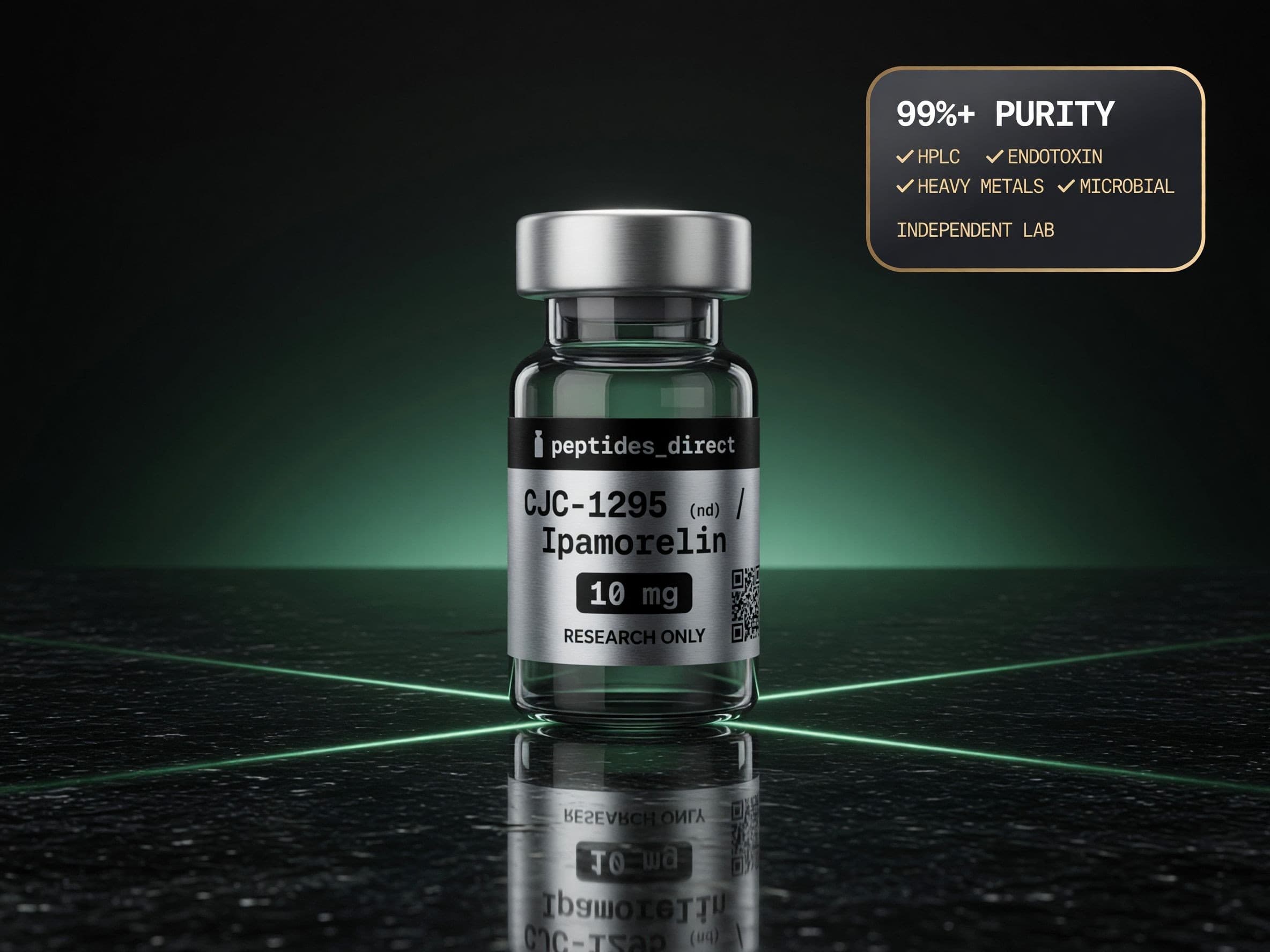
CJC-1295 (No DAC)
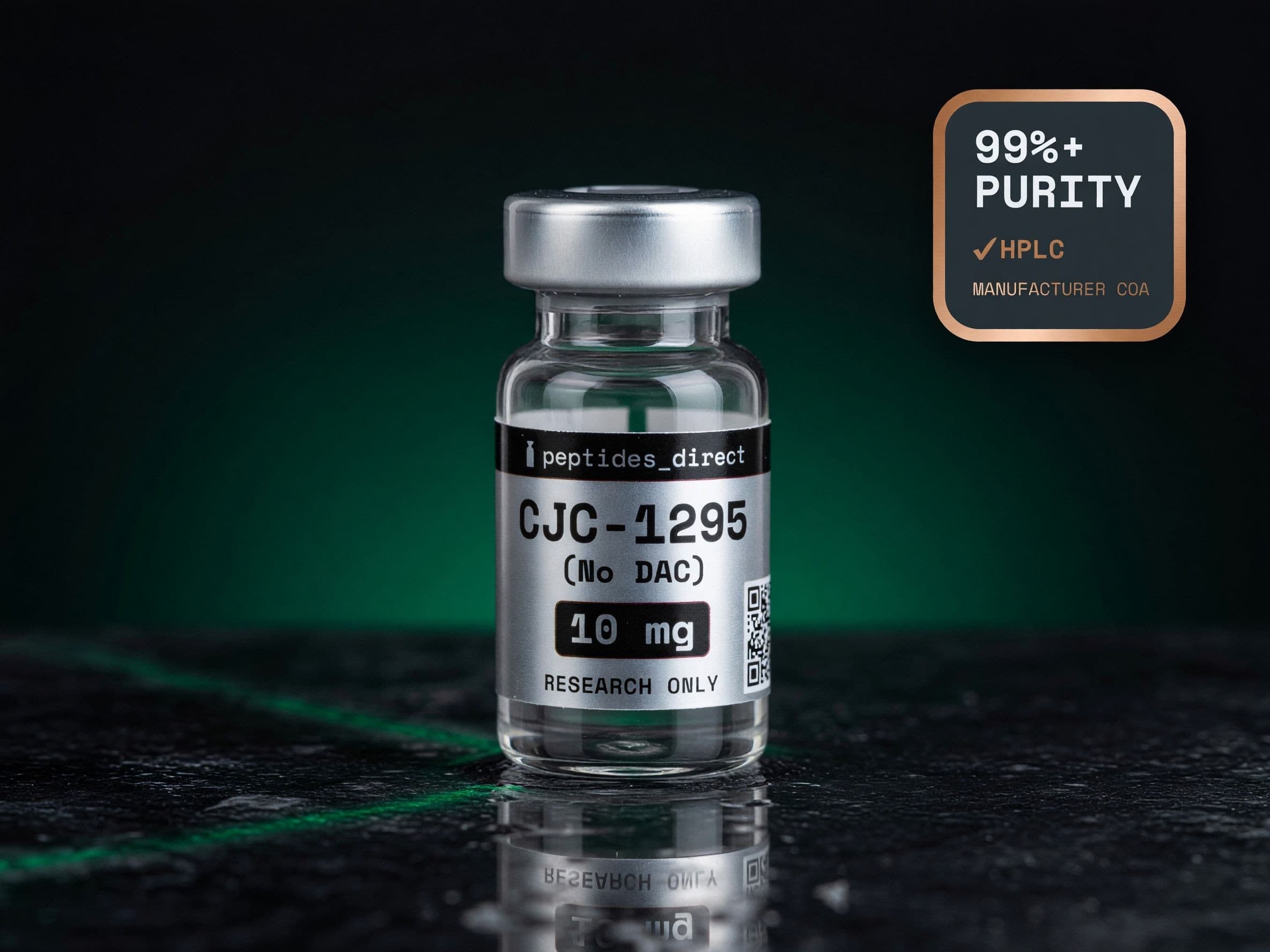
CJC-1295 without DAC (Mod GRF 1-29) is a synthetic 29-amino-acid GHRH(1-29) analog and GHRH receptor agonist. Research-grade lyophilized powder, specified purity at or above 99% (HPLC), batch-specific CoA. Laboratory use only.
99.31%Third-party lab: JanoshikView COA€59.99
€69.99
−14%(€10.00)savedFor Research Use Only
This product is sold strictly for in-vitro research and laboratory use. Not intended for human consumption or any in-vivo application.
Payment Methods
GHRH(1-29) analog, 29 amino acids
CJC-1295 without DAC (also called Mod GRF 1-29) is a synthetic 29-amino-acid analog of human GHRH/GRF. The 1-29 fragment carries the active site of the 44-amino-acid native hormone.
GHRH receptor on somatotrophs
Binds the GHRH receptor on somatotroph cells of the anterior pituitary, the receptor through which native GHRH signals into the somatotropic axis.
Four DPP-4 substitutions
Substitutions at positions 2, 8, 15, and 27 raise stability against the enzyme DPP-4 compared with unmodified GHRH(1-29), without introducing any albumin binding.
No DAC, short-acting
The molecule carries no Drug Affinity Complex group and does not bind albumin. Its half-life is commonly cited at about 30 minutes, a molecule fact that describes a short, pulsatile signal.
Contrast with the DAC variant
The long-acting DAC variant binds albumin through a maleimidopropionyl group and is reported with a half-life of 5.8 to 8.1 days. The No-DAC form omits that group.
Specified purity, batch CoA
Lyophilized powder, specified purity at or above 99% by HPLC, with a batch-specific third-party certificate of analysis from Janoshik Analytical.
Research areas
What is CJC-1295 (No DAC)
CJC-1295 without DAC, referred to in the literature as Mod GRF 1-29, is a synthetic 29-amino-acid analog of human growth-hormone-releasing hormone (GHRH/GRF). Native GHRH is 44 amino acids long; the 1-29 fragment carries the entire active site, which is why the analog is recognised at the same receptor.
Against the unmodified fragment, the sequence carries four amino-acid substitutions, at positions 2, 8, 15, and 27, which raise resistance to the degrading enzyme DPP-4. The defining structural difference from the long-acting variant is the absence of the Drug Affinity Complex (DAC) group that would otherwise allow covalent binding to albumin. Without that group the half-life stays short, commonly cited at about 30 minutes.
CJC-1295 has no FDA or EMA approval and appears on the FDA Category 2 bulk drug substances list. Clinical development of the long-acting DAC variant by ConjuChem reached phase 2 and was discontinued. We supply the material as research-grade lyophilized powder.
How it works
CJC-1295 without DAC is a GHRH receptor agonist: it binds the GHRH receptor on somatotroph cells of the anterior pituitary, the same receptor that native GHRH occupies. Receptor occupancy is the point at which the somatotropic axis is engaged, upstream of pituitary growth hormone and of hepatic IGF-1.
The four substitutions protect the peptide from DPP-4 cleavage but add no albumin binding, so the pharmacokinetics stay short. The commonly cited half-life of about 30 minutes is a secondary value in wide circulation and was not directly measured in the primary studies listed below. Receptor occupancy is brief, unlike the albumin-bound DAC variant with its reported 5.8 to 8.1 day half-life; GH pulse frequency and pulse size are what the cited trials measured under these compounds.
Published human pharmacology on this scaffold used native and agonist GHRH(1-29) analogs and the DAC-conjugated molecule, not the exact Mod GRF(1-29) sequence supplied here.
Documentation
Material specification
Purity
Test method
Form
Typical storage (sealed)
Typical storage (reconstituted)
CoA
Selected research
- PMID 15817669
Human growth hormone-releasing factor (hGRF)1-29-albumin bioconjugates activate the GRF receptor on the anterior pituitary in rats: identification of CJC-1295 as a long-lasting GRF analog
Rat and in-vitro pharmacology; the work that identified the albumin-binding GRF(1-29) bioconjugate - PMID 2546126
Bioactivity of growth hormone releasing hormone (1-29) analogues after SC injection in man
Acute human pharmacology study of GHRH(1-29) analogues - PMID 16352683
Prolonged stimulation of growth hormone (GH) and insulin-like growth factor I secretion by CJC-1295, a long-acting analog of GH-releasing hormone, in healthy adults
Phase 1 pharmacology of the long-acting DAC variant (contrast molecule), healthy adults, follow-up windows of 28 and 49 days - PMID 8772599
Once daily subcutaneous growth hormone-releasing hormone therapy accelerates growth in growth hormone-deficient children during the first year of therapy. Geref International Study Group
Human study in children with GH deficiency, 12 months - PMID 7955460
Treatment with GHRH(1-29)NH2 in children with idiopathic short stature induces a sustained increase in growth velocity
Human study in children with idiopathic short stature, 12 months
Reconstitution tips
For a clear, stable solution, reconstitute gently:
- Let the vial and the bacteriostatic water reach room temperature (10 to 15 minutes) before mixing.
- Add the water slowly, letting it run down the inside wall of the vial, not directly onto the powder.
- Swirl or roll gently, never shake.
- Wait 5 to 10 minutes; it should turn clear.
Research use only
This material is sold strictly for in-vitro research and laboratory use. Not intended for human or animal consumption, medical, cosmetic, or household applications. Suitable only for professional laboratory environments.
Reconstitution: sensitive peptide
Some peptides react sensitively to the pH and quality of the reconstitution water and can turn cloudy or not fully dissolve if reconstituted incorrectly (for example with tap water, non-sterile water, old or contaminated bacteriostatic water, or the wrong water-to-peptide ratio). This is a common reconstitution matter, not an automatic sign of a faulty vial. Always reconstitute with fresh, pharmaceutical-grade diluent as prescribed by the product-specific protocol on this page (bacteriostatic or sterile water, or dilute acetic-acid water first where the page says so), add it slowly down the inner wall of the vial, and swirl gently instead of shaking. If it still looks cloudy right after mixing, let it rest for 10 to 15 minutes and swirl again before judging clarity. Correct technique and suitable water are the customer's responsibility, and so is following the product-specific instructions on this page. Where a peptide needs an acid-first protocol (it says so above, for example for AOD-9604 and Tesamorelin), reconstituting it in plain bacteriostatic water instead is a handling error, not a defect, and is not covered. If a vial stays cloudy after these steps, contact us with clear photos. We replace it free of charge once if you reconstituted with water from our own range or with factory-sealed water from a pharmaceutical manufacturer and followed the instructions on this page; with water of unknown origin the cause cannot be narrowed down and the case is not covered. Expert peptides (marked as such above) are excluded from this programme.
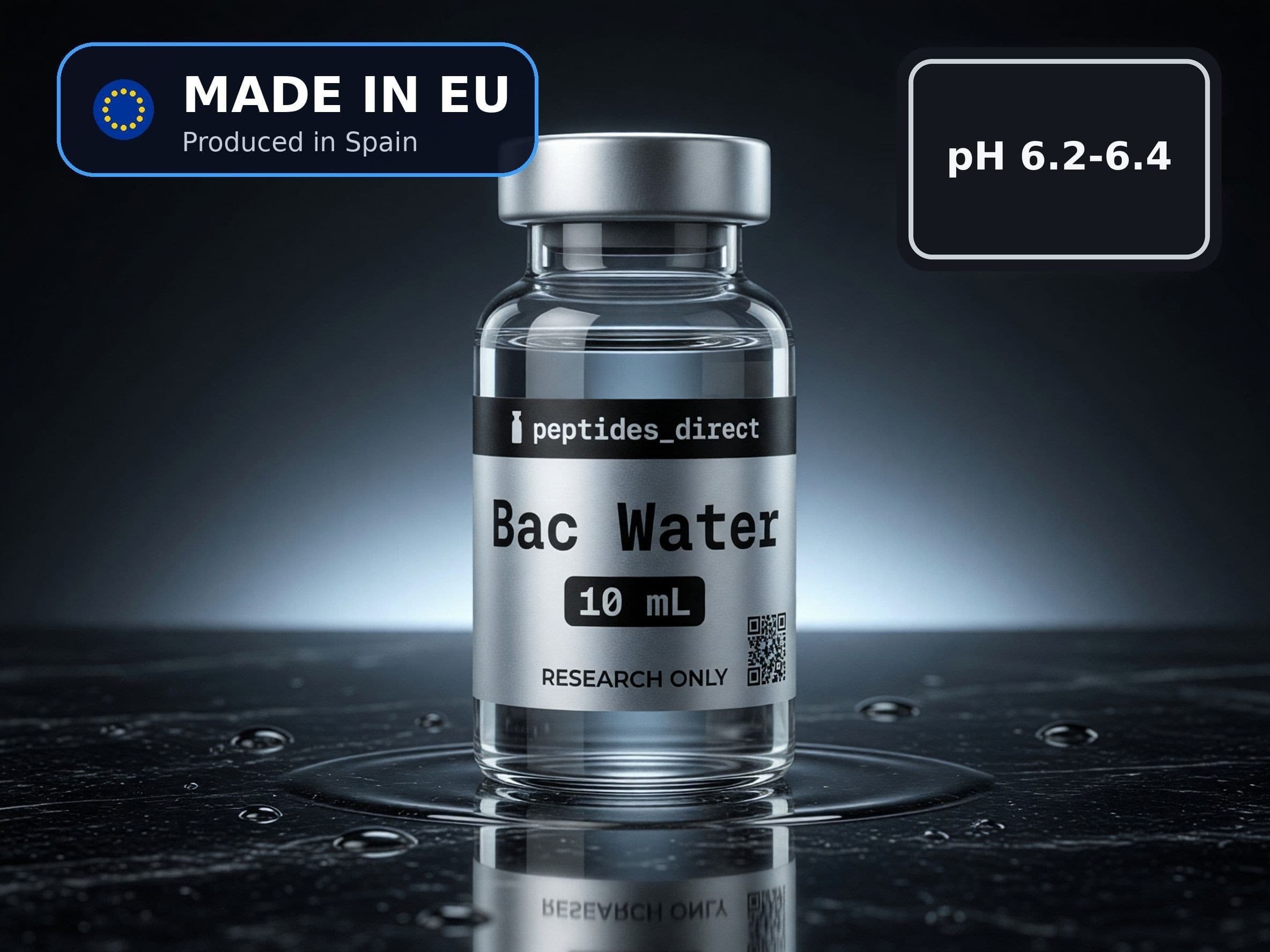
Best reconstituted in near-neutral bacteriostatic water (around pH 5.7, the USP water value). We recommend checking your water's pH with a cheap meter first: each peptide has its own ideal range, and matching the water is your responsibility.
This peptide normally dissolves directly in bacteriostatic water: use a generous volume (2 ml or more), add it slowly down the inner wall, swirl gently and let it rest for 10 to 15 minutes. Some people pre-dissolve the powder in 0.1 to 0.2 ml of dilute acetic-acid water first; for this product we have no evidence that this changes anything, and it is not required. Full steps are in the FAQ below.
Reconstitution itself, including the choice of diluent, volumes and technique, is part of the research work and lies with the customer; how a mix behaves once liquid meets powder is outside our control. Your statutory rights regarding genuine product defects remain unaffected.
Why peptides turn cloudy: the reconstitution guideStorage and stability
- Dry, lyophilized vials keep for months refrigerated, or up to 24 months frozen at -20°C.
- After reconstitution in bacteriostatic water, use within about 30 days at 2 to 8°C, and avoid repeated freeze-thaw.
Reviews
No reviews yet. Write the first one!
Only customers who ordered the product from us can leave a review; we verify this automatically against the order number. Every review submitted is published, regardless of star rating. Rewarded reviews from our coupon program are individually labelled.
Frequently Asked Questions
Technical data sheet
- Molecular formula
- C₁₅₂H₂₅₂N₄₄O₄₂
- Molar mass
- 3367.9 g/mol
- Type / receptor
- Short-acting GHRH (1-29) analog, No DAC
- Form
- White lyophilized powder
- Solubility
- Bacteriostatic water (BAC)
- Storage
- -20°C for up to 24 months; 30 days at 2-8°C after reconstitution
Identity data from public chemical references (PubChem). Per-batch purity: see lab reports below.