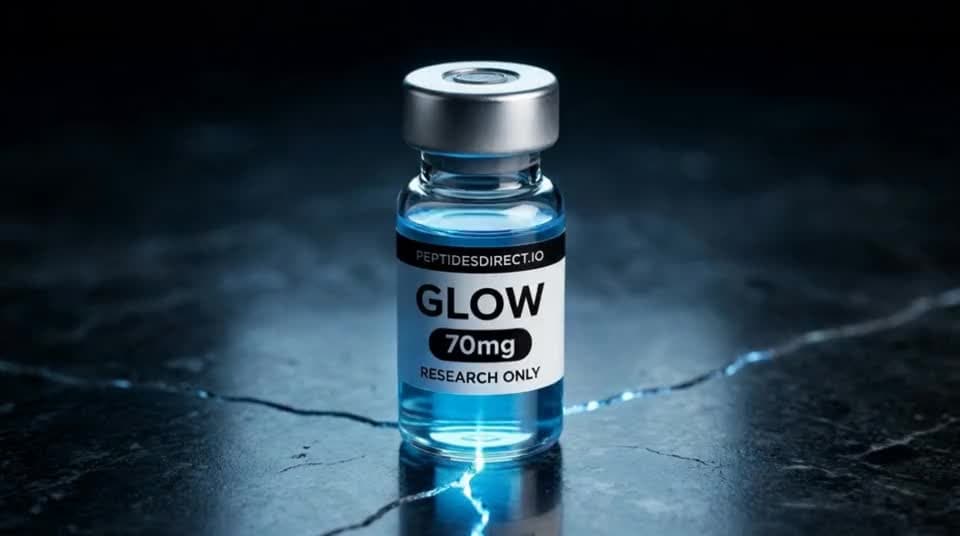
GLOW
3-in-1 skin peptide blend: GHK-Cu 50mg + BPC-157 10mg + TB-500 10mg. Targets collagen synthesis, tissue regeneration, and skin repair for comprehensive dermatological research.
99.00%Third-party lab: LiquilabsView COA€109.99
€129.99
−15%savedFor Research Use Only
This product is sold strictly for in-vitro research and laboratory use. Not intended for human consumption or any in-vivo application.
Payment Methods
Three peptides, one vial
GLOW pairs GHK-Cu, BPC-157 and TB-500 at a research-grade ratio so cell and animal studies can examine three complementary regeneration signals at the same time.
Collagen and matrix support
GHK-Cu carries copper into cells and triggers collagen production in fibroblasts, the cells that build firm, elastic skin in laboratory work.
Tissue and tendon repair
BPC-157 is a stable pentadecapeptide studied for tendon, muscle and gut healing across rodent and cell models. It supports angiogenesis through VEGF signaling and accelerates wound closure in published research.
Cell migration and angiogenesis
TB-500 is full-length Thymosin Beta-4. It sequesters actin monomers, drives cell migration into wound sites and supports new capillary formation in cardiac, dermal and corneal models.
Antioxidant and gene-level effects
GHK-Cu reduces oxidative-stress markers and modulates thousands of genes, including DNA-repair and protein-recycling pathways studied in skin biology.
Skin, wound and tissue research blend
The combination is most often used in studies on skin barrier, scar formation, tendon repair, vascular regrowth and topical formulation work.
Research areas
What is GLOW
GLOW is a three-peptide research blend that pairs GHK-Cu (50mg), BPC-157 (10mg) and TB-500 (10mg) in a single lyophilized vial, 70mg total. The idea is to combine a regenerative copper-binding peptide with two of the most studied healing peptides in tissue biology, so researchers can study three complementary signals together instead of mixing three separate vials.
GHK-Cu is the copper-bound form of the natural human tripeptide GHK. It is best known in skin and wound-healing research. BPC-157 is a 15 amino acid sequence isolated from gastric juice protein BPGP, studied for tendon, muscle, ligament and gut regeneration. TB-500 is full-length Thymosin Beta-4 (43 amino acids), an actin-binding protein with established roles in cell migration, angiogenesis and tissue remodeling.
We supply GLOW as a freeze-dried powder, ready for reconstitution and use in laboratory protocols.
How it works
The three peptides act on complementary pathways.
GHK-Cu delivers copper exactly where cells need it. Copper is the cofactor for enzymes that build collagen cross-links and run antioxidant defense. On top of that, the GHK part of the molecule behaves like a switch that nudges thousands of genes toward a more regenerative profile in laboratory experiments. Studies show GHK-Cu boosts collagen production, helps form new capillaries, activates fibroblasts and reduces oxidative-stress markers in cell and animal work.
BPC-157 is the build-and-stabilize signal. In published research it upregulates growth-hormone receptor expression, modulates VEGF-driven angiogenesis and accelerates tendon, muscle and gastric ulcer healing in rodent models. Unlike most peptides, it remains stable in gastric juice, which is why oral and topical formulations have been examined alongside injectable routes.
TB-500 acts on the cytoskeleton. By binding monomeric G-actin it controls how fibroblasts, endothelial cells and progenitor cells migrate into a wound site. Research links it to faster wound closure, reduced fibrosis and capillary regrowth in cardiac, corneal and skin models.
In a blend, the three peptides cover the matrix-building side (GHK-Cu), the systemic repair side (BPC-157) and the cell-migration side (TB-500) of tissue research at the same time.
Often studied alongside
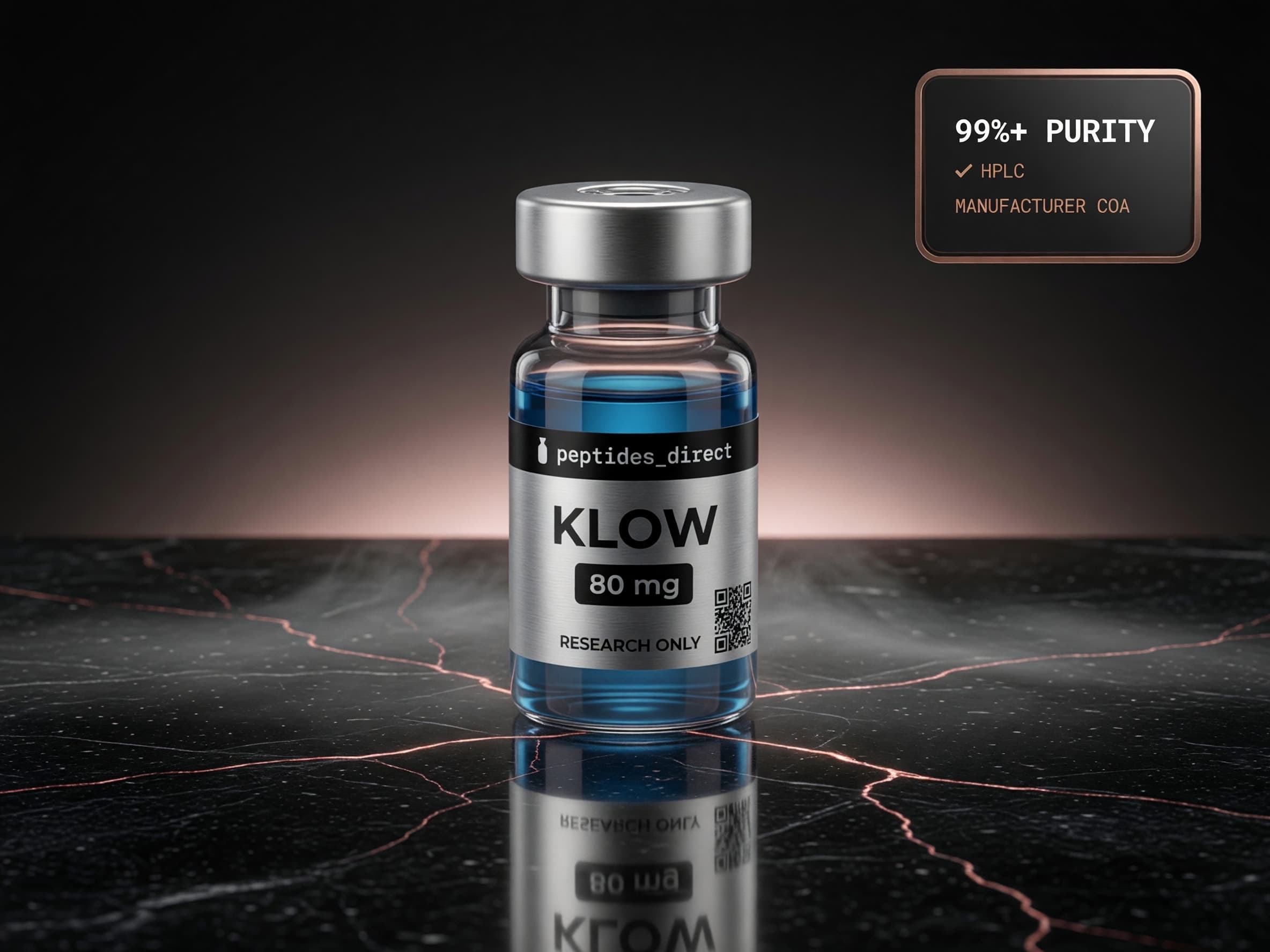
A common four-peptide extension of this blend adds KPV, the anti-inflammatory C-terminal tripeptide of alpha-MSH, for an additional layer of anti-inflammatory signaling. It is sold as KLOW in research catalogs.
Four-peptide extension with KPV anti-inflammatory signaling
4-in-1 anti-aging peptide blend: GHK-Cu 50mg + BPC-157 10mg + TB-500 10mg + KPV 10mg. Targets collagen synthesis, tissue regeneration, skin repair, and anti-inflammatory pathways.
The individual components are also available on their own for studies that need single-peptide controls.
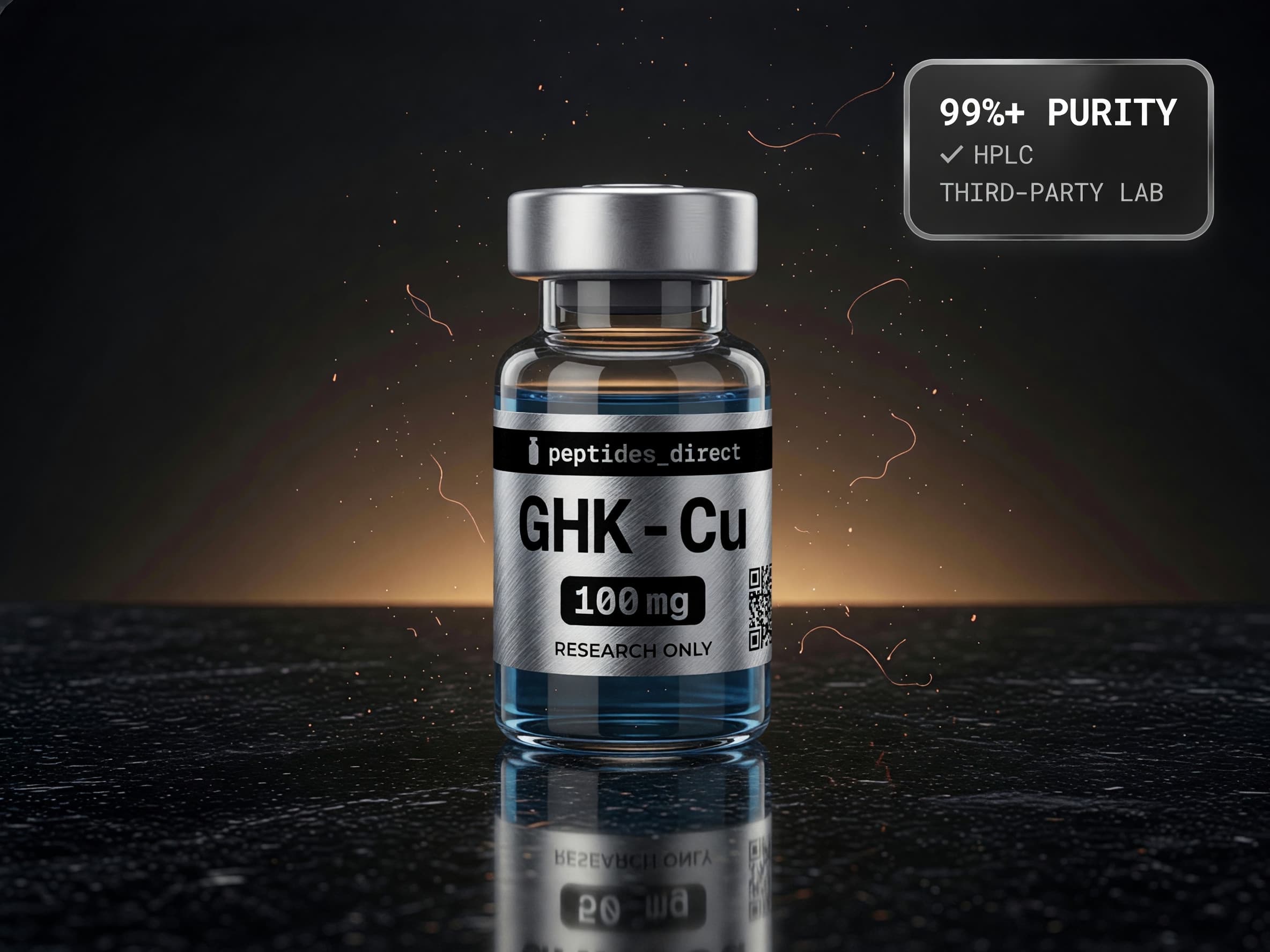
GHK-Cu on its own, copper-bound regenerative peptide
Naturally occurring copper tripeptide complex for skin regeneration and anti-aging research. Stimulates collagen synthesis, accelerates wound healing, and modulates 4000+ genes. Plasma levels decline with age, making it a key target in longevity research.
BPC-157 on its own, gastric pentadecapeptide
Gastric pentadecapeptide (15 amino acids) known for exceptional tissue repair properties. Promotes wound healing, angiogenesis, and cytoprotection across tendons, muscles, gut, and nerves. Over 30 years of preclinical research.
TB-500 on its own, full-length Thymosin Beta-4
Full-length 43-amino-acid Thymosin Beta-4, a naturally occurring repair protein, independently confirmed by a third-party CoA from Janoshik. Promotes cell migration and new blood vessel formation for systemic tissue healing. Especially researched for muscle, tendon, and cardiac repair.
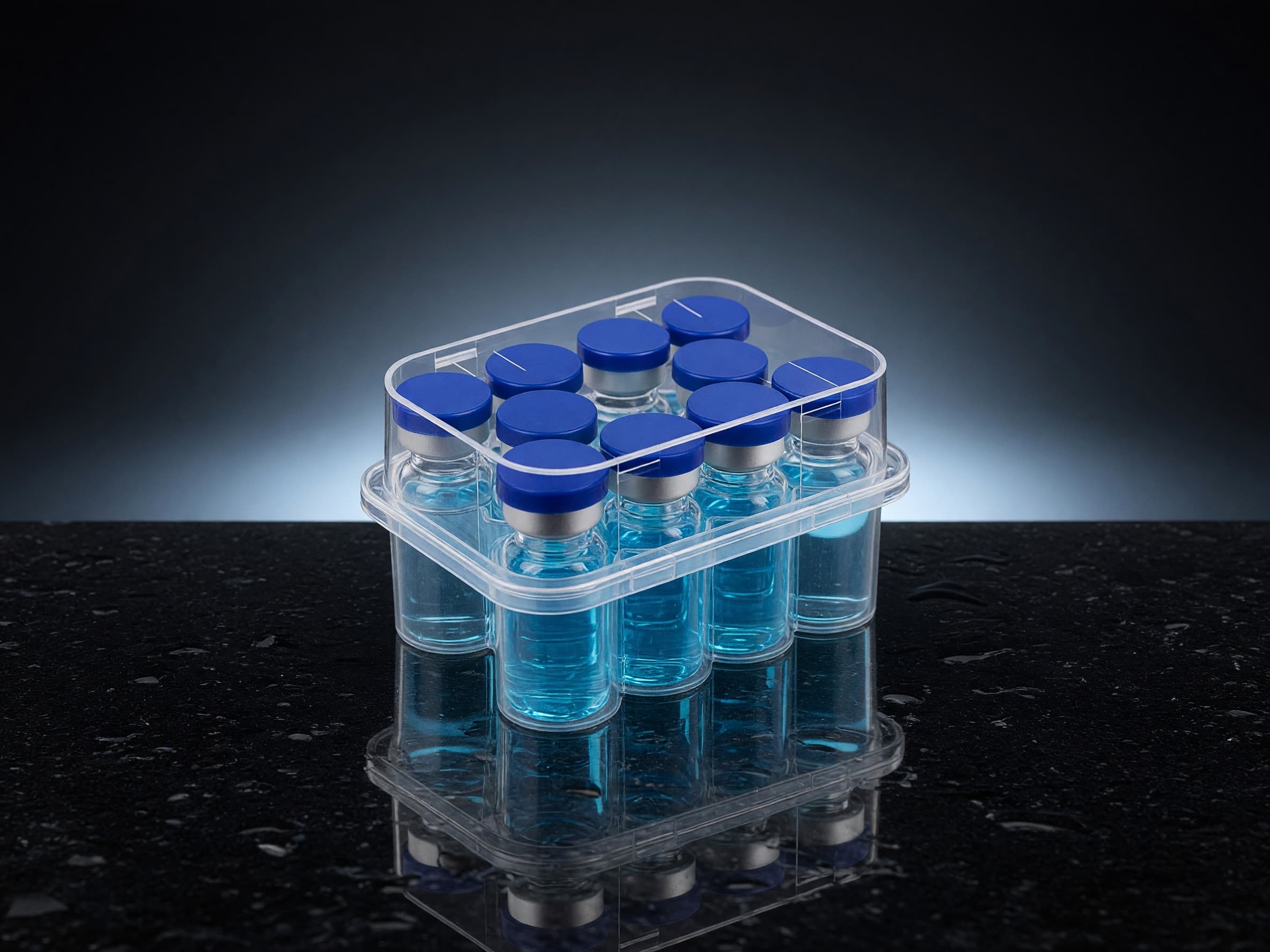
For reconstitution, the standard solvent in published protocols is bacteriostatic or sterile water. The dissolved blend takes on a faint blue tint from the copper complex in GHK-Cu.
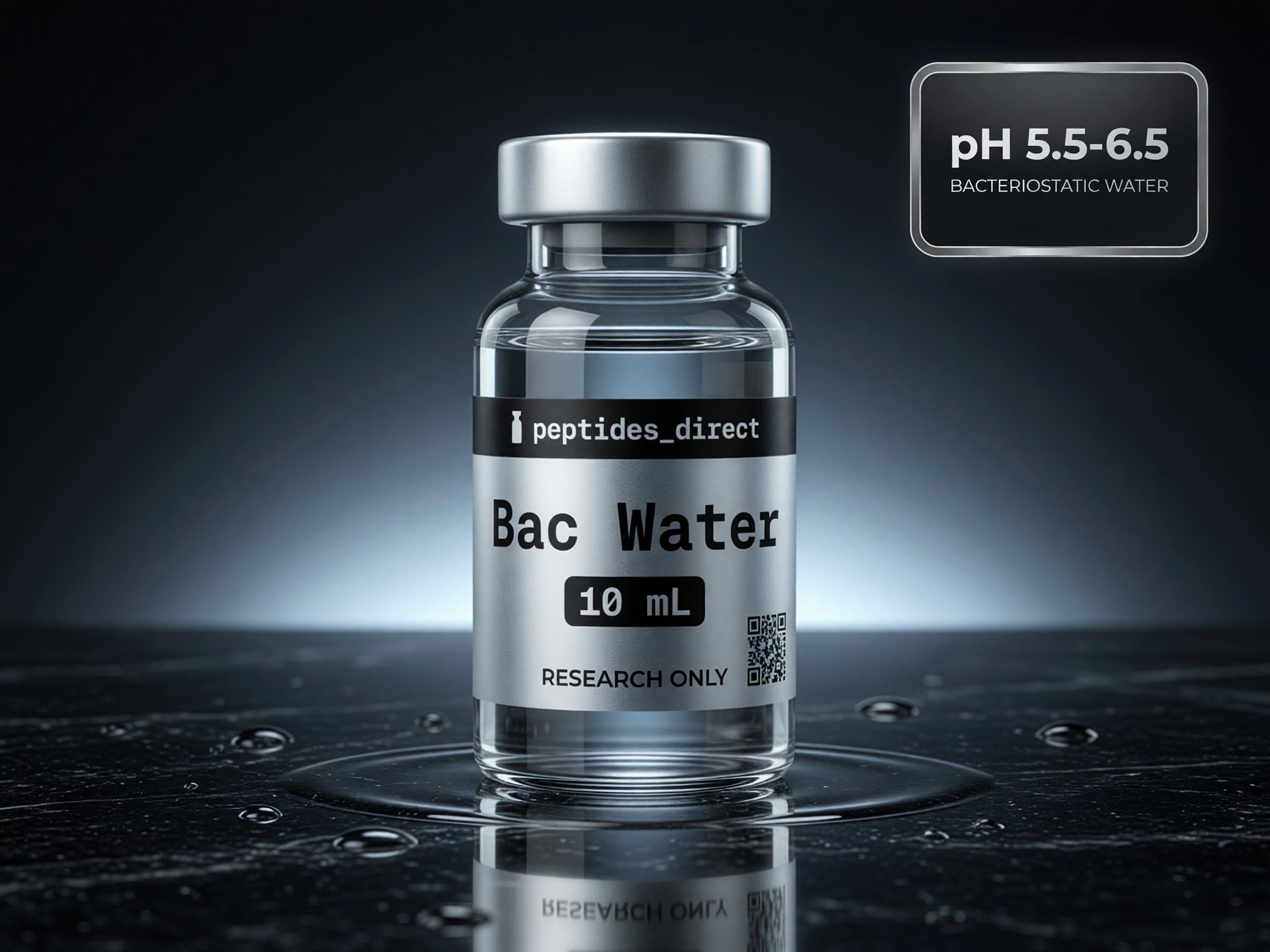
Standard solvent for reconstitution
USP-grade sterile water with 0.9% benzyl alcohol (near-neutral, pH 6.2 to 6.4) - the standard solvent for reconstituting lyophilized peptides. Essential accessory for any peptide research. Each vial is sealed and ready to use.
Documentation
Material specification
Composition
Purity
Test method
Form
Storage (sealed)
Storage (reconstituted)
CoA
Selected research
- PMID 29986520
Pickart L, Margolina A. Regenerative and Protective Actions of GHK-Cu in Light of New Gene Data
Int J Mol Sci, 2018, canonical GHK-Cu mechanism review - PMID 26236730
GHK Peptide as a Natural Modulator of Multiple Cellular Pathways in Skin Regeneration
Biomed Res Int, 2015, collagen and immune-modulation review - PMID 40672369
Beneficial effects of GHK-Cu in experimental colitis
Front Pharmacol, 2025, GHK-Cu anti-inflammatory pathway - PMID 41754849
Tendon, Ligament, and Muscle Injury Therapy Perspectives with Stable Gastric Pentadecapeptide BPC 157
Recent review on BPC-157 in musculoskeletal repair - PMID 40131143
Safety of Intravenous Infusion of BPC157 in Humans: A Pilot Study
2025, first human safety pilot for BPC-157 - PMID 36464872
Ying Y et al. Thymosin β4 and Actin: Binding Modes, Biological Functions and Clinical Applications
2023, canonical TB4 mechanism review - PMID 35462518
Research advances on thymosin β4 in promoting wound healing
2022, TB-500 wound-healing evidence review
Research use only
This material is sold strictly for in-vitro research and laboratory use. Not intended for human or animal consumption, medical, cosmetic, or household applications. Suitable only for professional laboratory environments.
Reconstitution: sensitive peptide
Some peptides react sensitively to the pH and quality of the reconstitution water and can turn cloudy or not fully dissolve if reconstituted incorrectly (for example with tap water, non-sterile water, old or contaminated bacteriostatic water, or the wrong water-to-peptide ratio). This is a common reconstitution matter, not an automatic sign of a faulty vial. Always reconstitute with fresh, pharmaceutical-grade diluent as prescribed by the product-specific protocol on this page (bacteriostatic or sterile water, or dilute acetic-acid water first where the page says so), add it slowly down the inner wall of the vial, and swirl gently instead of shaking. If it still looks cloudy right after mixing, let it rest for 10 to 15 minutes and swirl again before judging clarity. Correct technique and suitable water are the customer's responsibility, and so is following the product-specific instructions on this page. Where a peptide needs an acid-first protocol (it says so above, for example for AOD-9604 and Tesamorelin), reconstituting it in plain bacteriostatic water instead is a handling error, not a defect, and is not covered. If a vial stays cloudy after these steps, contact us with clear photos. We replace it free of charge once if you reconstituted with water from our own range or with factory-sealed water from a pharmaceutical manufacturer and followed the instructions on this page; with water of unknown origin the cause cannot be narrowed down and the case is not covered.
Use near-neutral bacteriostatic water (around pH 5.7); do not acidify. A blue to blue-green color is the copper and is normal.
The blue to blue-green color of copper peptides (GHK-Cu) is normal and not a defect.
Reconstitution itself, including the choice of diluent, volumes and technique, is part of the research work and lies with the customer; how a mix behaves once liquid meets powder is outside our control. Your statutory rights regarding genuine product defects remain unaffected.
Why peptides turn cloudy: the reconstitution guideStorage and stability
- Dry, lyophilized vials keep for months refrigerated, or up to 24 months frozen at -20°C.
- After reconstitution in bacteriostatic water, use within about 30 days at 2 to 8°C, and avoid repeated freeze-thaw.
Reviews
No reviews yet. Write the first one!
Only customers who ordered the product from us can leave a review; we verify this automatically against the order number. Every review submitted is published, regardless of star rating. Rewarded reviews from our coupon program are individually labelled.
Frequently Asked Questions
Frequently bought together
Complete your subcutaneous research workflow